

Stories by @mr95
4,775 stories

The Miller's Daughter
Her father told a lie that could kill her. A strange man offered a deal she couldn't refuse. The king wanted gold. She wanted to survive. Only one of them got what they deserved. Mira, 20, is the daughter of a miller who — in a moment of catastrophic boasting — tells the king that his daughter can spin straw into gold. The king imprisons her with a room full of straw and the promise that she will die if it is not gold by morning. A strange little man named Rumpelstiltskin appears and spins the gold — for a price: first her necklace, then her ring, then her firstborn child. The film reimagines the tale as a political survival story: Mira is not simply a passive victim but a young woman with no good options navigating a king who is both her captor and her suitor. The Rumpelstiltskin of this telling is not simply a villain — he is a fae creature of iron contractual logic whose deals are always honored to the letter, whose tragedy is that he wanted something living and made a deal for it that can only produce grief. When Mira becomes queen and her child is born, the contract comes due. The name-guessing is her final act of self-determination. Act One — The Lie The miller's boast. The prison room. The first deal. The specific economy of what Mira has already spent. Act Two — The Gold Two more nights. Two more deals. The king's proposal. Mira calculating survival at every moment. Act Three — The Name The child born. The contract due. Rumpelstiltskin's three-day grace. Mira's intelligence finding the name. His face when she speaks it.
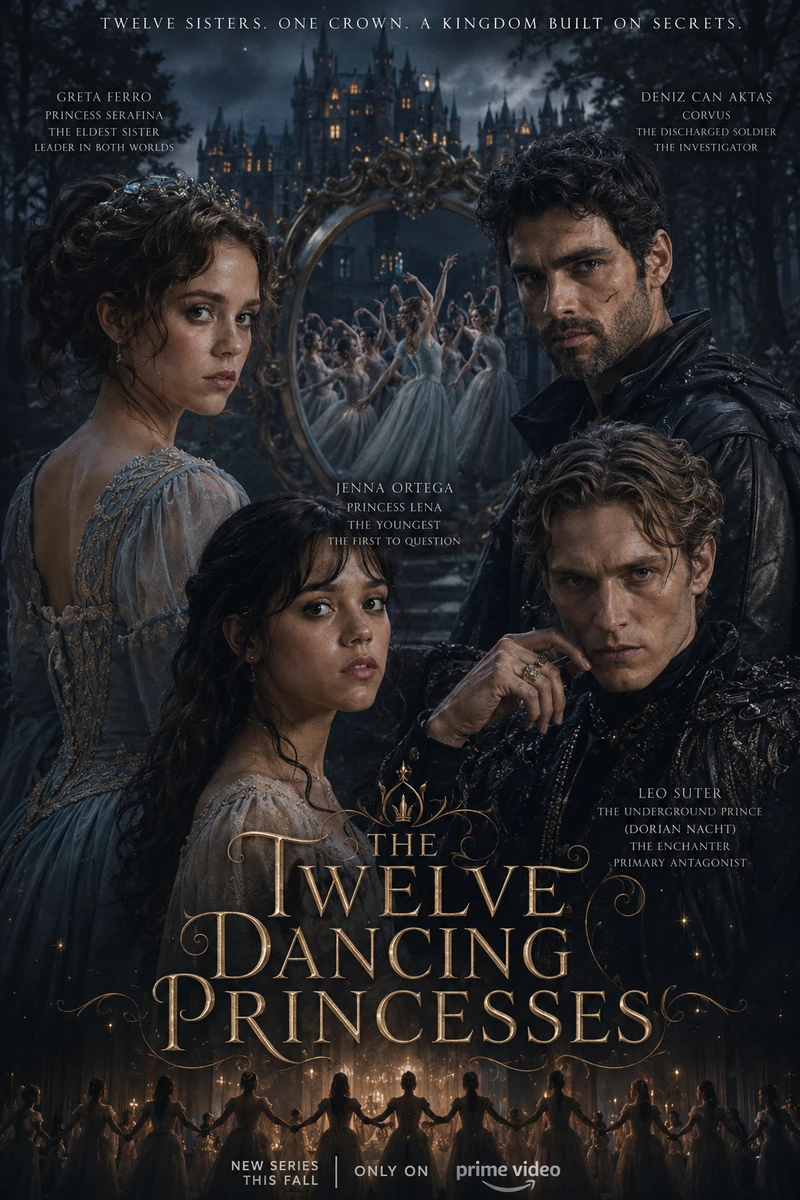
The Twelve Dancing Princesses
Every night, twelve princesses disappear and return with worn-out shoes. Nobody knew why. Nobody was supposed to find out. Twelve royal sisters — daughters of King Aldric — are found every morning with worn-through dancing slippers, unable or unwilling to explain where they have been. The king, desperate to understand, offers any suitor who discovers the secret a choice of one daughter in marriage; those who fail after three attempts are executed. The series follows two parallel storylines: the sisters' nightly journeys to an underground kingdom where they are bound by an enchantment that makes the dancing both irresistible pleasure and slow consumption; and the soldier Corvus, discharged from the king's army, who uses an old woman's advice (an invisibility cloak, the instruction not to drink what the sisters offer) to follow them. Three seasons track: Season 1 — the mystery established, Corvus's infiltration, the underground kingdom's nature revealed; Season 2 — the enchantment's source (a charismatic underground prince who has been collecting the sisters' energy), the sisters' growing awareness that they are both willing and trapped; Season 3 — the breaking of the enchantment, the moral reckoning about willing complicity in one's own entrapment. Season 1 — The Worn Shoes The mystery established. Corvus's investigation beginning. The underground kingdom's first revelation. Season 2 — The Consumption The enchantment's mechanics understood. The sisters' growing awareness. Serafina's terrible dilemma. Season 3 — The Breaking The enchantment destroyed. The moral reckoning about choice and coercion. Lena's testimony.
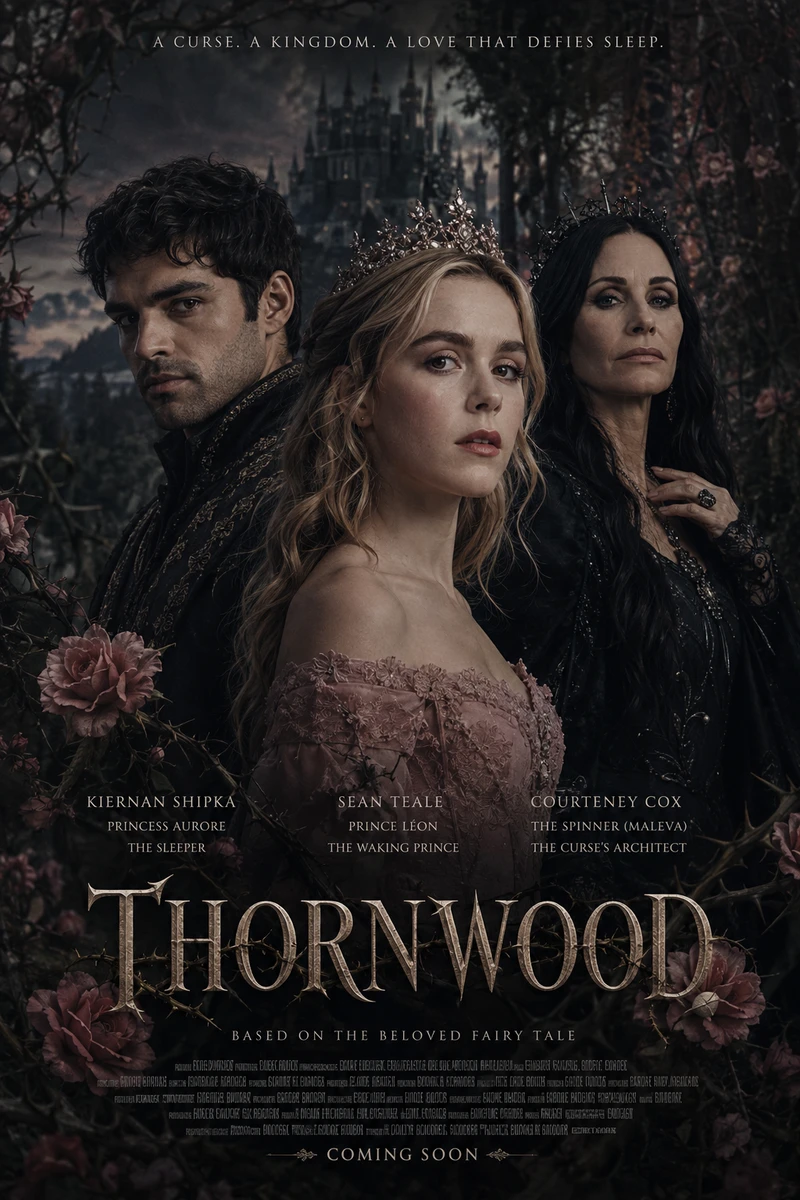
Thornwood
She was cursed at birth to sleep for a century. Nobody told the curse she would dream the whole time — or what she would learn there. Princess Aurore, 17 at the time of the curse, sleeps for one hundred years in Thornwood Castle — but the film's radical choice is to follow what happens inside the dream. While the kingdom overgrows with briars and the world changes outside, Aurore's dream-consciousness expands: she encounters the Spinner (the curse's architect, revealed to be a woman of genuine grievance rather than simple malice), she teaches herself the lost arts of her kingdom from the dream's archive of memory, and she falls in love with a version of the prince who is not a savior but a presence she constructs from her own hopes — which makes the waking encounter with the real Prince Léon far more complicated. The film moves between Aurore's dream-world (lush, slightly wrong, timelessly lit) and the waking world (the hundred years shown in fast-forward through the changing seasons visible through the castle windows). When Léon cuts through the briars, he finds not a passive sleeper but a woman who has spent a century becoming extraordinary — and who needs to grieve the world she missed before she can love the one she woke to. Act One — The Spindle Aurore's world before the curse — the film's only fully sunlit sequence. The thirteenth fairy's arrival. The sleep descending. Act Two — The Dream Century One hundred years of Aurore's interior life. The Spinner's presence in the dream as unwilling companion. The library of the kingdom's lost history. The dream-Léon. Act Three — The Waking Léon cutting through the briars. The kiss. Aurore's eyes opening. The grief and the possibility. The gap between the dream and the world.
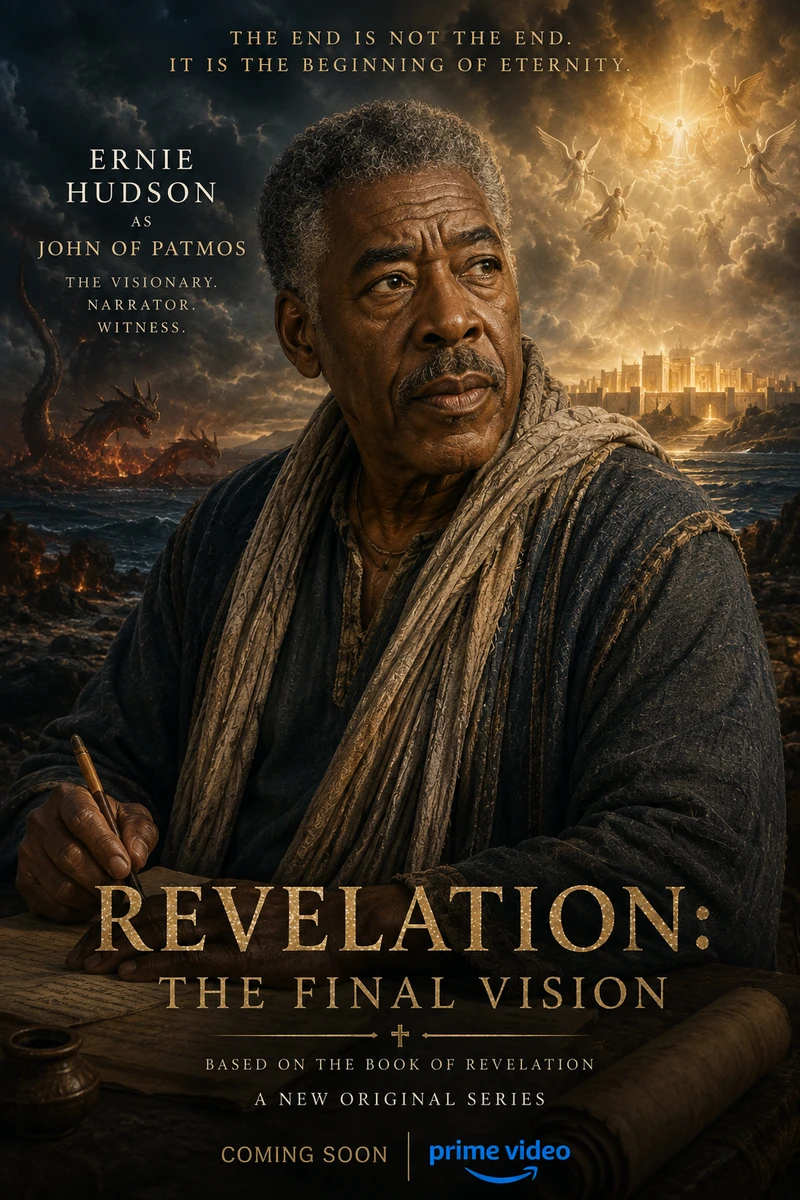
Revelation: The Final Vision
The last book of the Bible. The most visually extraordinary. The most contested. The most necessary. A faithful, visually ambitious adaptation of the Revelation to John — approached as what the text presents itself as: the apocalyptic vision of John of Patmos, written to seven specific churches in Asia Minor under Roman persecution, using the specific visual language of Jewish apocalyptic literature to communicate hope to a persecuted community. The series takes the Revelation seriously as both historical document and prophetic vision — grounding it in the specific historical context of Domitian's Rome while honoring its eschatological scope. Structured in two seasons following the text's own structure: Season 1 covers the letters to the seven churches, the throne room vision, the seals, and the trumpets. Season 2 covers the woman and the dragon, the beast, the bowls of wrath, Babylon's fall, the final battle, and the New Jerusalem. The visual language draws from ancient Near Eastern imagery, Roman imperial iconography, and the specific visual metaphors of Jewish apocalyptic — rendered with the conviction that these images were chosen for their specific meaning and deserve to be taken seriously. Season 1 — The Vision Begins Patmos. The throne room. The letters to the seven churches. The scroll with seven seals. The four living creatures. The martyrs under the altar. Season 2 — The End and the Beginning The woman clothed with the sun. The beast. Babylon's fall. The rider on the white horse. The thousand years. The new heaven and new earth. The New Jerusalem descending. 'Come, Lord Jesus.'
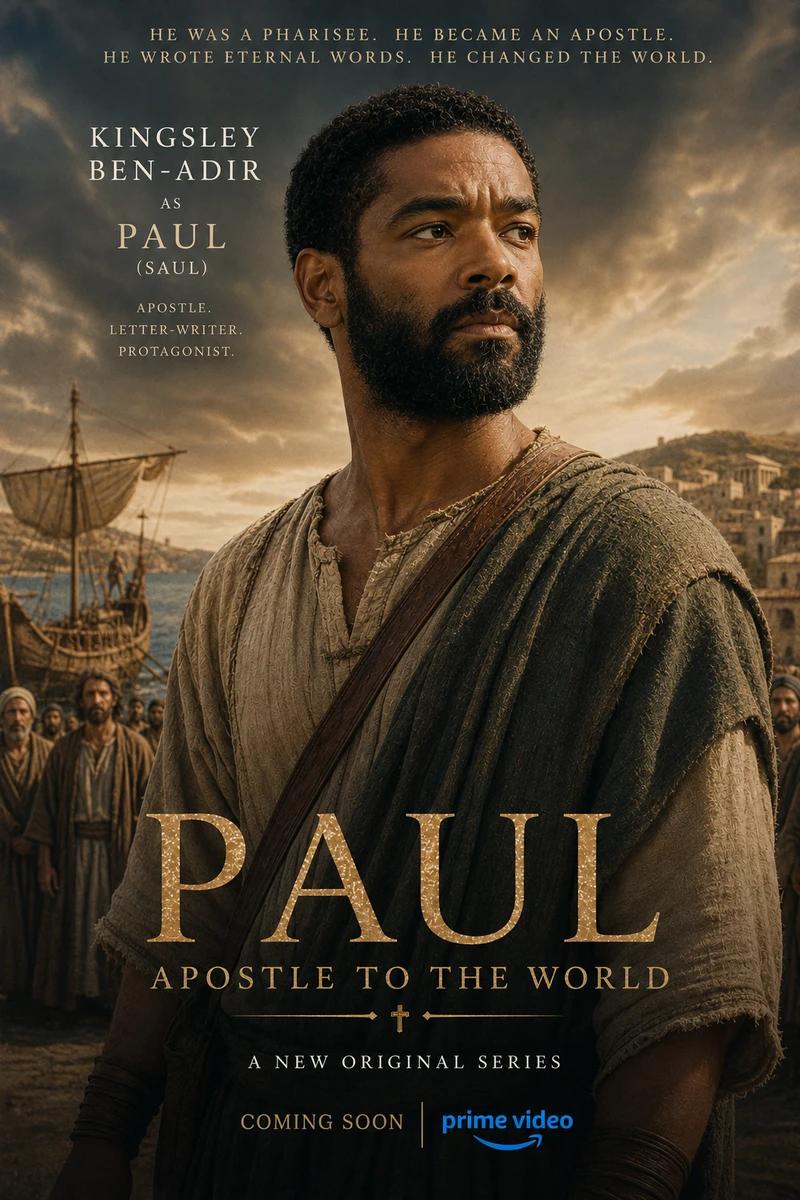
Paul: Apostle to the World
He was the church's greatest persecutor and its greatest advocate. The same intensity that made him dangerous made him extraordinary. A dedicated series following Paul from his Damascus road conversion through his final imprisonment in Rome — drawn from Acts and illuminated throughout by Paul's own letters, which are woven into the narrative as direct addresses. Three seasons cover: Season 1 — the conversion, Ananias, Arabia, Damascus, Jerusalem, the first missionary journey (Barnabas, Cyprus, Galatia). Season 2 — the Jerusalem council, the second and third missionary journeys (Philippi, Thessalonica, Corinth, Ephesus), the riot in Ephesus. Season 3 — the arrest in Jerusalem, the trials before Felix, Festus, and Agrippa, the voyage to Rome, the shipwreck, Rome. Each season's episodes begin with a specific Pauline text written during that period. Season 1 — Damascus The conversion. The blinding. Ananias. The new Paul that the church cannot yet trust. The first journey. Season 2 — The World Philippi to Corinth to Ephesus. The letters written. The churches planted. The riot. Season 3 — Rome The arrest. The trials. The shipwreck — 'Be encouraged; for there will be no loss of life among you.' Rome. The gospel at the world's center.
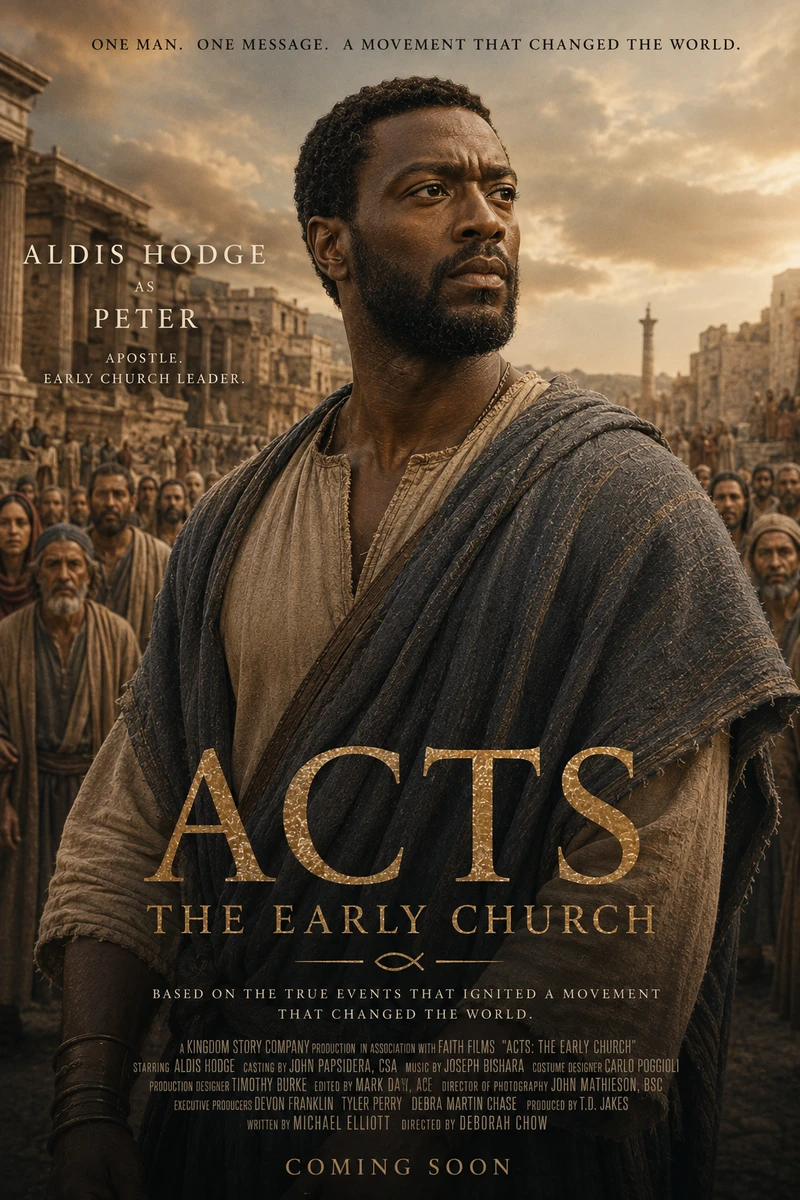
Acts: The Early Church
After the resurrection, twelve ordinary people were given an extraordinary commission. What happened next changed the world. A faithful, sweeping cinematic adaptation of the Acts of the Apostles — the story of the early church from Pentecost through Paul's arrival in Rome. The film is structured in three movements: Jerusalem (Pentecost, the early community, Stephen's martyrdom, the church's first persecution); The Gentile Mission (Philip and the Ethiopian eunuch, Cornelius and Peter, Antioch); and Paul's Journeys (the conversion on the Damascus road, the missionary journeys, the shipwreck, Rome). The film treats the Acts narrative with historical seriousness — the social, political, and religious context of the first century Mediterranean world fully rendered. The miracles are portrayed with the gravity the text gives them: not as special effects but as specific divine interventions in specific human situations. Movement One — Jerusalem Pentecost. Peter's sermon. The community of believers. Stephen. The persecution beginning. Movement Two — The Gentile Mission Philip and the Ethiopian. Cornelius. Antioch. The world opening. Movement Three — To Rome Paul's conversion. The missionary journeys. The shipwreck. Rome. The gospel reaching the world's center.
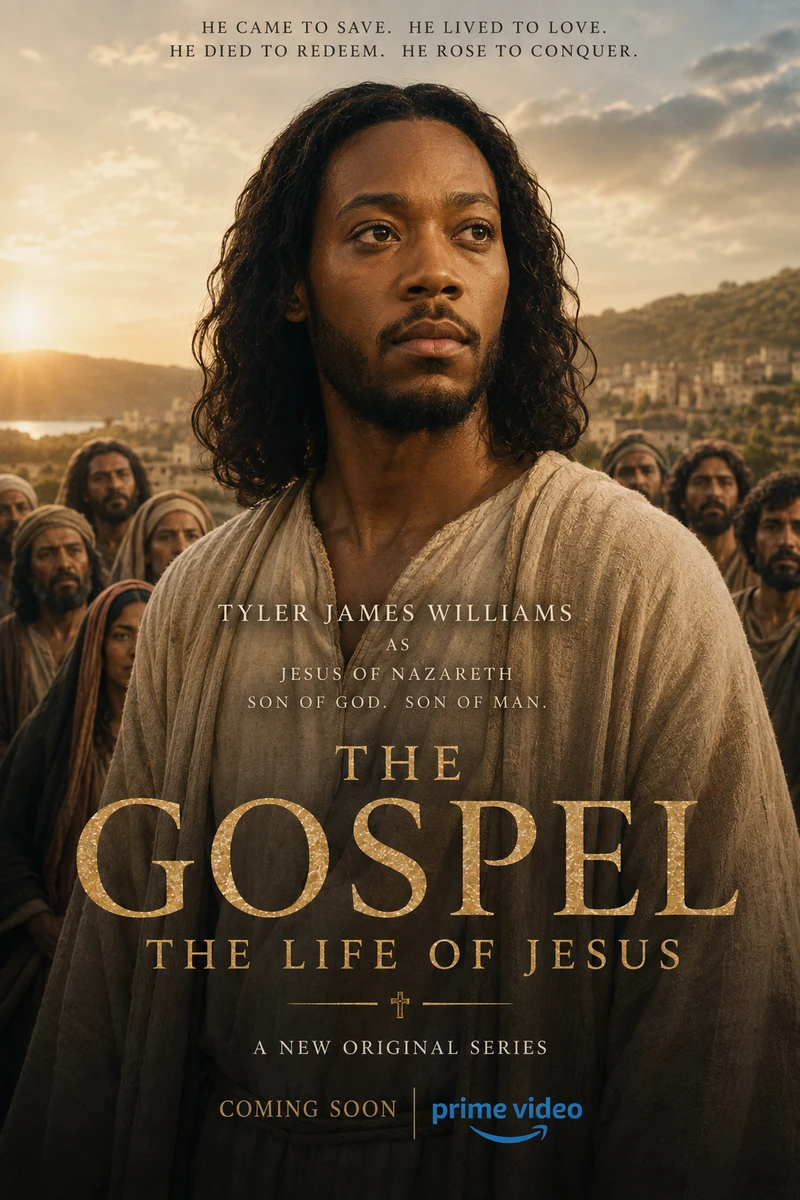
The Gospel: The Life of Jesus
He was born in a stable and died on a cross and changed everything between the two. This is the full account. A four-season telling of the complete Gospel narrative — drawing from all four canonical Gospels (Matthew, Mark, Luke, John) to present the fullest possible account of Jesus's life, ministry, death, and resurrection. Season 1 covers the birth narratives through the beginning of the Galilean ministry. Season 2 covers the Galilean ministry — the Sermon on the Mount, the healings, the parables, the Transfiguration. Season 3 covers the final journey to Jerusalem, the triumphal entry, the cleansing of the Temple, the Last Supper, Gethsemane, and the arrest. Season 4 covers the trials, the crucifixion, the resurrection, the appearances, and the Ascension. The series approaches the Gospel material with reverence and full narrative fidelity, giving the supporting characters — the disciples, the women, the Pharisees, Pilate — the psychological complexity that great drama requires while keeping Jesus at the center of every episode. Season 1 — The Word Made Flesh Annunciation through Baptism. The birth narratives. The Wise Men. The Temple at twelve. The wilderness temptation. The calling of the disciples. Season 2 — The Kingdom is Near The Galilean ministry. The Sermon on the Mount. The healings. The parables. Peter's confession. The Transfiguration. Season 3 — Jerusalem The final journey. The triumphal entry. The Temple. The Last Supper. Gethsemane. The arrest. Season 4 — It Is Finished The trials. The cross. The three hours of darkness. 'It is finished.' The tomb. The resurrection morning. The appearances. The Ascension.
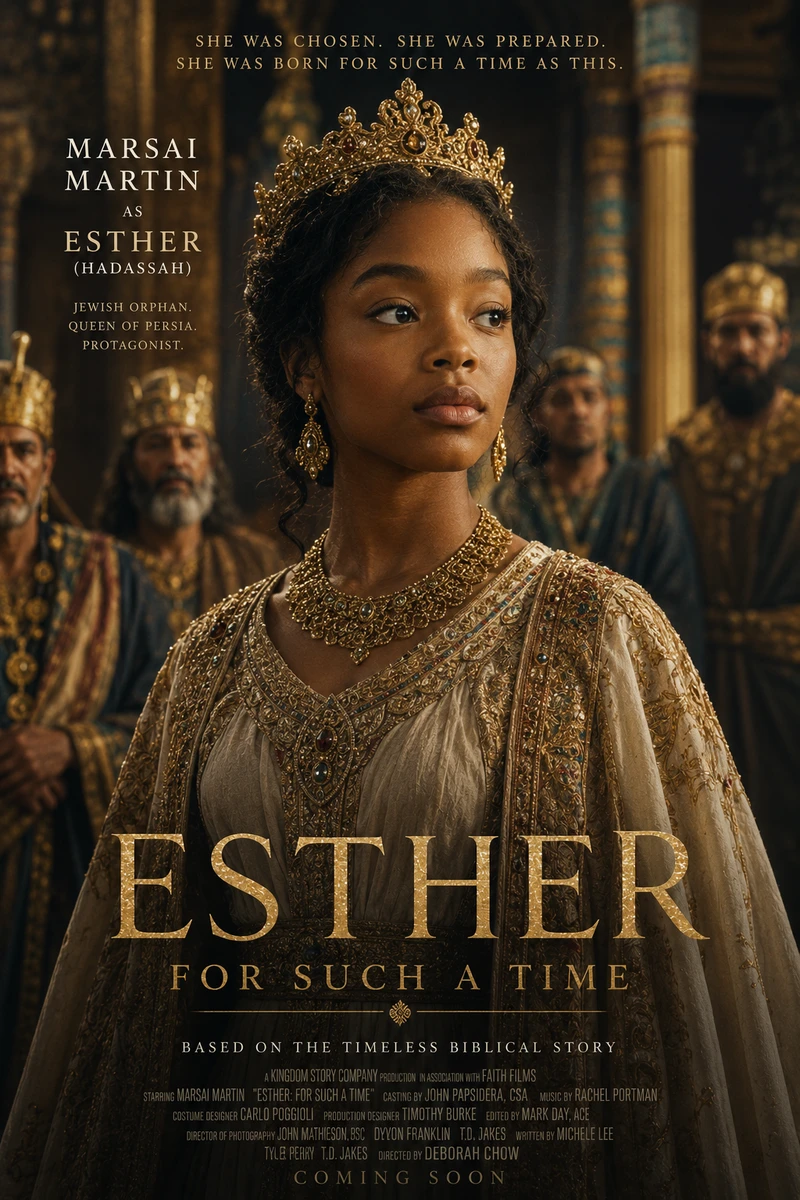
Esther: For Such a Time
She became queen by beauty and favor. She remained queen by courage. The line between the two is the whole of her story. A faithful, politically sophisticated adaptation of the Book of Esther — the story of a Jewish woman who becomes queen of Persia and risks everything to save her people from genocide. The film follows Esther from her Jewish upbringing in her cousin Mordecai's household through her selection for King Ahasuerus's court, her rise to queen, Haman's plot to exterminate the Jewish people, Mordecai's challenge to Esther, her three days of fasting, her extraordinary approach to the king without being summoned, her careful and brilliant management of the situation across two banquets, and the final reversal that saves her people. The film treats the Persian court with full historical richness — the specific visual language of the Achaemenid court, the complexity of political power, and the specific moral weight of Esther's choice. Act One — The Court Esther's selection. The twelve months of preparation. Her concealment of her Jewish identity. Act Two — The Plot Haman's edict. Mordecai's mourning. His message to Esther. The three days of fasting. Act Three — For Such a Time Esther approaching the king. The first banquet. The second banquet. The reversal. Haman's fate on his own gallows.
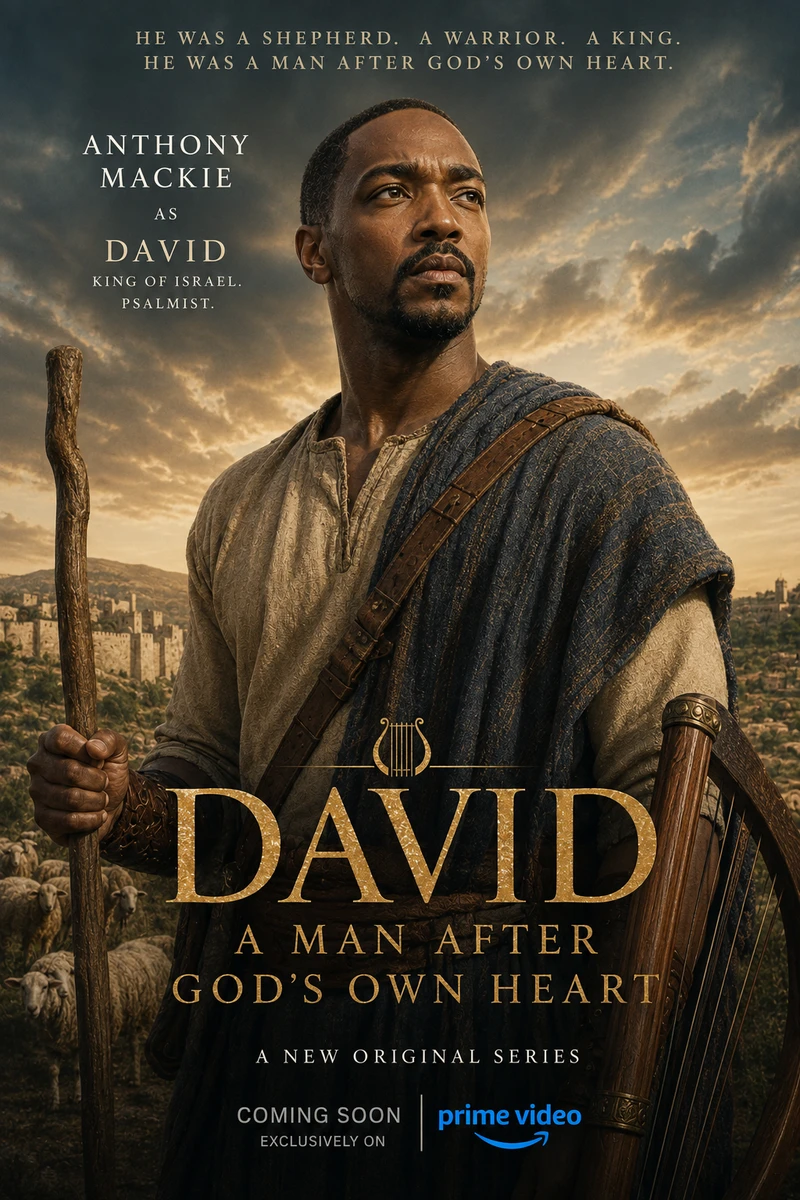
David: A Man After God's Own Heart
Shepherd. Giant-killer. Fugitive. King. Adulterer. Repentant. He was everything a human being can be — and God loved him through all of it. The complete David narrative across four seasons — the most fully realized biography in the Hebrew scriptures. Season 1: David's anointing by Samuel, his service with Saul's court, Goliath, his friendship with Jonathan, Saul's jealousy, his years as a fugitive. Season 2: David as king of Judah, the civil war with Ish-bosheth, his consolidation as king of all Israel, Jerusalem, the Ark, the Davidic covenant. Season 3: Bathsheba, Nathan's confrontation, Absalom's rebellion, David's flight from Jerusalem, the return. Season 4: David's final years, Solomon's preparation for the Temple, David's death and Solomon's succession. The Psalms are woven throughout — specific psalms sung or spoken in the moments that generated them. Season 1 — The Shepherd King Anointing through fugitive years. The friendship with Jonathan. The specific mercy David shows Saul repeatedly. Season 2 — Jerusalem The united kingdom. The Ark. The Davidic covenant. The specific joy of the dancing before the Lord. Season 3 — The Consequences Bathsheba. Nathan. Absalom. The rebellion and the flight and the return. David weeping over his son. Season 4 — The Twilight David's final years. The preparation for the Temple. The succession. The death.
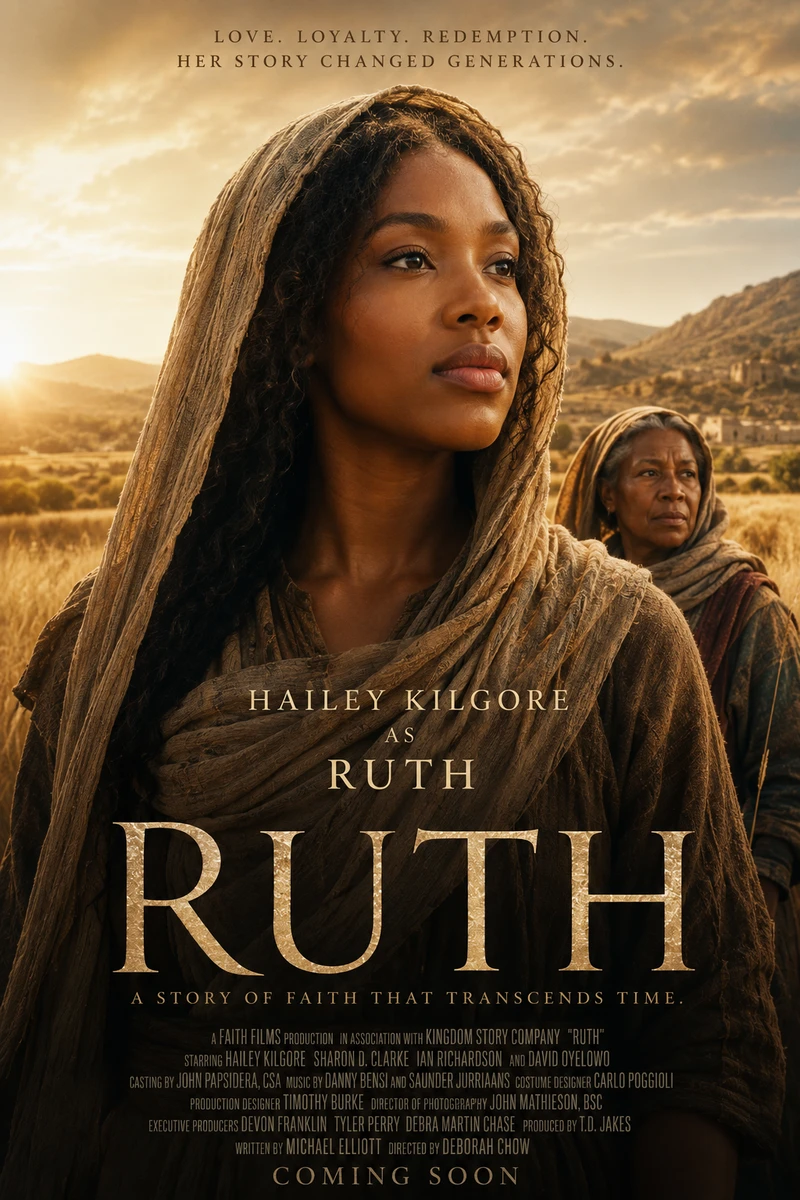
Ruth
She was a Moabite widow who chose her mother-in-law over her homeland. The loyalty she showed would become one of Scripture's most beautiful portraits of love. A faithful, intimate cinematic adaptation of the complete Book of Ruth — one of the Bible's shortest and most perfect narrative works. The film follows Ruth, a Moabite woman widowed in Moab, who chooses to follow her Israelite mother-in-law Naomi back to Bethlehem rather than return to her own family. In Bethlehem, Ruth gleans from the edges of Boaz's fields during the barley harvest. Boaz — a relative of Naomi's late husband, a man of standing and genuine goodness — notices Ruth's loyalty and character. The film follows the harvest season, the growing connection between Ruth and Boaz, Naomi's wisdom in guiding her daughter-in-law toward redemption, and the formal process by which Boaz becomes the kinsman-redeemer. The film is visual poetry about loyalty, belonging, and the specific grace of being seen. Act One — The Road Naomi's departure from Moab. Orpah's return. Ruth's speech. The road to Bethlehem. Act Two — The Harvest Ruth gleaning in Boaz's field. Boaz's notice. The specific generosity he shows that goes beyond legal requirement. Act Three — The Redemption The threshing floor. The morning. Boaz at the gate. The closer kinsman who declines. The sandal. The marriage.
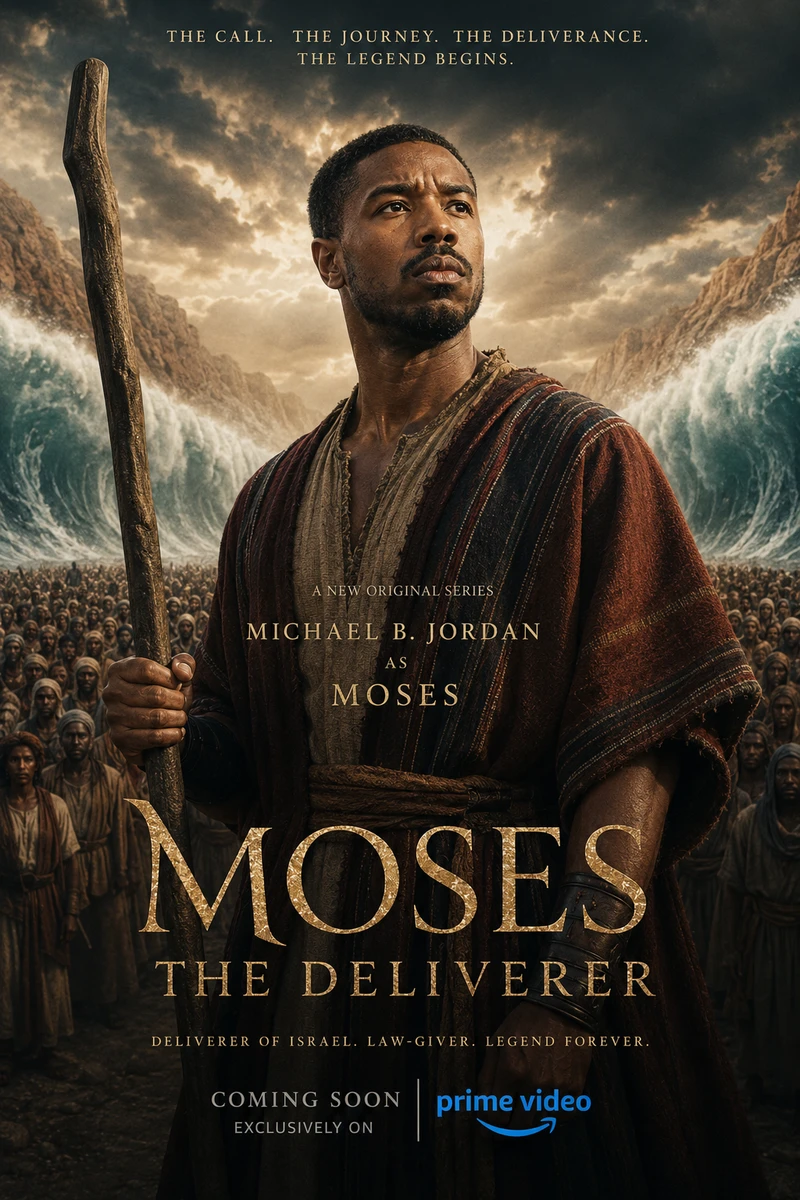
Moses: The Deliverer
He was raised as Egypt's prince. He became Israel's shepherd. Between those two identities was a burning bush and forty years in the wilderness. The complete Moses narrative across three seasons — one of the most significant lives in the Hebrew scriptures and in world religious history. Season 1 covers Moses's birth and survival (the basket in the Nile, Pharaoh's daughter, his upbringing in Pharaoh's court, his killing of the Egyptian overseer, his flight to Midian, Jethro's household, Zipporah, and the burning bush). Season 2 covers the Exodus — the ten plagues, the Passover, the crossing of the Red Sea, the wilderness, Sinai, and the giving of the Law. Season 3 covers the forty years of wilderness wandering — the golden calf, the twelve spies, the generation that died in the wilderness, and Moses's final view of the Promised Land from Nebo. Season 1 — The Prince and the Shepherd Birth through burning bush. Egypt through Midian. The calling that Moses resists and finally accepts. Season 2 — Let My People Go The ten plagues. The Passover. The crossing. Sinai. The Law given and immediately broken with the golden calf. Season 3 — The Wilderness Forty years. The generation that cannot enter. Moses at Nebo, seeing the land he will not enter. The most poignant ending in the Old Testament.
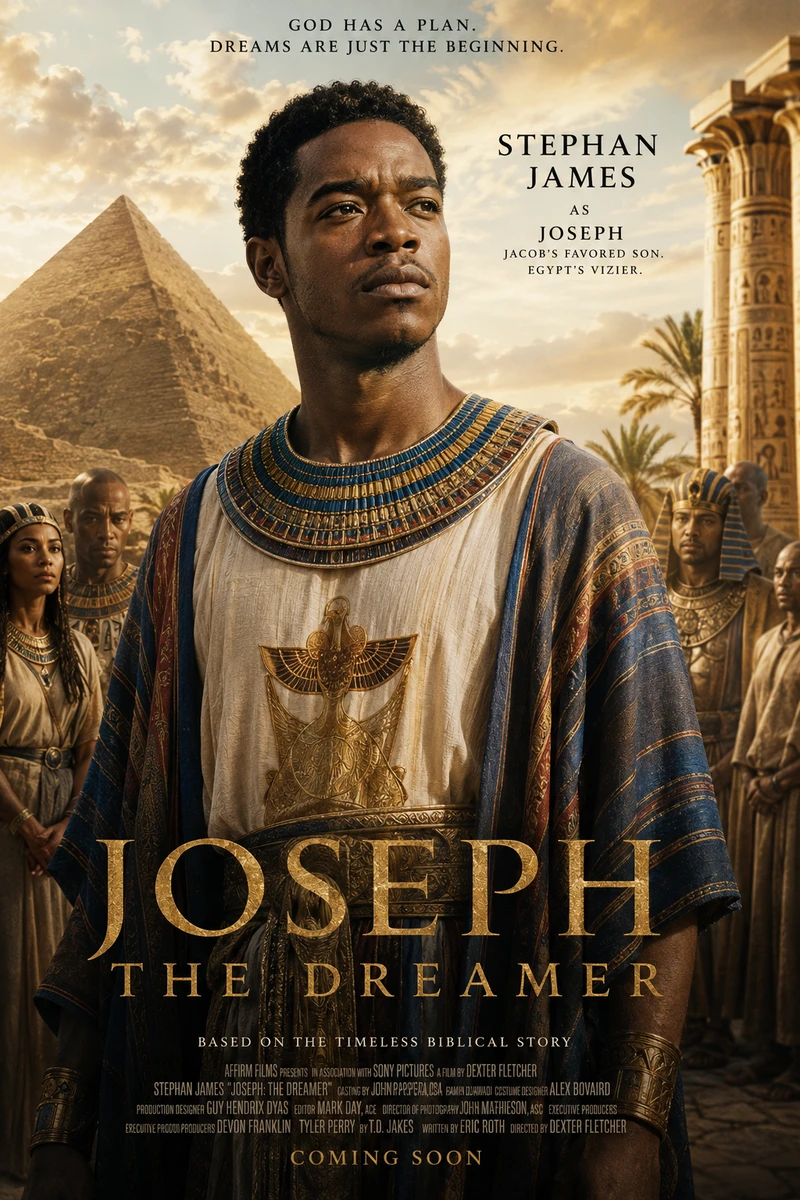
Joseph: The Dreamer
His brothers sold him into slavery. Egypt made him a prince. Forgiveness was the most powerful thing he ever did — and the hardest. The complete story of Joseph — one of the Old Testament's most fully realized narrative arcs. The film follows Joseph from his father Jacob's household through his brothers' betrayal and sale into slavery, his service in Potiphar's house and Potiphar's wife's false accusation, his years in Egyptian prison, his extraordinary gift of dream interpretation, his rise to Pharaoh's right hand as second in command of Egypt, the great famine, his brothers' arrival in Egypt, his revelation of his identity, and the profound, costly reconciliation with the brothers who betrayed him. The film is structured as a story of providence — not simple luck but the specific conviction that God's purposes work through human suffering without excusing those who cause it. Act One — The Coat Jacob's household. Joseph's dreams. The brothers' resentment building. The sale into slavery and the coat dipped in goat's blood. Act Two — Egypt Potiphar's house. The prison. The cupbearer and the baker. Two years of waiting. Act Three — The Vizier Pharaoh's dream. Joseph's interpretation. The rise to power. The seven years of plenty. Act Four — The Brothers The famine. The brothers arriving in Egypt. The revelation. The reconciliation that costs Joseph everything he has held against them.
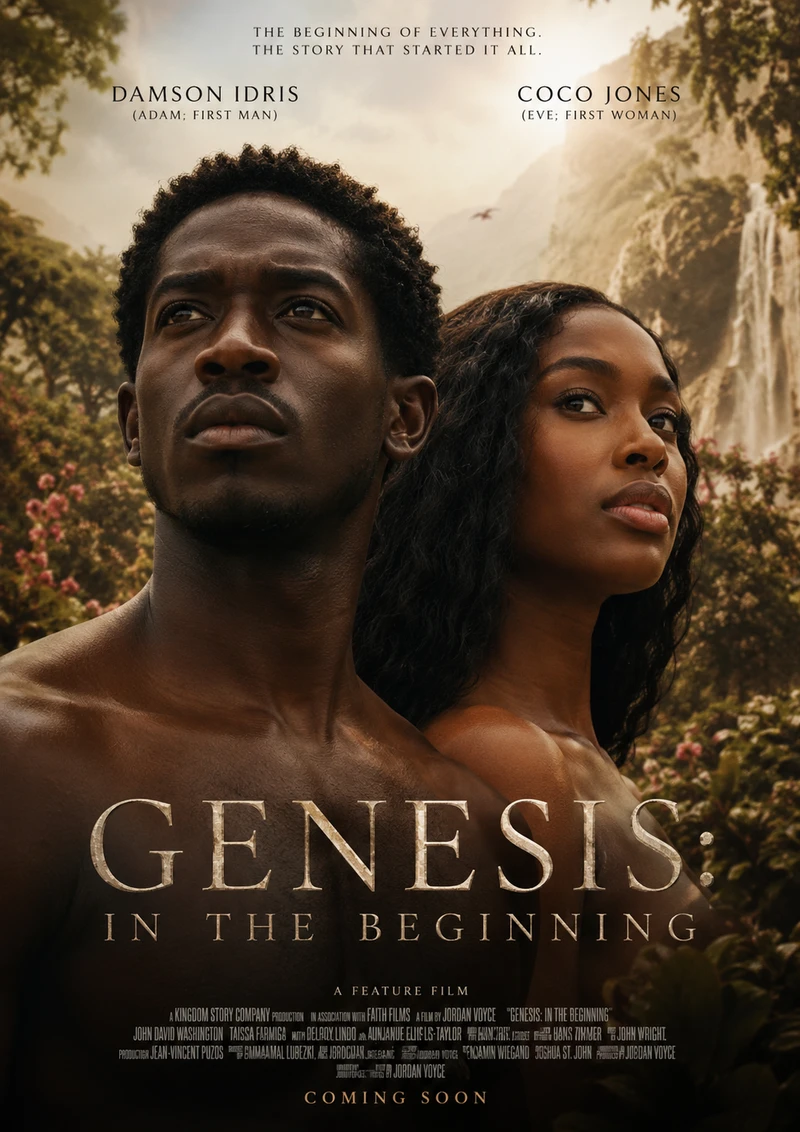
Genesis: In the Beginning
From the first light to the flood — the opening chapters of human history given the visual grandeur they demand. An epic cinematic treatment of Genesis chapters 1 through 11 — from the creation of the world through the Tower of Babel. The film is structured in four movements: Creation (the six days, rendered as visual poetry rather than literalism, the camera finding beauty in each emerging element of the world); the Garden (Adam and Eve in their full complexity — not naive children but the first fully realized humans, their choice presented with the moral weight it deserves); the Fall's Consequence (Cain and Abel, humanity's first murder, the catastrophic grief of parents watching children destroy each other); and the Flood (Noah's ark, presented with archaeological and geographical fidelity to the ancient Near Eastern world, the specific moral weight of divine judgment and mercy held simultaneously). The film's visual language draws from ancient Mesopotamian art — ochre, lapis lazuli, terracotta, the specific palette of the world's oldest civilization. Movement One — The Light Creation rendered as visual poetry. The camera moving through emerging worlds. The seventh day's rest. Movement Two — The Garden Adam and Eve in their fullness. The choice and its immediate consequence. Their exile — not as abandonment but as the beginning of a harder, more human story. Movement Three — The Two Brothers Cain and Abel. The offering. The murder. The mark. The film's most intimate and most devastating section. Movement Four — The Flood Noah building the ark across decades. The rain beginning. The waters. The dove. The rainbow's promise.

The Anchor
She built the most-watched evening news program in American television. The network is being sold. The new owners have a different definition of news. Victoria James, 51, is the anchor and managing editor of the country's most-watched evening news — a position she built over thirty years from field reporter to correspondent to anchor to managing editor. When the network is acquired by a media conglomerate with explicit political alignments, Victoria must navigate the specific war between institutional journalism and new ownership, protecting her program's editorial independence while managing the specific personal cost of fighting an institution that has defined her life. Season 1 — The Sale The acquisition announced. Victoria's response. The first editorial conflict within the first six days. Season 2 — The Fight The systematic pressure on editorial independence. Victoria's coalition and its costs. Season 3 — The Decision Victoria's final choice about the program, the network, and what she does when the institution she built becomes something she cannot serve.

The Senator
She became the first Black female senator from her state. The opposition she faces is not simply political. It is systematic, organized, and deeply personal. Senator Diana Cole, 38, was elected as the first Black female senator from a historically resistant state. Three seasons track her first six years in office — navigating institutional resistance, building genuine legislation, managing a political marriage that is both genuine partnership and strategic alliance, and facing a coordinated campaign to undermine her tenure that escalates from political opposition to something more dangerous. Season 1 — The First Year Diana in the Senate. The institutional resistance. The first legislation she actually passes. Season 2 — The Campaign The coordinated effort against her tenure. Its sources and its funding. Season 3 — The Reckoning Diana's response. Not simply survival but transformation — of herself and of the institution.
The Alchemist
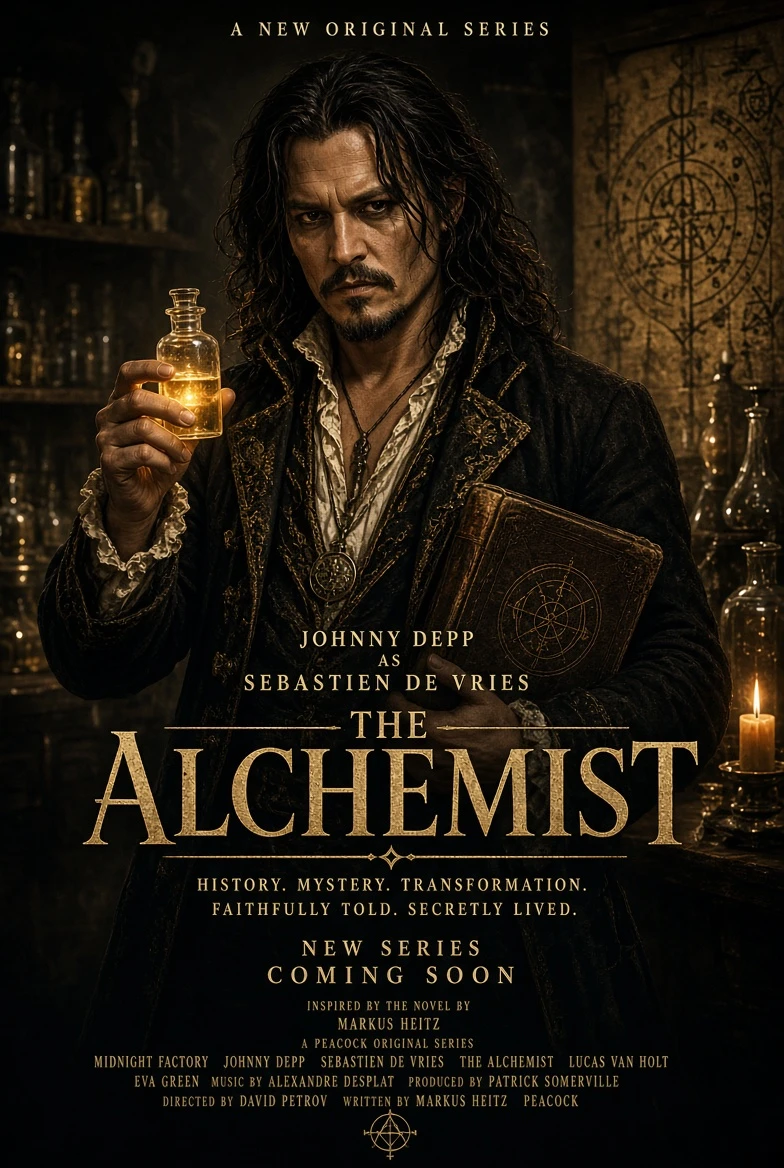
17th century Prague. He claimed to be able to turn lead to gold. He was lying about the gold. He was not lying about everything else. Set in the court of Emperor Rudolf II in Prague (~1600 AD), The Alchemist follows Sebastien de Vries, 60, a Flemish alchemist of genuine and unusual gifts — not the mythological transmutation of metals, but an extraordinary understanding of chemistry, medicine, and the natural world that the 17th century cannot categorize except as alchemy. He is both charlatan (in the specific ways he must be to survive in Rudolf's court) and genuine (in the specific ways his knowledge exceeds his era). The series is a historical mystery with strong philosophical undertones, following Sebastien's investigations of strange deaths in Rudolf's court and his developing friendship with the court physician. Season 1 — The Court Sebastien in Rudolf's court. The first mysterious death. His alliance with Dr. Welser. Season 2 — The Formula The mystery's deeper layer. What Sebastien actually knows and why it is more dangerous than gold.
Outback
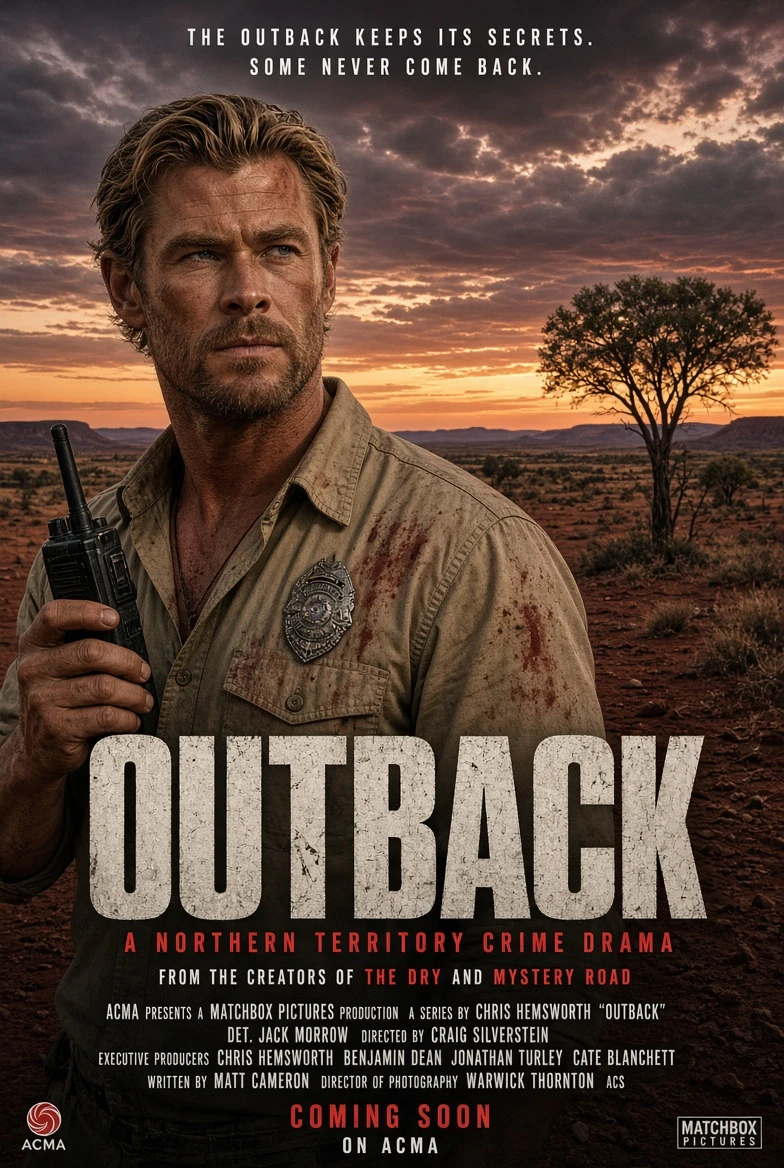
He was the Northern Territory's most effective detective. Then a case connected to his own family's past brought everything down. Senior Detective Jack Morrow, 40, operates out of Darwin — covering the vast, understaffed Northern Territory with a team of three and a caseload that would challenge a department of fifty. Three seasons track his most significant cases while simultaneously developing the personal investigation that eventually consumes everything: a cold case from 1994 that involved his father, the land rights movement, and a disappearance that was never solved because the right people preferred it unsolved. Season 1 — Darwin Jack's cases. The Territory. The cold case file found in a box from the station's archive. Season 2 — 1994 The cold case investigation. What happened to Jack's father and why. Season 3 — The Truth What the truth means for Jack's career, his family, and the Territory's ongoing land rights landscape.

The Model
She spent fifteen years in front of cameras. Now she wants to know what's behind them. Sophia Lund, 33, retires from modelling and moves into fashion photography — discovering that the industry she has inhabited her entire adult life looks completely different from the other side of the lens. Two seasons track her first two years as a photographer, her developing eye, and her complicated relationship with the fashion world she both loves and critiques. The romance with her photography mentor Lars — an older Danish photographer who taught her everything about the other side — develops with the specific tension of professional mentorship becoming something more personal. Season 1 — The Other Side Sophia with a camera for the first time. The industry's surprised reception. Lars's mentorship beginning. Season 2 — The Eye Sophia's own photographic vision emerging. The relationship with Lars. The show she mounts that changes everything.
Ashworth
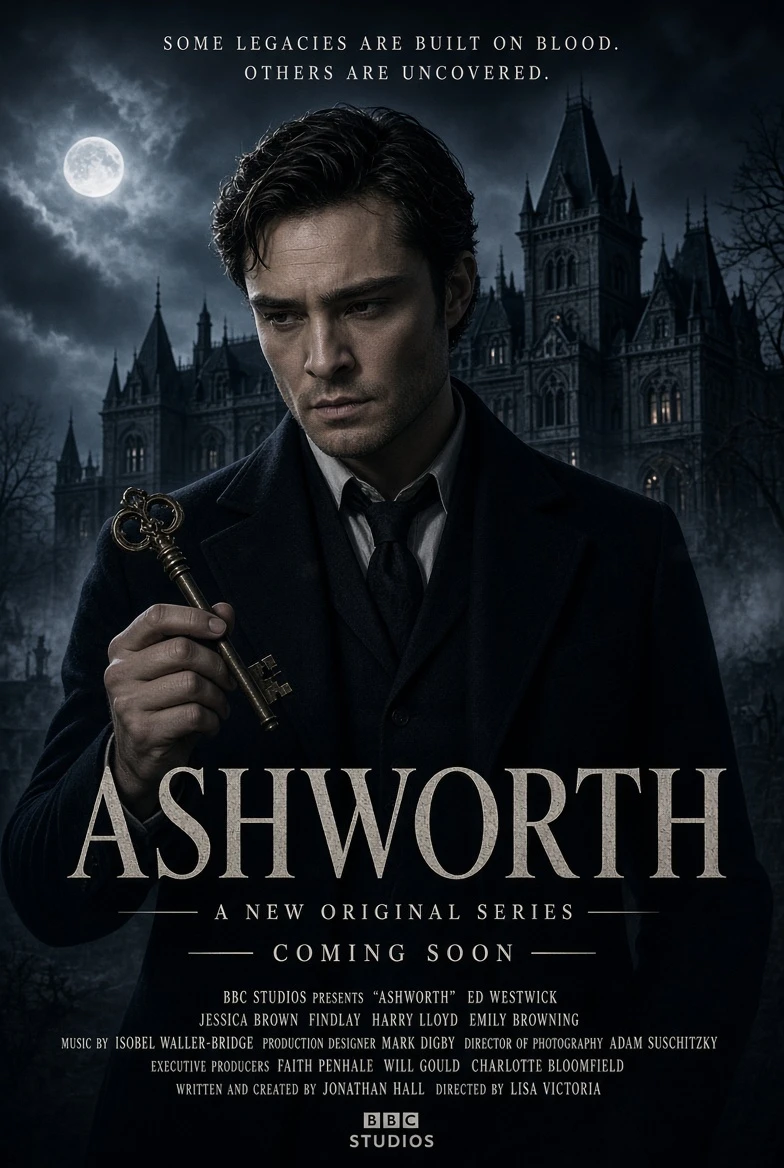
He inherited his family's estate, his family's debts, and his family's very specific curse. The solicitor who handled the estate had known about all three for forty years. Edward Ashworth, 34, returns to his family's decaying Victorian estate in Yorkshire after a decade in London following his estrangement from his father. His father has died, leaving him the estate, its substantial debts, and a solicitor who has been managing the estate's affairs with unusual independence. As Edward begins to investigate the family finances, he discovers layers of concealment stretching back generations — and a specific room in the east wing that every Ashworth since 1847 has kept locked. The series is a Gothic mystery drama with psychological thriller elements, set between the present and extended flashbacks to the Victorian Ashworths who created whatever is being concealed. Season 1 — The Return Edward in Yorkshire. The estate's condition. The solicitor's management. The locked room. Season 2 — The Victorian Ashworths Extended flashback season. What happened in 1847. The decisions that locked the room. Season 3 — The Opening The room opened. The truth confronted. What Edward does with it.

The Negotiator
She has negotiated three international treaties. The fourth one — the one that could end a decade of conflict — is being held hostage by a faction she cannot get to the table. Ambassador Patricia Wells, 50, is the US State Department's most experienced international negotiator — a woman who has been in rooms where the wrong word ends peace processes, and has never once said the wrong word. The film follows the 72 hours of her most critical negotiation: a ceasefire agreement that has been six years in development and is on the verge of collapse when a key faction withdraws. Patricia must get them back to the table using only the resources of conversation, preparation, and the specific weight of her own credibility. Act One — The Withdrawal Amara's faction leaves the talks. Patricia's assessment of why. The 72 hours beginning. Act Two — The Conversations Patricia working through the network of relationships that can get Amara back to the table. Act Three — The Table The negotiation resumed. The agreement reached. The specific word Patricia chose in hour 71 that made the difference.