

Stories by @mr95
4,775 stories

Vanguard
She was the DEA's most decorated field agent. The cartel she's been hunting for six years just made a critical error: they went after her daughter. Agent Zara Mitchell, 32, is the DEA's most effective field operative in the Southwest — brilliant, relentless, and operating with the specific controlled fury of someone who has watched a cartel's expansion for six years. When the Vega cartel's enforcer makes the specific mistake of threatening her daughter as leverage, Zara's response is not fear but acceleration. The film follows 72 hours of Zara operating at full capacity against a cartel whose resources dwarf her agency's, with the specific efficiency of someone who has been planning for exactly this scenario. Act One — The Threat The cartel's mistake. Zara's response. The 72-hour countdown beginning. Act Two — The Operation Zara operating at capacity. The film's extended action sequences. The cartel understanding too late what they started. Act Three — The Resolution Maya safe. The cartel's leadership structure dismantled. Zara's report — filed precisely, on time, in accordance with DEA protocol throughout.

The Watchmaker
He repairs watches that stopped at the moment of someone's death. When a watch arrived that stopped at a time no one could explain, he stopped sleeping. Anatole Beaumont, 62, is a Parisian master watchmaker who has spent forty years in a shop on the Île Saint-Louis repairing watches that stopped working. He has a private philosophy: every stopped watch contains the specific moment it witnessed, and the mechanical failure is the watch's way of refusing to move past it. When a specific watch arrives — one that stopped at a time three hours in the future — Anatole's philosophy becomes something more urgent. The mystery of who sent the watch and why consumes his retirement, his considerable expertise, and eventually draws him into the orbit of a woman — the watch's previous owner — who shares his specific obsession with time. Act One — The Watch Arrives Anatole's shop. The watch. The impossible stopped time. His first night of not sleeping. Act Two — The Investigation Céline's appearance. The watchmaker's guild. The 1923 workshop's history. The physics of what a stopped watch at a future time means. Act Three — 14:47:23 The moment arrives. What Anatole does with the remaining three hours.

The Last Station
Antarctica, 2031. The last research station. Six scientists. One impossible winter. And the station commander who made a decision that saved five of them and will cost him everything when they get home. Commander Alistair Marsh, 40, leads the last remaining Antarctic research station in a world where climate change has made the continent newly critical and newly contested. When a catastrophic storm cuts the station off for an unprecedented eight-month period, Alistair must keep six scientists alive with dwindling supplies. The moral decisions he makes during those eight months — decisions that save five lives at significant cost — are the subject of a parliamentary inquiry when they return. The film moves between the Antarctic isolation and the London inquiry, building two simultaneous portraits: the man who made the decisions and the man being judged for them. Act One — The Storm The storm arriving. The station isolated. Alistair beginning the calculations of what can be sustained. Act Two — The Eight Months The survival, the decisions, James's death. Told in fragments across the inquiry's testimony. Act Three — The Verdict The inquiry's conclusion. Not a legal verdict but a moral one — more complicated and more honest.

The Danish
She moved from Copenhagen to New York for love. The love didn't last. New York did. The Danish bakery she opened in Tribeca to cope with heartbreak is now the city's most beloved problem. Astrid Jensen, 29, opens a Danish bakery in Tribeca six months after her relationship ends and she decides to stay in New York rather than return to Copenhagen. She expected it to be a coping mechanism. She did not expect it to become the city's most reviewed, most discussed, most socially complicated small business — because Astrid bakes exactly what she is feeling each morning, and what she is feeling is complicated, funny, devastating, and delicious. The romance with Marco — an Italian-American food journalist who reviews the bakery in his first week and then cannot stop coming back — develops with the specific warmth of two people who communicate better through food than conversation. Act One — The Opening The bakery's first week. Marco's review. The specific pastry Astrid made the morning of his visit and what it communicated. Act Two — The Menu The bakery's emotional menu developing across weeks. Marco eating his way through Astrid's feelings. Act Three — The Recipe What Astrid bakes the morning she understands she has fallen in love again.

The Broker
He built the city's most sophisticated money-laundering network from a Mayfair office. The detective who caught him had been using his services for three years. Julian Harlow, 35, is the most sophisticated financial criminal in London — a former investment banker who now operates an elaborate money-laundering network for organized crime through a legitimate private equity firm. He is charming, precisely dressed, and operates with such refined patience that the Met's financial crimes unit has been circling him for four years without a single prosecutable piece of evidence. When lead detective Sarah Price finally arrests him on a technicality, Julian's first question in the interview room is a single specific number — the account number of the payments she has been receiving from his network for thirty-six months. The film is a psychological thriller about two people who know each other's crimes completely and must negotiate what happens next. Act One — The Arrest The interview room. Julian's first question. Sarah's silence. The negotiation beginning. Act Two — The Evidence What both sides have on each other. The specific architecture of their mutually assured destruction. Act Three — The Settlement Neither goes to prison. Both lose everything else. The film's most precisely crafted ending.
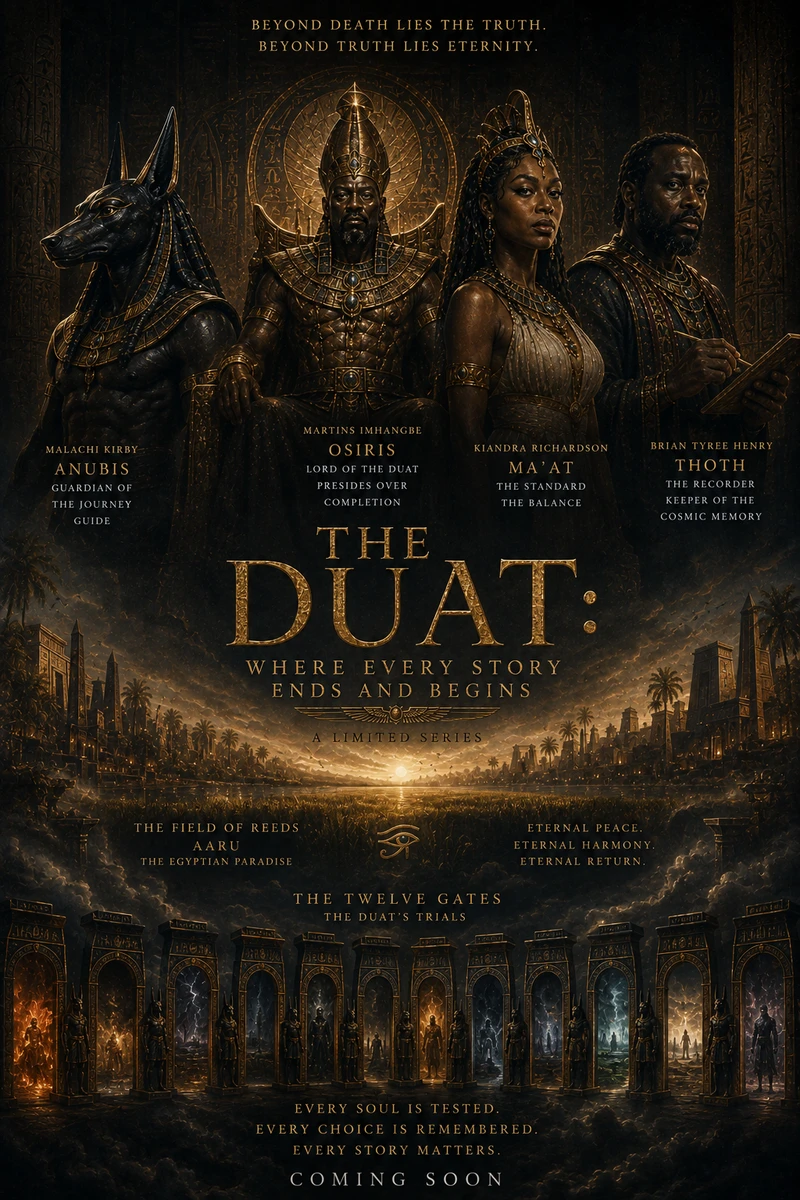
The Duat: Where Every Story Ends and Begins
The Nile Chronicles culminates in the Duat itself — the Egyptian afterlife, shown in its full mythological complexity. Not a simple heaven or hell but a twelve-hour journey (mirroring Ra's night passage) through different realms, each with its own trials and guardians, culminating in the Hall of Two Truths where Anubis weighs the heart. The series functions as a final gathering of all the major divine beings who have appeared across the universe, seen from the perspective of the Duat they ultimately govern. Structured as twelve episodes representing the twelve hours of the Duat, each hour showing a different aspect of the afterlife: the Field of Reeds (Aaru) in its full beauty, the trials of the deceased, the gates guarded by specific divine beings, and the final judgment. The series' most important argument is the most Egyptian: death is not an ending but a transformation. The deceased become the Akh — the glorified spirit — who joins Ra's barque and participates in the cosmic order. The Duat is not a sentence. It is a completion.
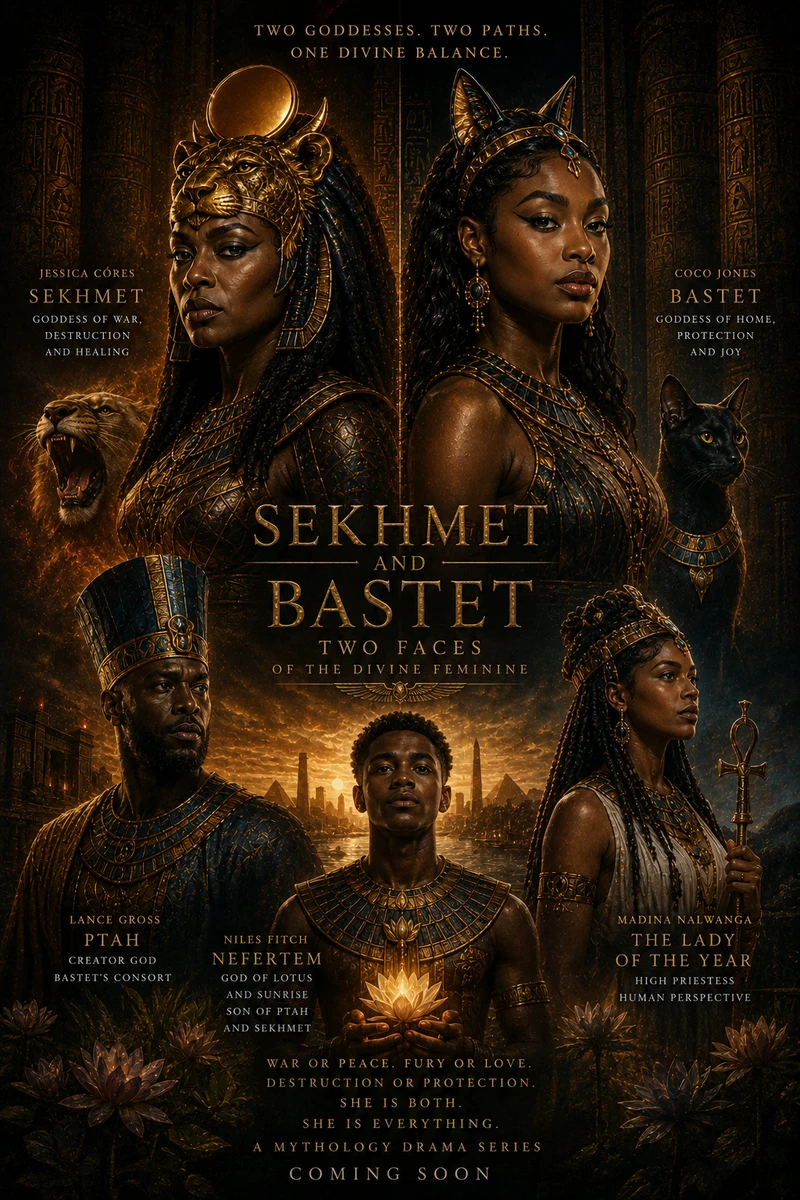
Sekhmet and Bastet: Two Faces of the Divine Feminine
A character-centered series following Sekhmet (goddess of war, destruction, and healing) and Bastet (goddess of home, protection, and joy) — who in Egyptian mythology are understood as two aspects of the same feline divine principle: the Eye of Ra in its destructive aspect (Sekhmet) and its protective aspect (Bastet). The series explores both goddesses as fully realized divine beings whose domains are not opposites but complements, and whose relationship is the most complex sibling dynamic in the Egyptian pantheon. Two seasons track: Season 1 covers the aftermath of Sekhmet's near-destruction of humanity and her transformation through beer and wine (the myth of her calming) into Bastet, and the specific work of both goddesses in serving their respective domains. Season 2 covers the Hittite War's divine dimension and the role both goddesses play in protecting Egypt's borders and people.
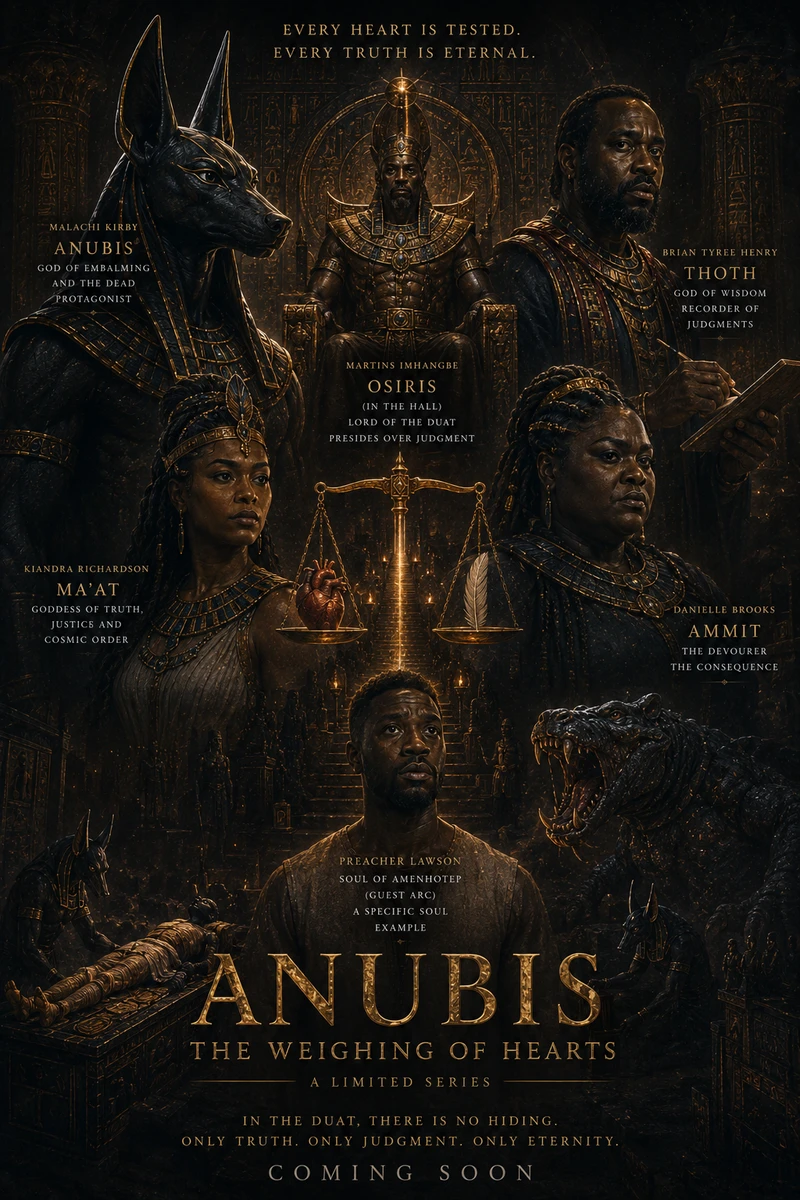
Anubis: The Weighing of Hearts
The definitive portrait of Anubis — the Egyptian deity most misrepresented by popular culture as menacing, when the actual mythological tradition gives us a god of extraordinary gentleness, precision, and care. Anubis guards the process of mummification (which he invented to protect Osiris's body and extended to all humanity as a gift), guides the dead through the Duat, and weighs each heart against the feather of Ma'at in the Hall of Two Truths. The series shows a single divine year in Anubis's governance: the souls he receives, the hearts he weighs, the care he takes with each individual judgment. Guest arcs include historically significant Egyptian figures and mythological mortals. The series' most important formal decision: every soul Anubis receives is treated as a specific individual whose life mattered. He does not process the dead in bulk. He gives each person the attention their life deserves.
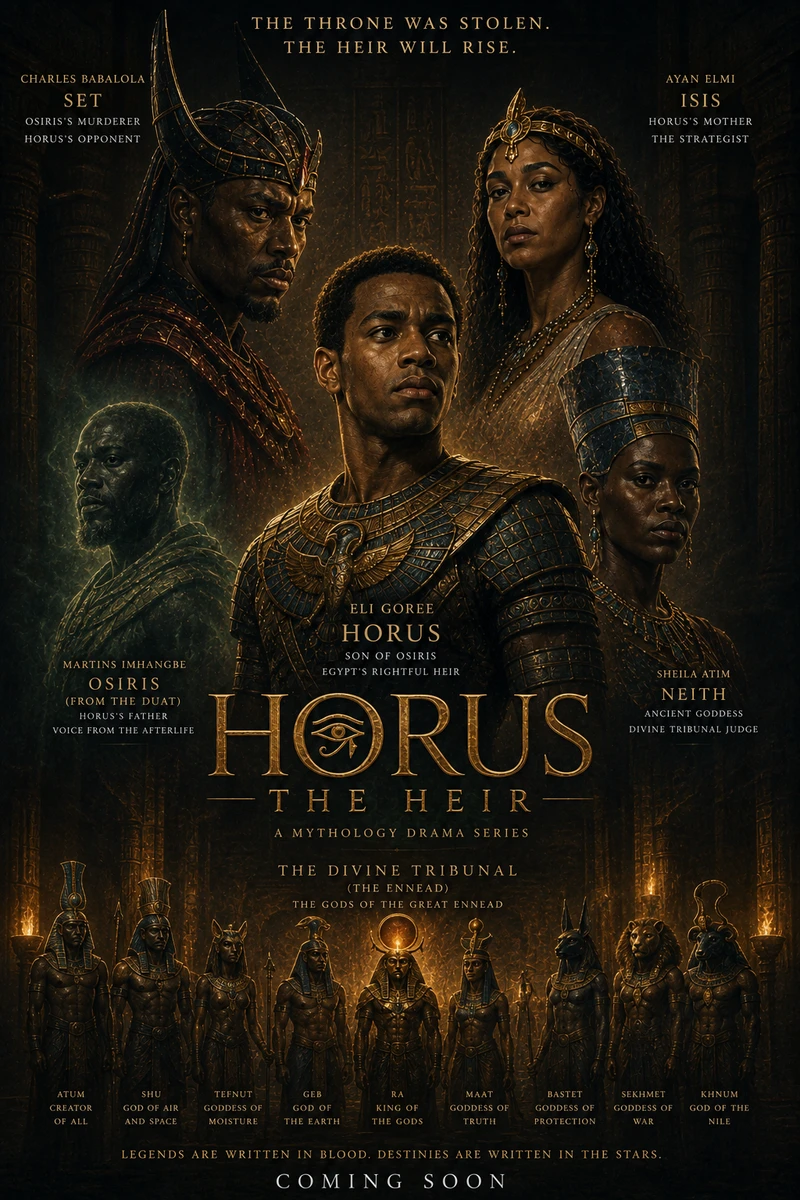
Horus: The Heir
The story of Horus — Osiris and Isis's son, raised in hiding in the papyrus marshes of the Nile Delta, emerging to contest Egypt's throne against his uncle Set. The Contendings of Horus and Set is one of Egyptian mythology's most extensive and formally complex texts — a legal and divine contest that lasts eighty years according to some sources, involving Ra, Thoth, the divine tribunal, multiple trials and battles, and the eventual recognition of Horus as Egypt's rightful king. The series treats the Contendings with full fidelity to the ancient texts while giving each divine being the psychological depth the story deserves. Set's perspective is not ignored — his argument that a warrior-king is better than a child with an inherited claim is not without logic, which the series takes seriously. But the Egyptian sources are clear: Horus prevails because his claim is just, and justice is the fundamental principle of the Egyptian cosmos.

Osiris and Isis: The First Death
The Nile Chronicles' most emotionally rich installment — the story of Osiris and Isis, which is the central myth of Egyptian religion, the foundation of the afterlife tradition, and one of the ancient world's greatest love stories. Osiris, first king of Egypt, murdered and dismembered by Set, reassembled and resurrected by Isis, becoming lord of the Duat. The series treats this not as simple tragedy but as the myth that explains why death can be transcended, why resurrection is possible, and why love — specifically Isis's love — is the most powerful force in the Egyptian cosmos. Two seasons cover the full myth: Season 1 is Osiris's reign, his murder by Set, and Isis's search across Egypt to recover his pieces. Season 2 is the resurrection, the birth of Horus, Osiris's choice to rule the Duat rather than return to the living world, and the establishment of the afterlife as humanity's great promise.
Ra: The Eternal Journey
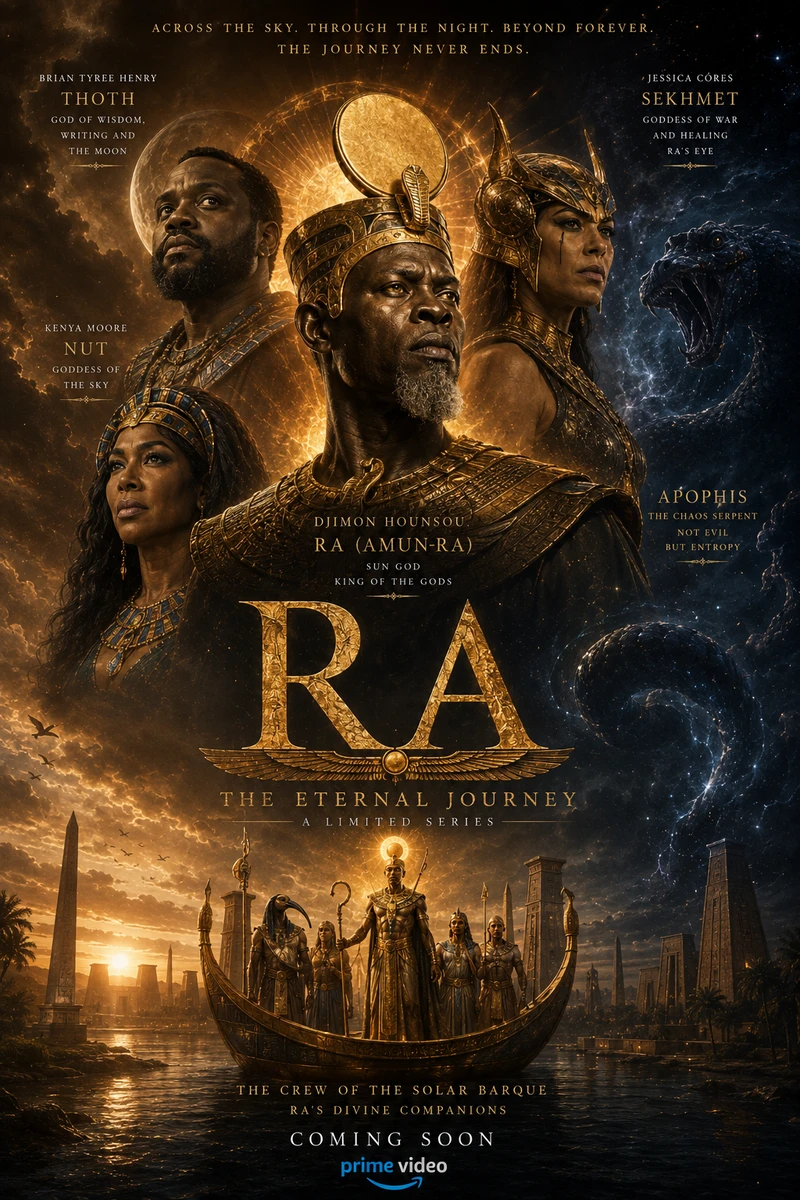
The Nile Chronicles opens with its most cosmically ambitious installment — the daily journey of Ra, the sun god, whose solar barque crosses the sky by day and descends through the twelve hours of the Duat by night, battling Apophis (the serpent of chaos) to ensure the sun rises again. The series treats Ra not as a simple solar deity but as the most exhausted, most committed divine being in Egyptian mythology — he has made this journey every single day since creation and will make it every day until the end of the cosmos, because if he fails, everything ends. This is not dramatized as glory. It is portrayed as the specific, profound weight of the most necessary work imaginable. The series also covers Ra's original kingship over gods and men, his aging (in the myth where humanity plots against him as he grows old), and the creation of Sekhmet from his Eye — one of Egyptian mythology's most morally complex stories.
Ragnarök: The Twilight
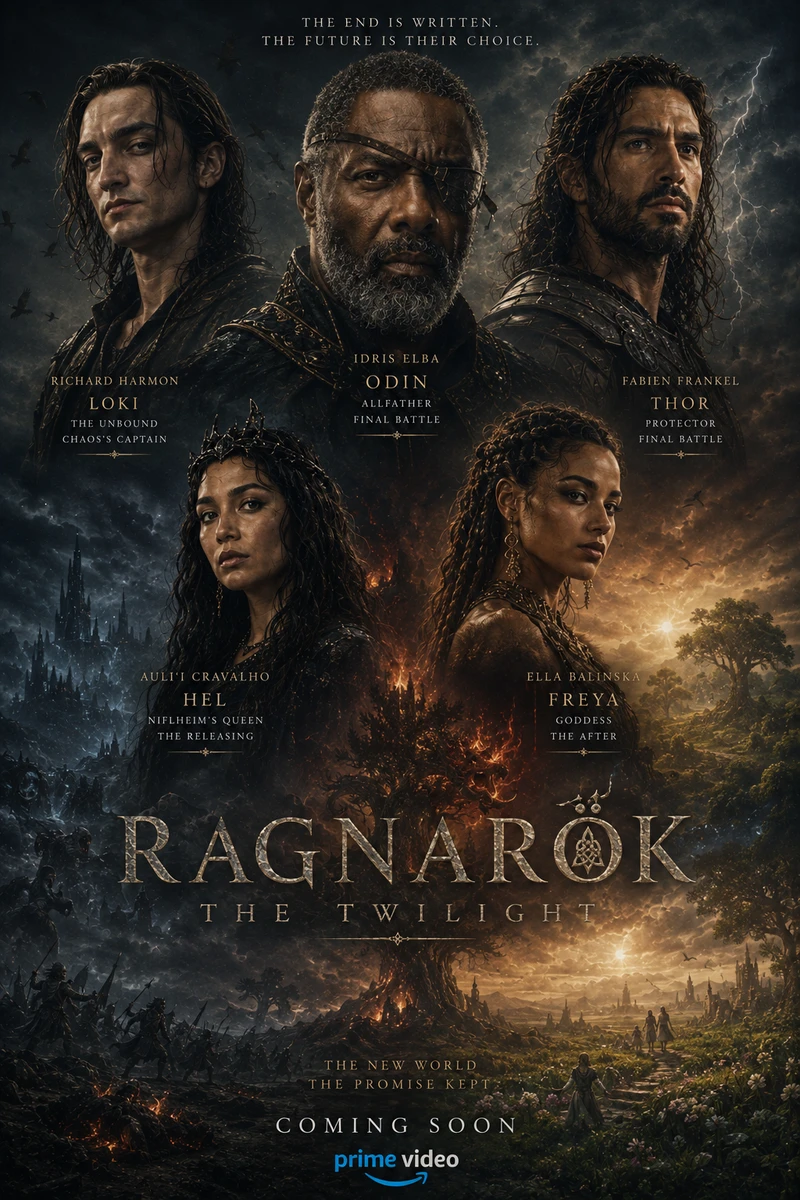
The Norse Chronicles culminates in Ragnarök — the twilight of the gods, the end of the world as the Norse sources describe it, and the most emotionally devastating finale ever conceived for a mythology series. The series follows the Fimbulwinter (three years of winter without summer), the breaking of Loki's bonds, the gathering of the forces of chaos, and the final battle at Vígríðr. Every major character from across the six series returns. The key mythological battles are all honored: Odin versus Fenrir, Thor versus Jörmungandr, Freyr versus Surtr (without his sword, which he gave away for love). Crucially, the series also shows the Eddic promise: the world is reborn after Ragnarök. Baldr and Höðr return from the dead. A new, green world emerges from the waters. Hel's role in the ending is the series' most significant final statement — she releases the dead of Niflheim for the final battle, not from malice but from the understanding that the boundary she has maintained is dissolving, and she will hold it with dignity until the last possible moment.
Hel: The Just Kingdom
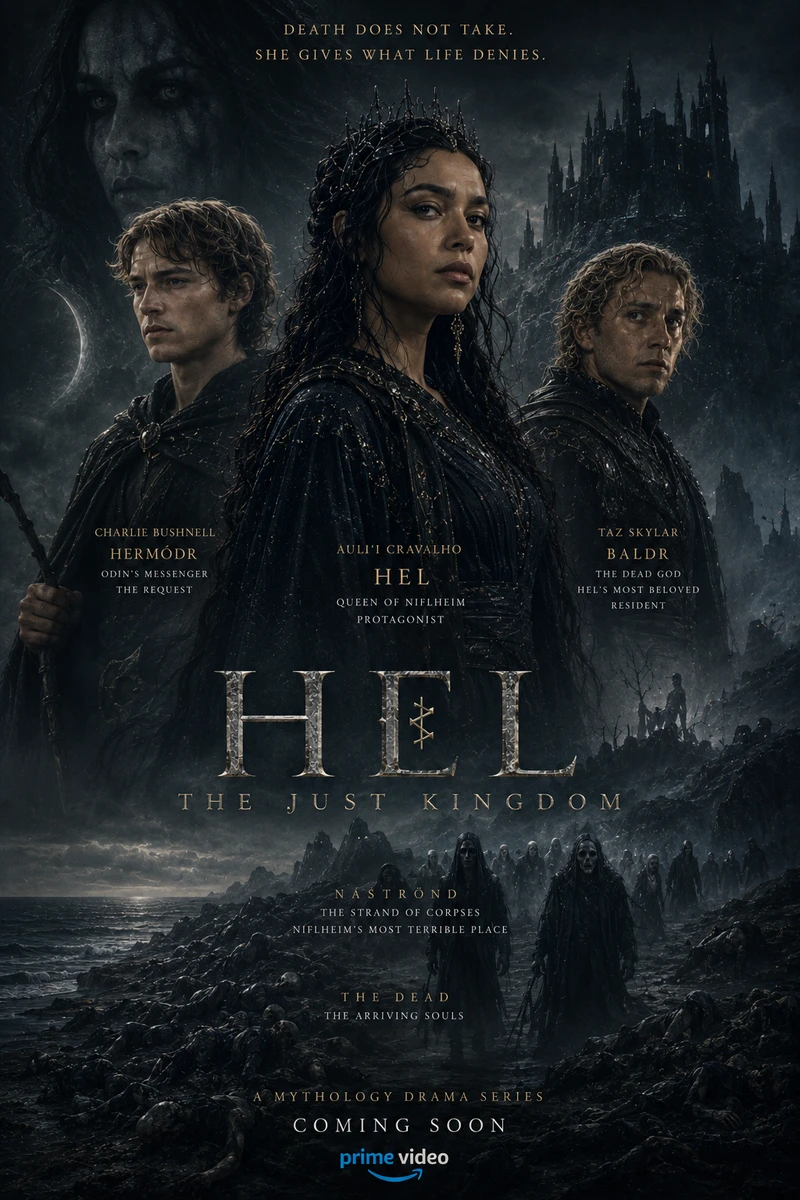
The Norse Chronicles' most important corrective and its most emotionally resonant installment — the definitive portrait of Hel as she actually appears in Norse sources. Hel is appointed by Odin to govern Niflheim, the realm of those who die of old age, sickness, and accident. She accepts this appointment with the quiet gravity that characterizes everything she does. Her realm is not a punishment — it is the destination of most of humanity, and she governs it with scrupulous fairness. The series shows a single year in Hel's governance: the souls she receives, the judgments she makes, the specific loneliness of being the boundary between living and dead. The great mythological event of the series is Hermóðr's mission to recover Baldr — the only living being who comes to Niflheim to ask for something back. Hel's response to his request is the series' most morally complex moment: she does not refuse out of malice but out of the specific integrity of her governance.

Loki: The Shapes of Things
The Norse Chronicles' most psychologically complex installment — a series that finally treats Loki with the full ambiguity the Eddas actually give him. Loki is not evil at the series' start. He is contradictory — simultaneously the Æsir's most useful companion and the source of their greatest disasters, not from malice but from a nature that cannot hold a single shape for long enough to be trustworthy. Two seasons track Loki across the great Loki myths: his various shape-changes and their consequences, the birth of his three extraordinary children (Hel, Jörmungandr, Fenrir) and Odin's consequential decision about each of them, his increasing estrangement from the Æsir as his disasters outweigh his helps, and finally Baldr's death — the mythological event that makes Loki's binding inevitable. The series neither excuses Loki nor condemns him. It simply shows a being whose nature made tragedy inevitable, and asks whether that makes it his fault.
Thor: The Protector
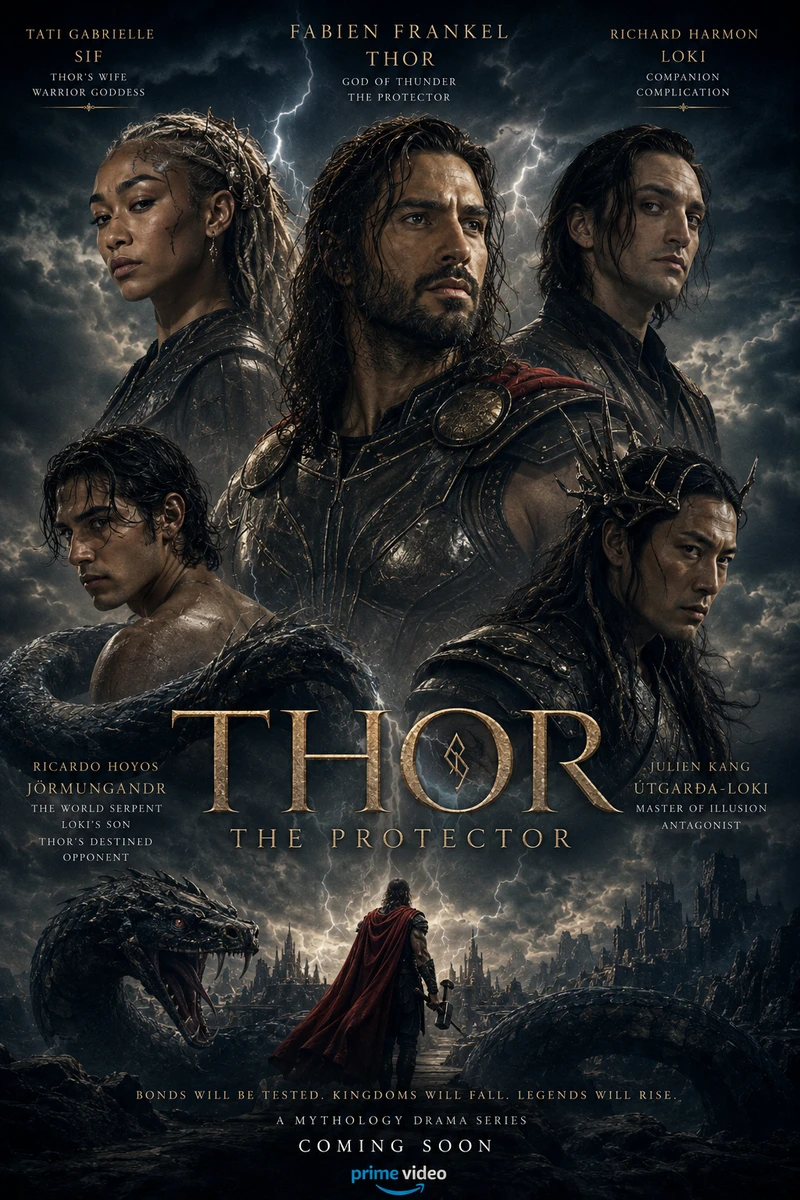
A three-season series following Thor across the great Norse myths — not as a simple warrior but as a complex divine protector whose strength is the most obvious thing about him and whose humanity (in the sense of genuine feeling) is the most important. Three seasons track the major Thor myths: Season 1 covers the theft of Mjölnir and Thor's disguise as a bride (the Þrymskviða), his expeditions to Utgard, and his first encounters with Jörmungandr. Season 2 covers the building of Asgard's walls and the consequences of Loki's schemes. Season 3 is the most emotionally demanding — Thor's growing awareness of Ragnarök and the specific grief of a god who cannot protect the people he loves against fate itself. The romance across all three seasons is with Sif — a relationship the series treats as genuine partnership rather than simply divine marriage.
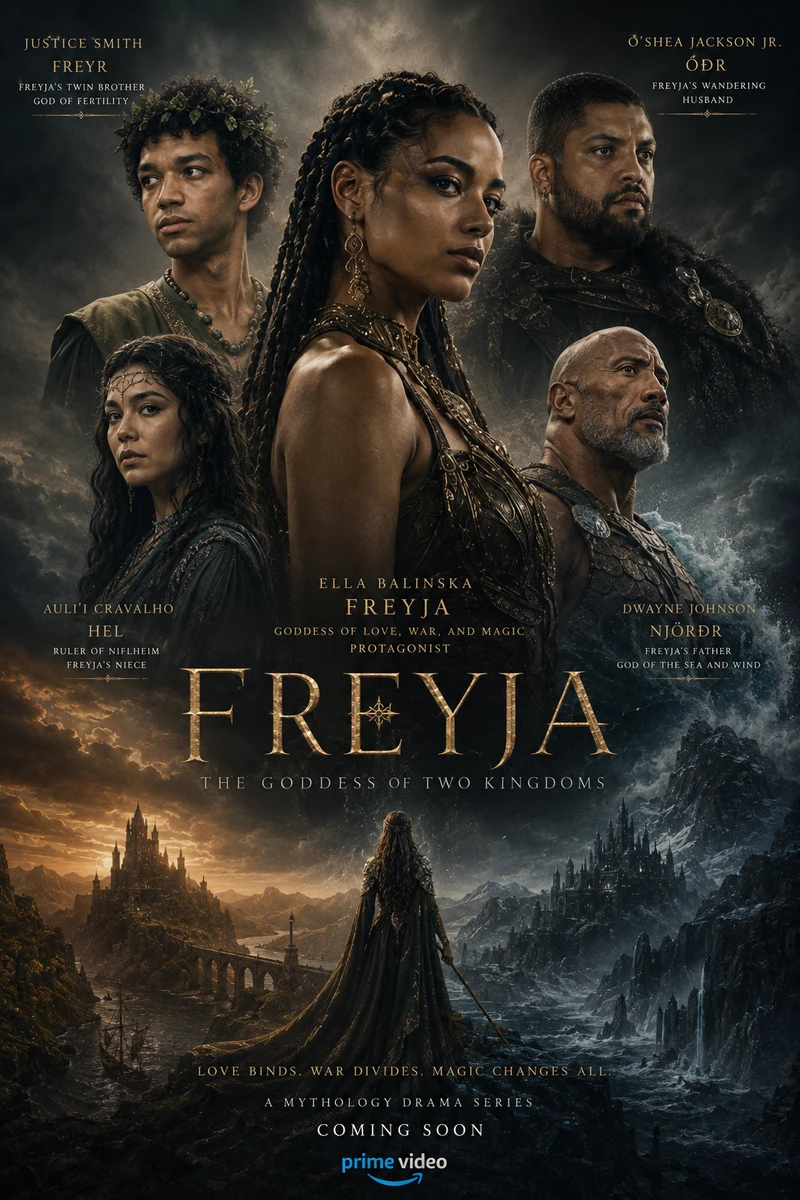
Freyja: The Goddess of Two Kingdoms
A character-centered limited series placing Freyja at the universe's center — exploring a goddess whose domain is far more complex than popular culture acknowledges. Freyja rules love, beauty, fertility, war, death, and seiðr magic simultaneously, and the series argues that these are not contradictions but a unified vision of female divine power. The series explores multiple storylines across its two seasons: the First Aesir-Vanir War and its resolution through hostage exchange (Freyja, Freyr, and Njörðr given to the Æsir, Hœnir and Mimir given to the Vanir); Freyja's search for her missing husband Óðr across the Nine Worlds (crying golden tears that become the gold in the earth); her teaching of seiðr magic to Odin; and her role as commander of the Valkyries who choose half the battle-slain. Season 2 deepens into her relationship with Hel — her niece, Loki's daughter — which is one of the universe's most unexpected and moving secondary relationships.
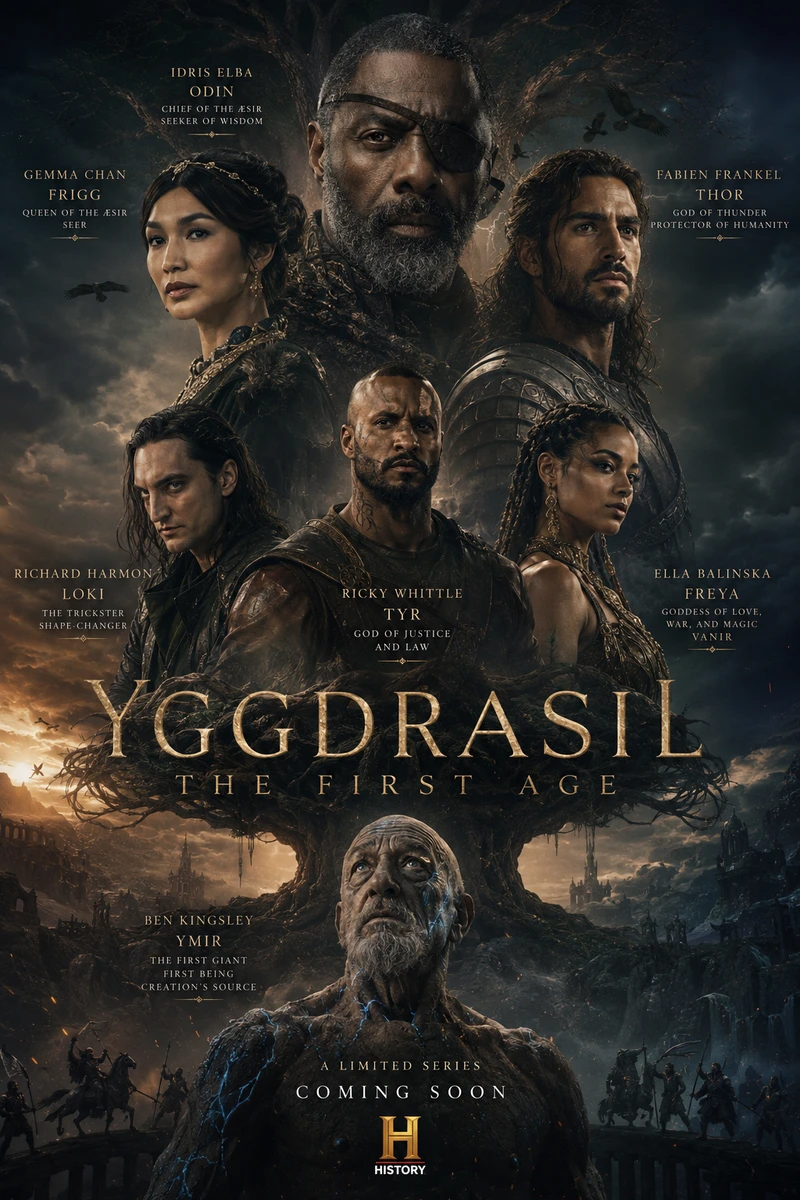
Yggdrasil: The First Age
The Norse Chronicles opens at the cosmogony itself — the creation of the Nine Worlds from the void of Ginnungagap. This series is the universe's most formally ambitious installment, structured as a mythic epic rather than a conventional narrative. It covers the emergence of Ymir (the first giant), the creation of the gods, the construction of the Nine Worlds from Ymir's body, the forging of the World Tree Yggdrasil, and the first age of the gods — including Odin's self-sacrifice on the World Tree to gain the runes, the first war between the Æsir and Vanir, and the establishment of the Nine Worlds' governance. The series treats Norse cosmology with absolute fidelity to the Eddas while giving each divine being the psychological depth of a fully realized character. Special attention is paid to the portrayal of Odin: not as a simple all-father but as a profoundly mortal god who makes difficult choices with full knowledge of Ragnarök approaching.
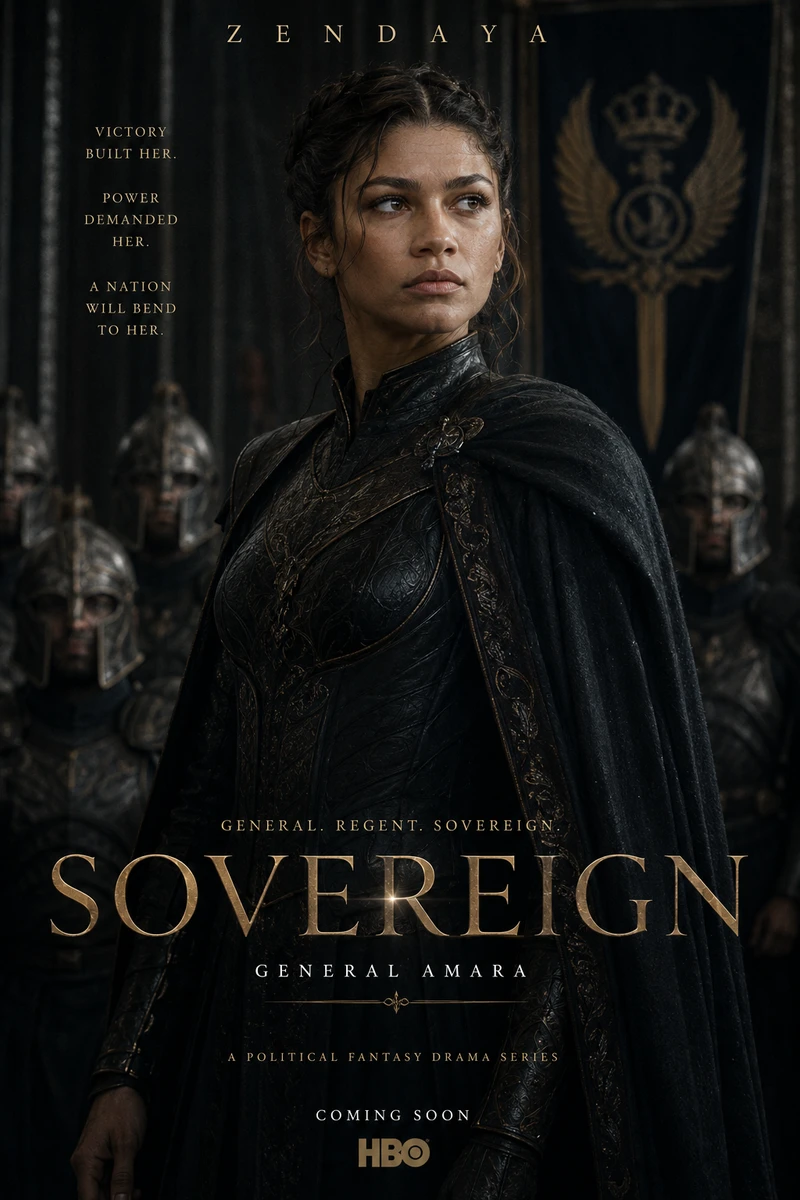
Sovereign
Set in a fictional African-inspired kingdom at a moment of political transformation — the old system of military governance giving way to constitutional reform — Sovereign follows General Amara, 30, who has spent twelve years winning wars for her kingdom and is appointed by the dying king as regent in the transition period. She is the most effective military leader in a generation and has no idea how to govern without fighting. Three seasons track her transformation from general to sovereign, her political education across the specific terrain of democratic reform, and her relationship with Emeka — the constitutional scholar whose vision of what the kingdom could be is the destination Amara is being asked to lead everyone toward.

Obsidian
Valentina Cruz, 28, spent six years as Los Angeles's most sophisticated art thief — never taking anything with a legitimate original owner, always targeting stolen works being laundered through legitimate sales. The FBI's art crime unit finally catches her on a procedural error she made deliberately, because she wants a deal: her expertise in exchange for a sanctioned role tracking the network that taught her everything. Two seasons track Valentina inside the FBI task force, her relationship with lead agent James Park developing across the specific tension of someone who is simultaneously consultant and suspect.

Isabela
Set in a magical world inspired by Colombian myth, Isabela follows Isabela Madrigal, 19, a young woman with the gift of making things grow — plants, flowers, crops — who leaves her village after her gift accidentally destroys something irreplaceable. Her journey across a magical continent to find the person who can help her understand her gift becomes a two-season bildungsroman about power, responsibility, and what it means to make something beautiful when you know it can also destroy.