

Stories by @mr95
4,775 stories
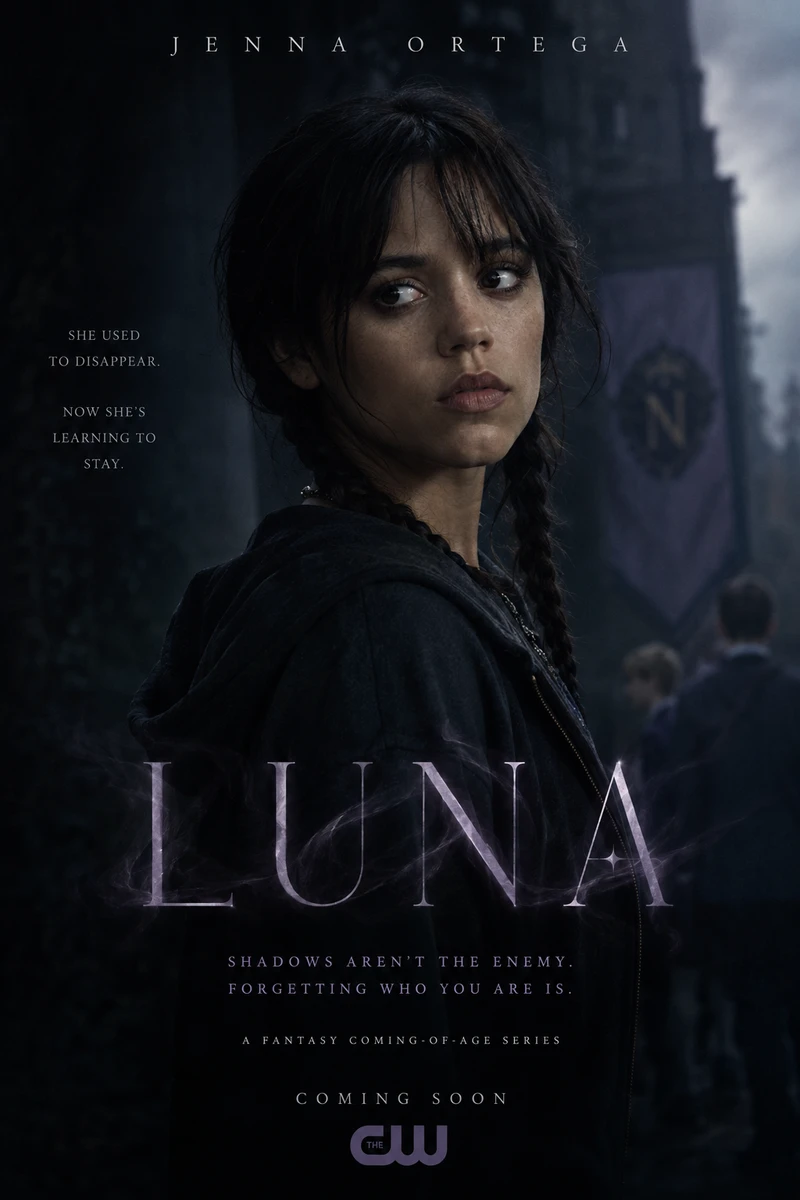
Luna
Luna Vega, 17, is a Mexican-American teenager in Los Angeles who discovers at fourteen that she can manipulate shadow — not darkness itself, but the shadows that objects cast, which she can detach, shape, and move. She has spent three years hiding this ability. Three seasons track her from hiding to understanding to choosing: Season 1 is her encountering others with similar gifts; Season 2 is the government agency that wants to study (and control) those gifts; Season 3 is the decision about what to do with power you didn't ask for and cannot return.
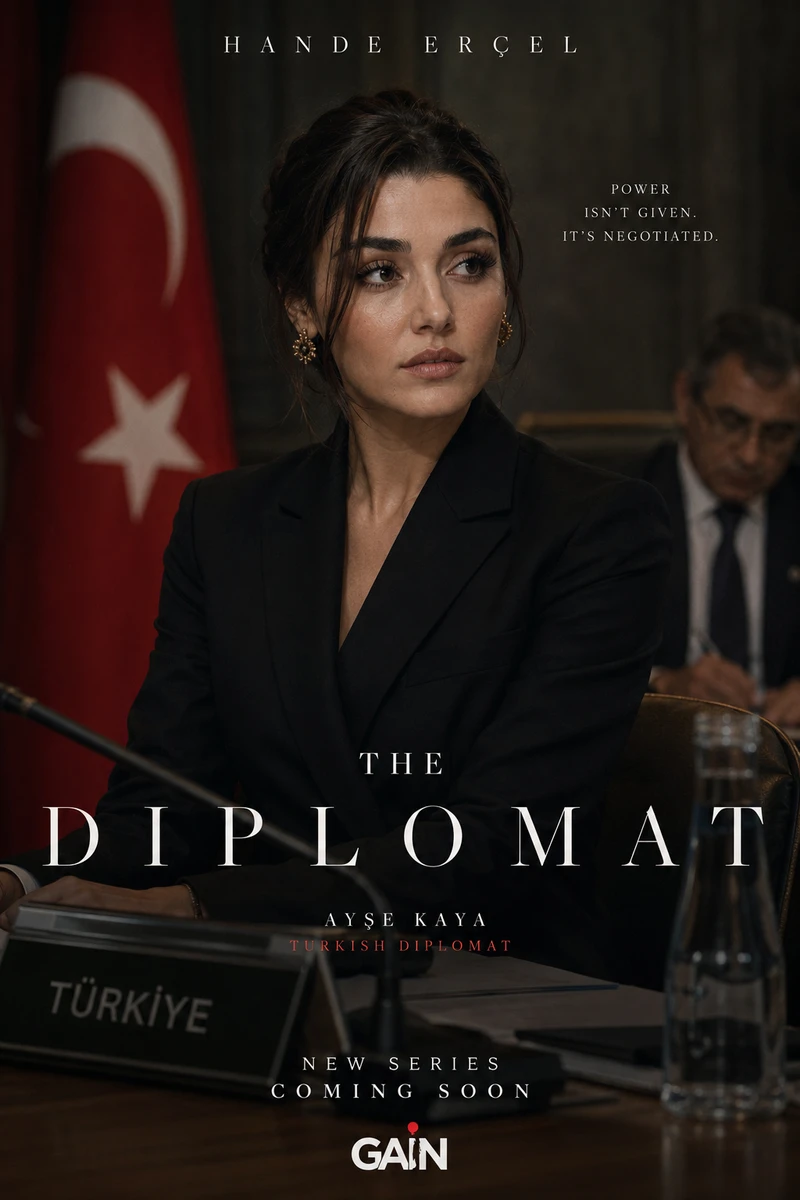
The Diplomat
Ayşe Kaya, 31, is assigned as Turkey's cultural attaché in London — officially a prestigious posting, actually a consequence of her refusal to sign off on a dossier she believed was falsified. In London, she builds a network of contacts and intelligence while pursuing the diplomatic work officially assigned to her, uncovering a financial network that connects three European governments and two Turkish institutions. The romance with British intelligence officer Robert Ashby develops across two seasons with the specific tension of professional opposition.
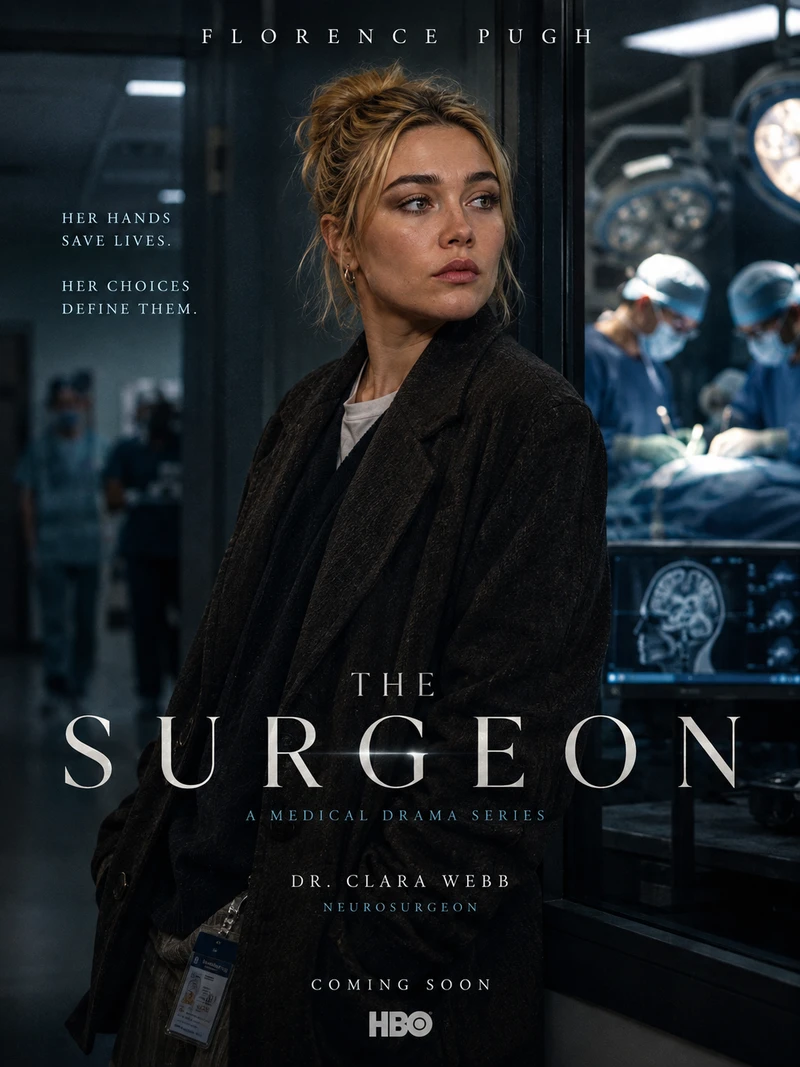
The Surgeon
Dr. Clara Webb, 31, is the finest neurosurgeon at her institution — and the most interpersonally catastrophic colleague anyone has ever worked with. Not cruel — simply unable to modulate social interaction in ways that don't include complete honesty, which in a hospital environment is equally devastating. Two seasons track Clara across a case that tests every limit of her technical capability (Season 1) and a personal crisis that requires her to access emotional resources she has never developed (Season 2). The romance with Dr. James Okafor — an anaesthesiologist whose patience is architectural and whose sense of humor is the only thing that makes Clara's honesty survivable — develops with the specific rhythm of two people whose professional compatibility runs six months ahead of their personal one.
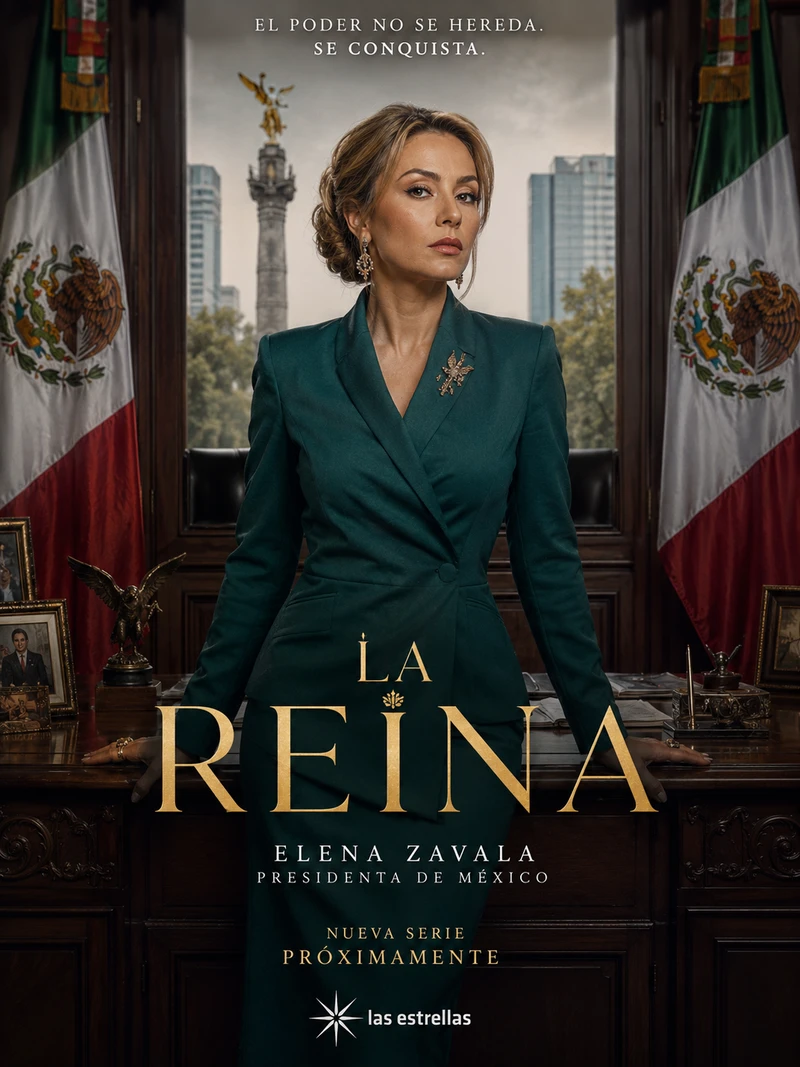
La Reina
Elena Zavala, 48, is elected Mexico's first female president following a campaign built on anti-corruption and judicial reform. Three seasons track her administration: Season 1 is the first year — the machinery of government, the specific resistance of institutions to reform, the personal cost of the presidency. Season 2 is the political crisis — a cartel escalation that forces Elena to choose between military response and negotiated settlement in ways that divide her coalition. Season 3 is the reckoning — a corruption investigation that reaches people she trusted completely. The romance across all three seasons is with her chief of staff Rodrigo — a twelve-year professional relationship that the presidency finally makes impossible to keep entirely professional.
The Speed of Light
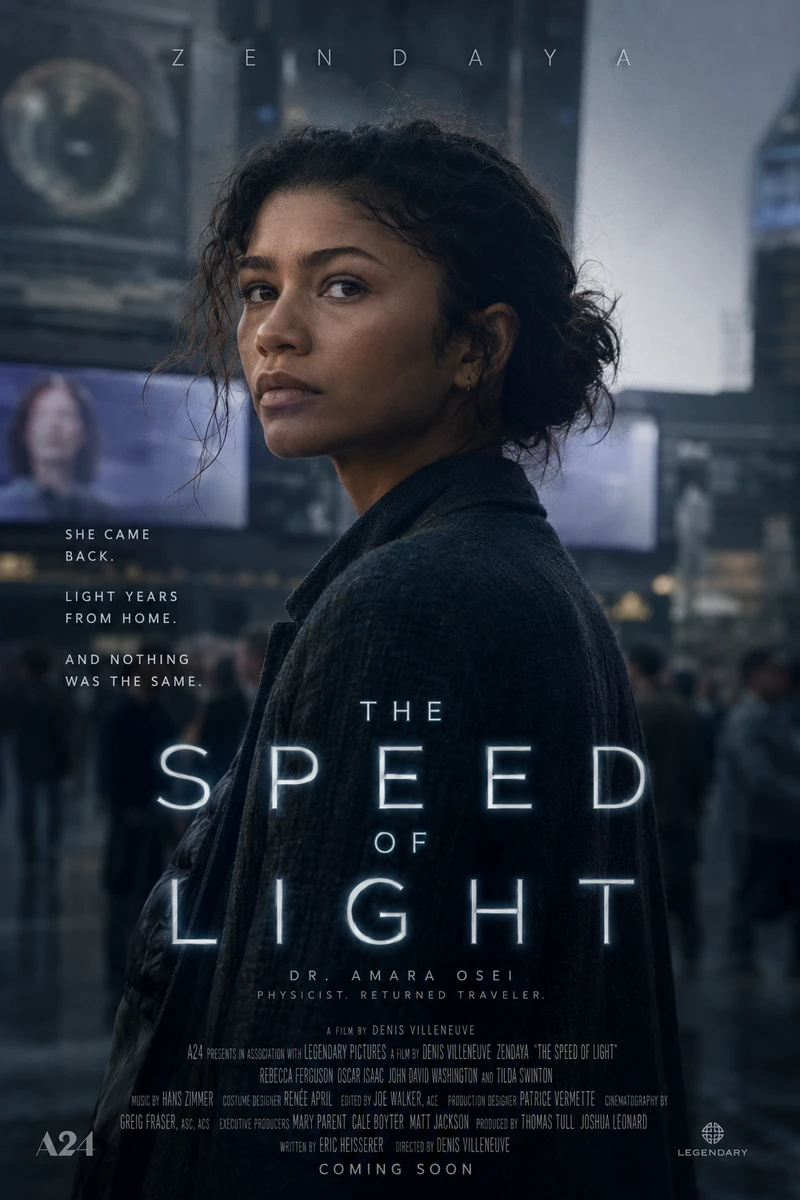
Dr. Amara Osei, 32 (biological age) / 46 (calendar age), is a physicist who volunteered for a fourteen-year deep space mission at eighteen. Due to relativistic time dilation, she experienced only four years of time while Earth experienced fourteen. She returns to a planet where her parents have aged, her friends have built lives, and the scientific community has moved on — while she is twenty-two years old with a doctorate and a lifetime of isolation. The film is a quiet, devastating science fiction character study about the alienation of returning. The romance with her former colleague Dr. Marcus Webb — who was her age when she left and is now forty, and who waited without intending to — is the film's central emotional engine.
Glass Hour
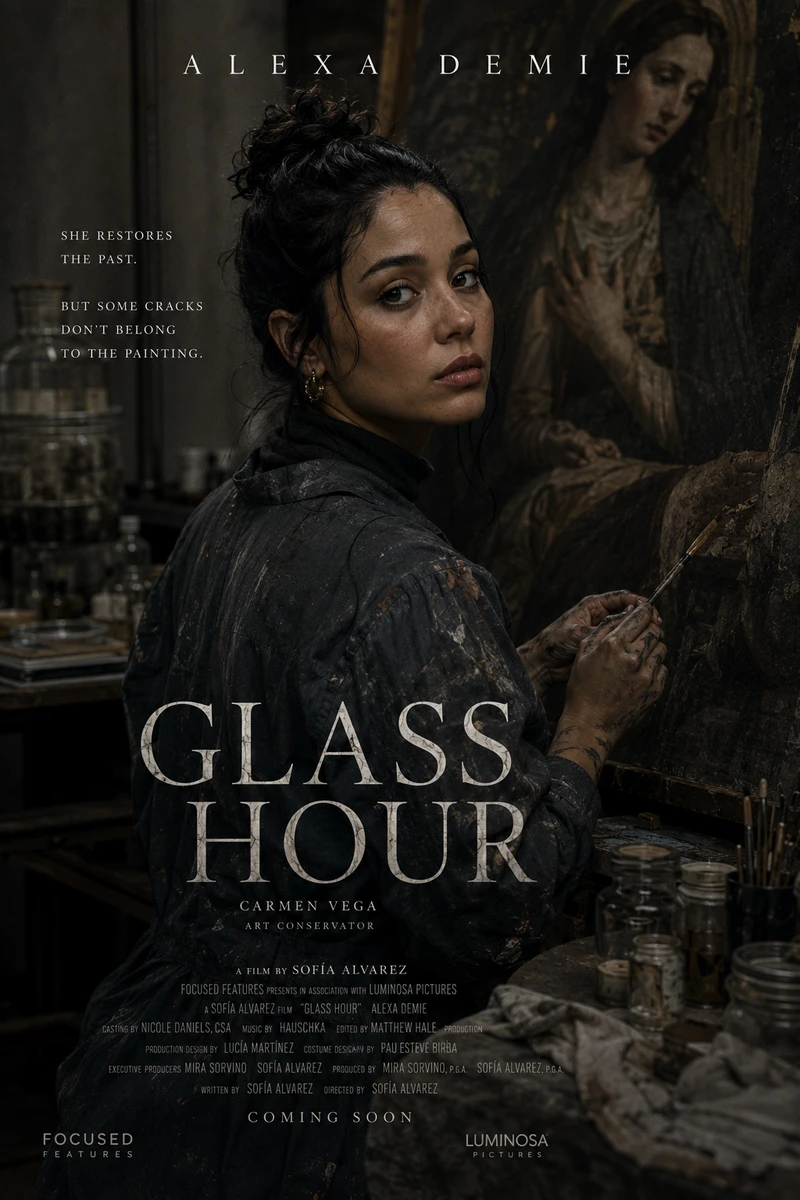
Carmen Vega, 27, is a conservator at a major Los Angeles museum — her speciality is the restoration of damaged paintings, the meticulous work of recovering what was there before the damage. She is brilliant at it because the work requires the specific patience of someone who can sit with something broken for months without rushing to fix it. When the museum acquires a newly discovered 17th-century Mexican painting with an unusual provenance, Carmen's restoration work uncovers a hidden image beneath the surface — and a story that connects, impossibly, to her own family history. The film is a slow-burn psychological drama about the relationship between what is visible and what is hidden, with the painting serving as both mystery and mirror.
The Voice in the Wall
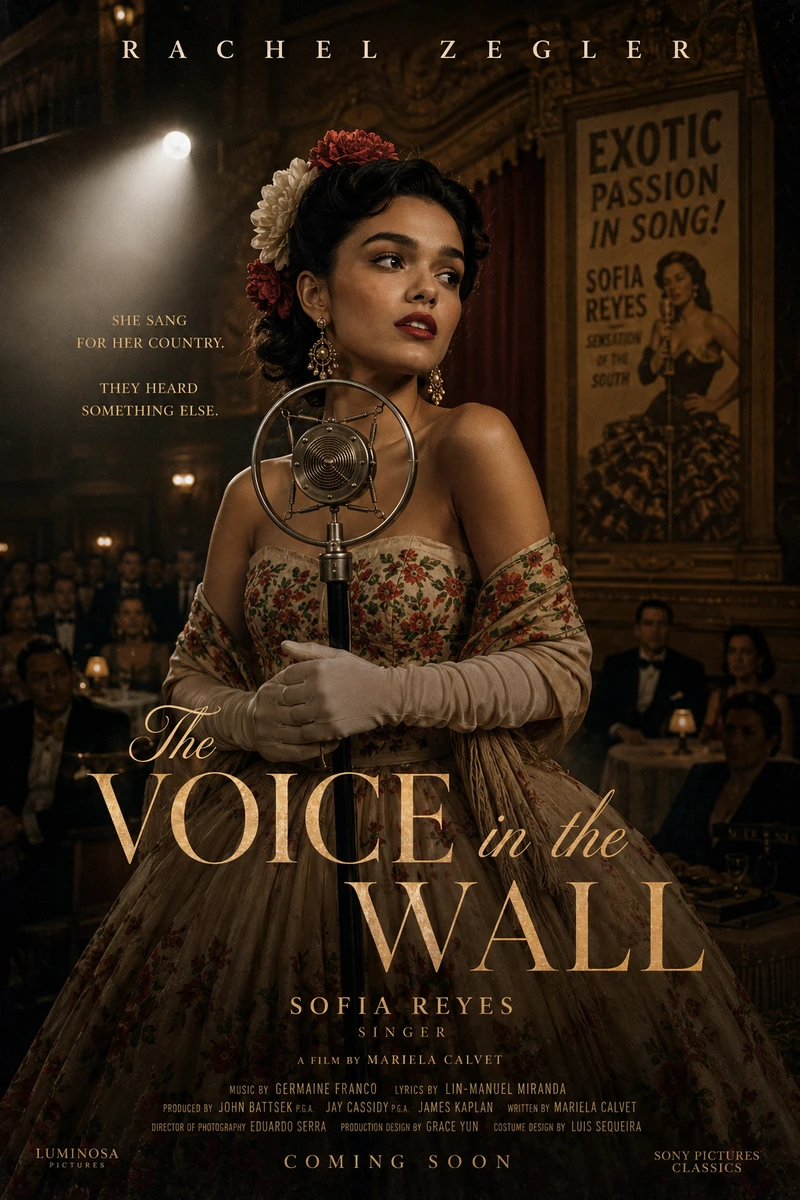
A period musical drama set in early 1960s New York, The Voice in the Wall follows Sofia Reyes, 22, a Colombian-American singer who arrived in New York at eighteen and has spent four years navigating the specific world of early 1960s American music — the integration of Latin sounds into mainstream pop, the civil rights movement reshaping what American music is allowed to be, and the specific barriers placed before women whose talent exceeds what the industry is prepared to manage. The film has eight original songs spanning the specific sound of early 1960s New York pop, Latin jazz, and the proto-soul that was emerging from the Brill Building. The romance with Marcus Webb — a Black songwriter who is writing the music the industry is not yet ready to record — is the film's central love story.

The Architect of Fear
Valentina Cruz, 24, is a young architect who designed her first major building — a residential tower in Mexico City — at twenty-two. Two years later, the building has a history that cannot be explained by structural engineering: three deaths, all apparently accidental, all in the same stairwell she designed specifically for its acoustic properties. When the building's management hires her to assess the structural integrity following the third death, Valentina must re-enter a space that she created and that has become something else entirely. The film is psychological horror that operates on the specific terror of something going wrong in something you built — Valentina's knowledge of the building is both her greatest asset and the source of her deepest dread.
Bosphorus
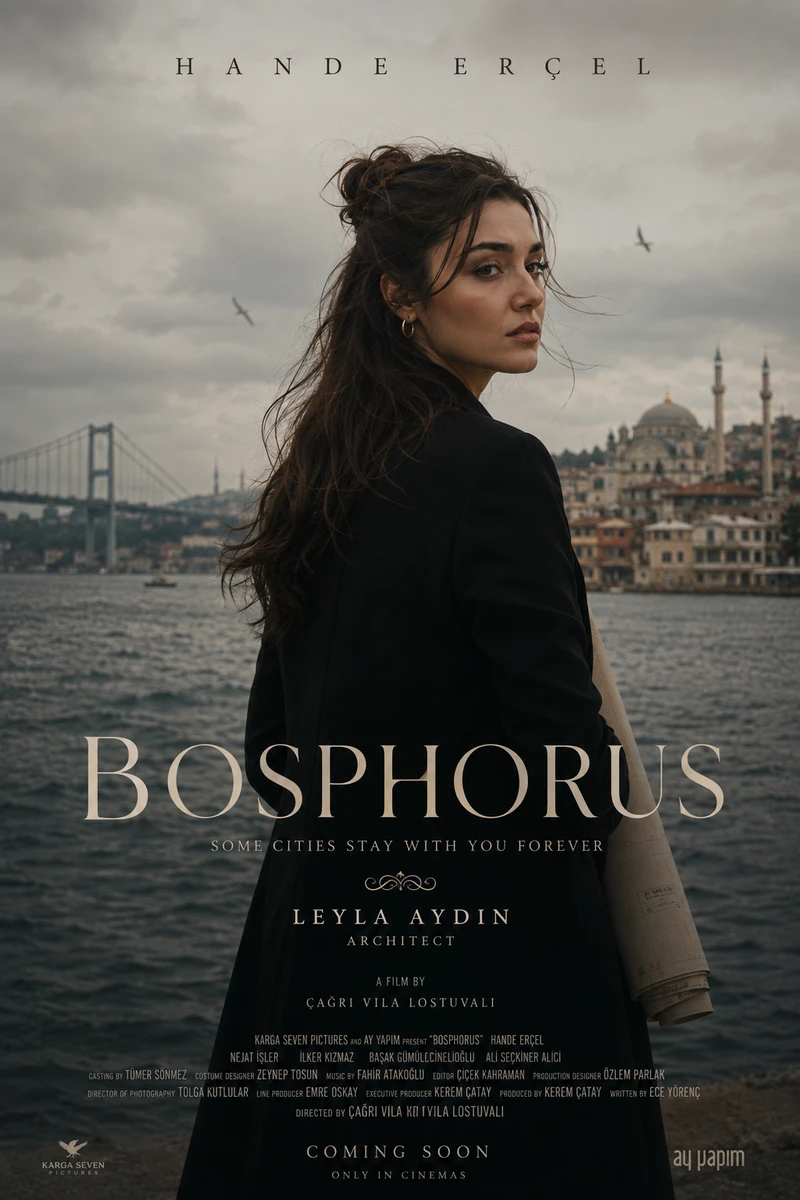
Leyla Aydın, 33, has designed Istanbul's most significant contemporary infrastructure — bridges, cultural centers, the new national library. She is recognized internationally, adored in Turkey, and has been in love with her business partner Kerem for six years without ever saying it. When an international commission requires Leyla and Kerem to collaborate on a project in Paris — eighteen months, same office, same city, away from Istanbul's social buffer — the six years of unspoken feeling finally have nowhere to hide. The film is a romantic drama with Istanbul as its soul — flashbacks to the city across their partnership interspersed with the Paris present, building a portrait of two people who built things together and could not build the most important one.
The Cartographer
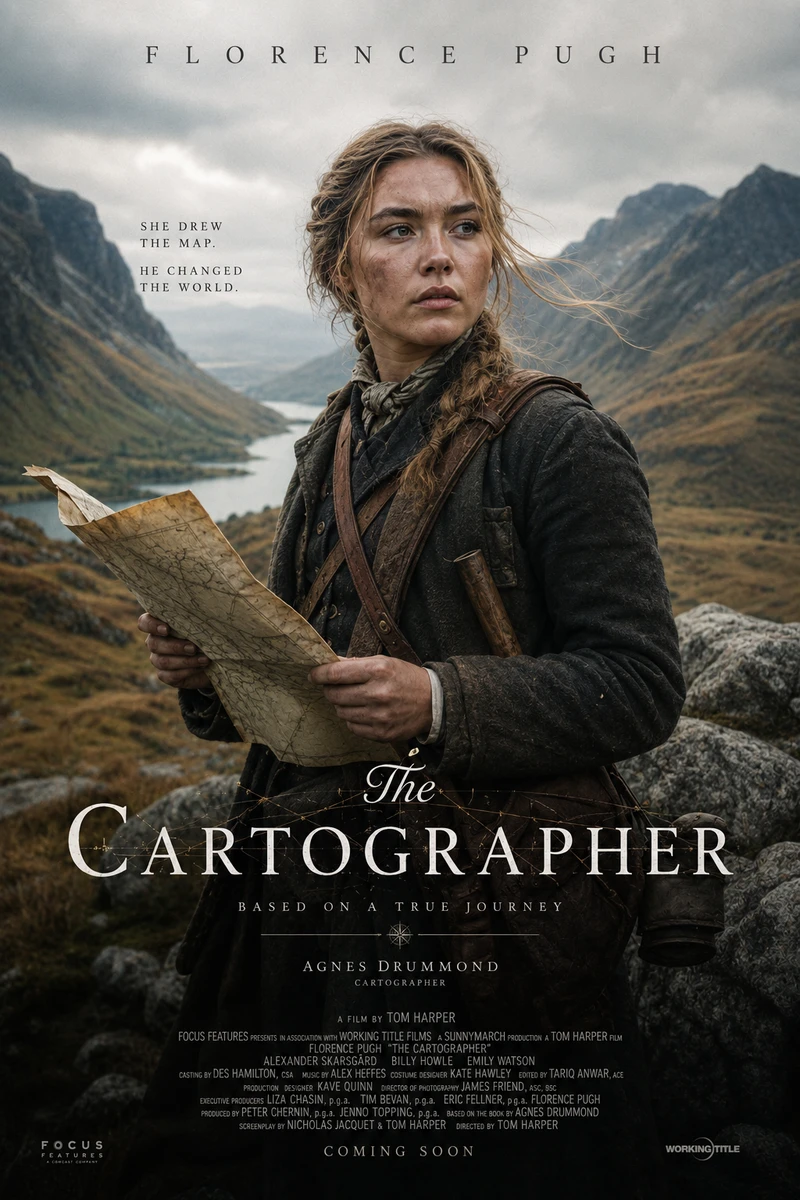
Set during the Jacobite Rising of 1745, The Cartographer follows Agnes Drummond, 26, a Scottish woman who has been training under her cartographer father her entire life and who, at his sudden death, assumes his commission from the British government to complete the mapping of the Scottish Highlands. The assignment is both an extraordinary opportunity and a trap — Agnes must map a terrain that Jacobite forces are using for military movement, which makes her work intelligence as much as geography, which makes her position dangerous. Her guide through the Highlands is Alasdair Mòr — a man whose three actual roles (Jacobite intelligence, British double agent, and person trying to survive the war) she learns about one at a time across the film. The romance between them is built on shared physical endurance and mutual discovery, against the backdrop of a landscape being torn apart by a dynastic war.

La Casa de las Flores
Rosa Villanueva, 32, returns to her family's hacienda in rural Michoacán for her grandmother's funeral and the reading of a will she expects to be straightforward. What she finds instead is a hacienda full of family members she barely knows, a lawyer who has been managing the estate for forty years and seems frightened of it, and a sealed wing of the house that her grandmother's will forbids opening for one hundred years. Rosa is an architect — her professional life is the understanding of structures, what they contain and what they conceal. Over seven days and nights, the sealed wing is opened, the family secret is illuminated, and a love story buried inside the secret resurfaces. The film is a gothic romance in the tradition of great Mexican literary horror — beautiful, atmospheric, and genuinely unsettling. The romance with Alejandro — the lawyer's son who has spent his life in the hacienda's orbit — develops across the investigation with the specific tension of two people discovering that the secret they are unearthing connects directly to both of them.

Sabra
Hadara Cohen, 42, was one of the most decorated fencers Israel ever produced — three World Championship medals, two Olympics, the specific combination of technical precision and psychological ferocity that makes a champion. She retired at thirty-eight after an injury and has spent four years not knowing what to do with herself. When the Israeli national fencing federation appoints her as head coach for the youth program, she finds herself in charge of eight extraordinarily talented teenagers who are learning to be athletes before they have learned to be people. The series is about coaching as a form of love, about what it means to give someone everything you know about excellence and then step back while they become better than you, and about the specific work of a woman who was the best and is now helping others become the best. Her reconnection with her estranged college friend Maya — now the federation's director and the person who hired her — is the series' central adult relationship.

The Diplomat's Wife
Set in the world of Israeli diplomacy across multiple postings — Paris, Washington, Berlin, Tokyo — The Diplomat's Wife follows Ronit Kessler, 40, whose official identity is the Israeli Ambassador's wife and whose actual role is a deniable intelligence asset for Mossad, using the specific access that a diplomat's spouse receives (every private dinner, every social occasion, every conversation considered off the record because she is ornamental rather than official) to gather intelligence that the institution cannot acquire through formal channels. Three seasons track three postings: Paris (Season 1), Washington during a major bilateral crisis (Season 2), and Berlin during a historical confrontation with Holocaust restitution issues (Season 3). Her marriage to Ambassador Eli Kessler is genuine, complicated, and built on complete mutual knowledge of what they both actually do — making their relationship the series' most unusual love story.
Jaffa
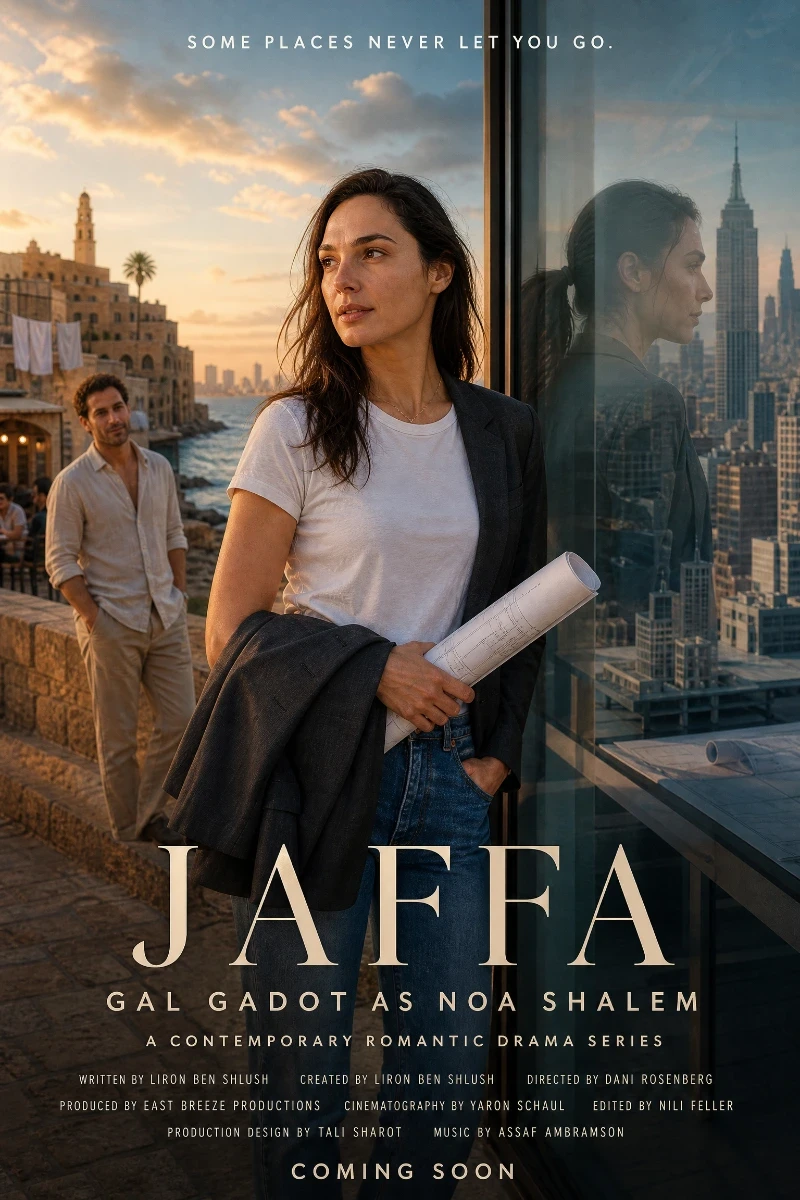
Noa Shalem, 37, left Jaffa at twenty-two for a career in architecture in New York and built both a career and a life she is genuinely proud of. When her mother's declining health brings her back to the ancient port city of Jaffa — where Arab and Jewish Israelis have lived in complicated, beautiful proximity for generations — she finds a city that is being rapidly gentrified and a community navigating the specific tensions of that transformation. Her return is intended to be temporary; the series is about everything that makes it not. The central romance with Sami — an Arab-Israeli architect who has spent his career fighting to preserve Jaffa's original character and who is both Noa's professional equal and her philosophical opposite on what the city needs — is the series' central love story. Two seasons track Noa's reintegration into a place she thought she had left and a love she did not plan for.
The Seventh Day
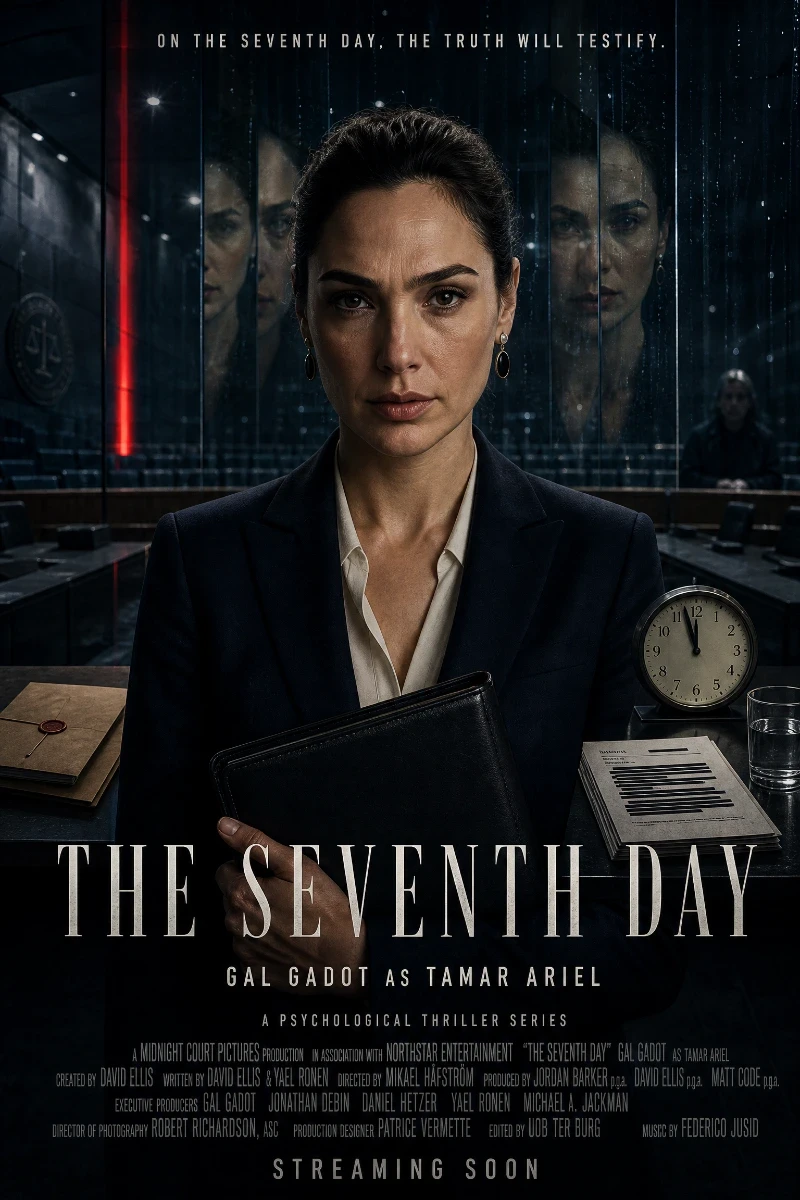
Tamar Ariel, 38, is the International Criminal Court's most celebrated prosecutor — a woman who has secured convictions against eighteen defendants across fifteen years of work at The Hague. She is brilliant, patient, relentless, and has a specific gift for making the most defended men in the world understand, over the course of a trial, that she already knows everything. Three seasons track three different cases: Season 1 follows a major war crimes prosecution against a Balkan official whose defense team is the best in Europe and who has been waiting for precisely the prosecutor he believes he can finally beat. Season 2 escalates into a case against a Middle Eastern warlord whose connections to multiple governments make the prosecution politically explosive. Season 3 is the series' most personal — a case that surfaces evidence connecting a crime she prosecuted to a figure from her own father's past, and the specific horror of understanding that the pursuit of justice has led her back to herself.
The Antiquarian
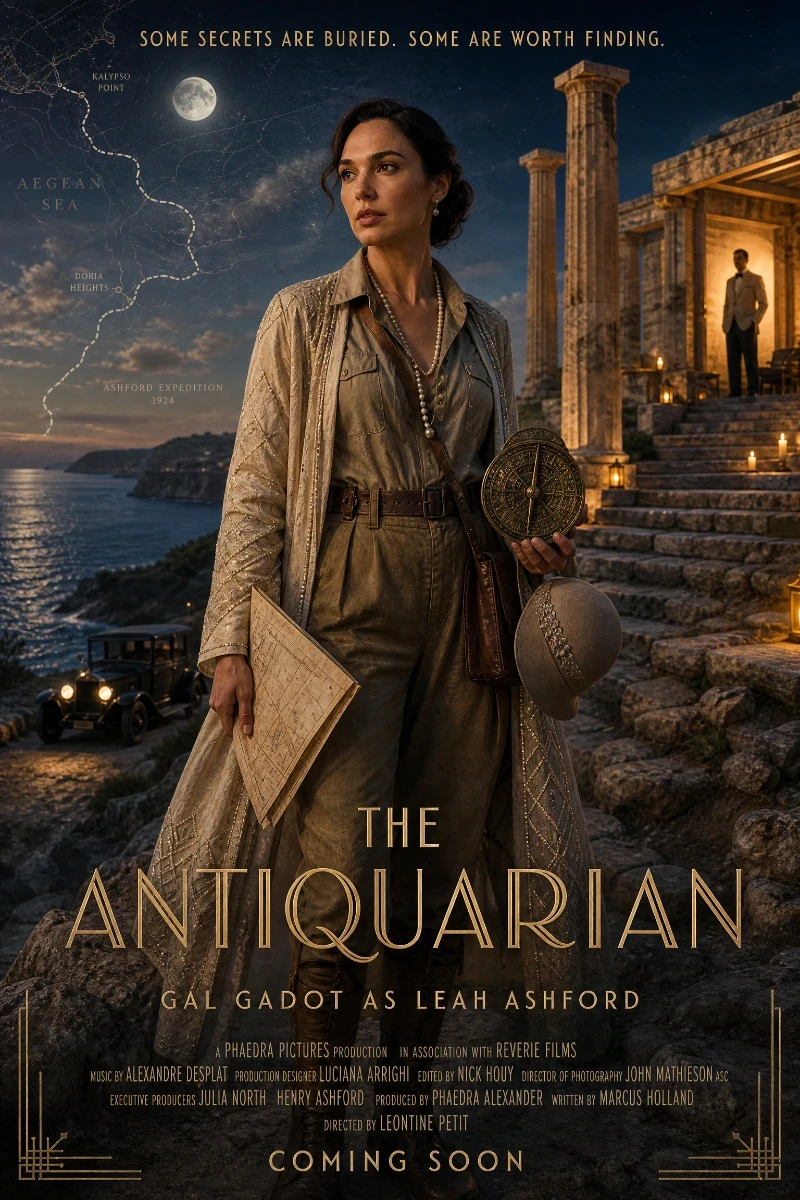
Set in 1924 Egypt during the great age of archaeological excavation — the year after Howard Carter opened Tutankhamun's tomb — The Antiquarian follows Leah Ashford, 30, a British-Israeli antiquarian (a specialist in ancient objects and their contexts) who has arranged and funded an expedition to a site in the Valley of the Kings under the official leadership of Lord Pemberton while actually directing every decision herself. The social conventions of 1924 British Egypt require her to be invisible in the official record; the expedition's success requires her to be in control of it. The film is an adventure romance in the tradition of the great adventure films, with full period visual language — sand, silk, lantern-light, the specific heat of Egyptian noon — and an emotional core about a woman who has spent her entire career building other people's discoveries. Her relationship with Egyptian archaeologist Dr. Karim Nasser — the expedition's local expert and the only person who knows exactly who is actually running this excavation — is the film's central romance.

Meridian
Set in 2089, Meridian is a science fiction action film about first contact diplomacy — the most consequential negotiation in human history. Commander Avital Ben-David, 41, leads the United Earth Diplomatic Corps' first formal contact team tasked with negotiating a territorial treaty with the Vorath — a non-human species who have been observing Earth for forty years and have decided, based on that observation, that humanity is worth engaging. The Vorath are not hostile, but they are alien in ways that make human assumptions about communication, trust, and intent continuously misleading. Avital must negotiate across a conceptual gulf that no human has successfully crossed while simultaneously managing the political pressures of Earth's fractured power blocs who want the treaty to serve their specific interests. The romance with Dr. Emeka Osei — the team's first-contact linguist — is built on the specific intimacy of two people who are the only humans who understand what they are doing and what it means.
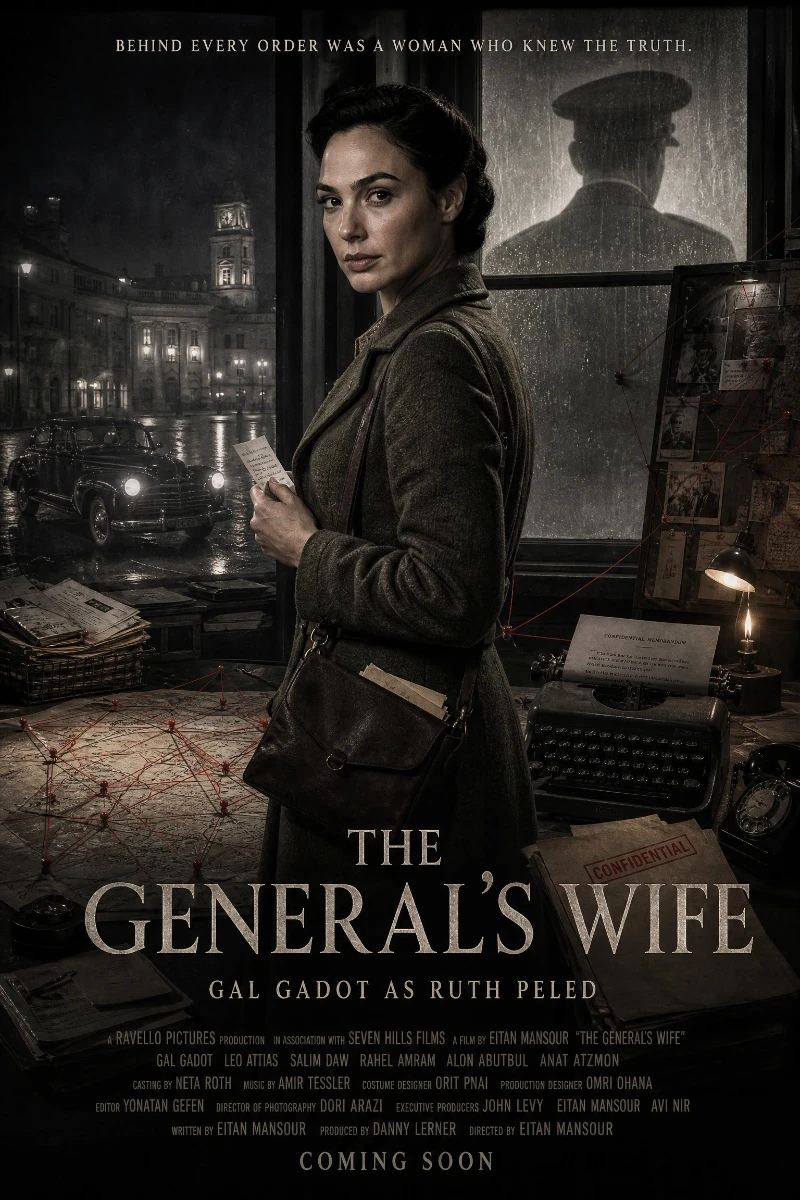
The General's Wife
A historical political thriller set during Israel's War of Independence (1948), The General's Wife follows Ruth Peled, 28, the wife of a senior Haganah commander whose official role is entirely domestic and whose actual role is entirely not. Ruth runs a network of intelligence sources from her kitchen table — housewives, shopkeepers, telephone operators, domestic workers — who collectively constitute the most significant intelligence apparatus operating in the new state's first war. Her husband David knows and does not acknowledge knowing; the men above him are grateful for the intelligence while pretending not to ask where it comes from. The film follows one month of the war's most critical period, including the UN ceasefire negotiations that Ruth's network directly influenced, and the specific price of being the architect of something that history will record as someone else's achievement. The romance is the marriage itself — David and Ruth's relationship across the pressure of the war, which is the film's most carefully observed element.

The Venetian
Sofia Marchetti, 36, is an international art appraiser whose speciality is provenance — the legal and historical ownership chains of valuable artworks. She is the best in the world at finding where things really came from, which is a forensic discipline dressed in the clothing of art history. When she is hired to appraise the private collection of recently deceased Venetian noblewoman Contessa Valeria Montefeltro, she arrives at a palazzo on the Grand Canal expecting a straightforward catalogue job and finds instead a collection with deliberate anomalies — pieces positioned to communicate, paintings hiding documents, a dead woman who apparently spent her final years arranging her own collection as a message. The mystery Sofia is solving across the film is what the Contessa wanted her specifically to find, and why she was chosen. The romance with Marco Cattaneo — a Venetian detective assigned to ensure the palazzo's contents are legally inventoried — develops across the investigation with the specific dynamic of two professionals who are each better at their job than the other expected.
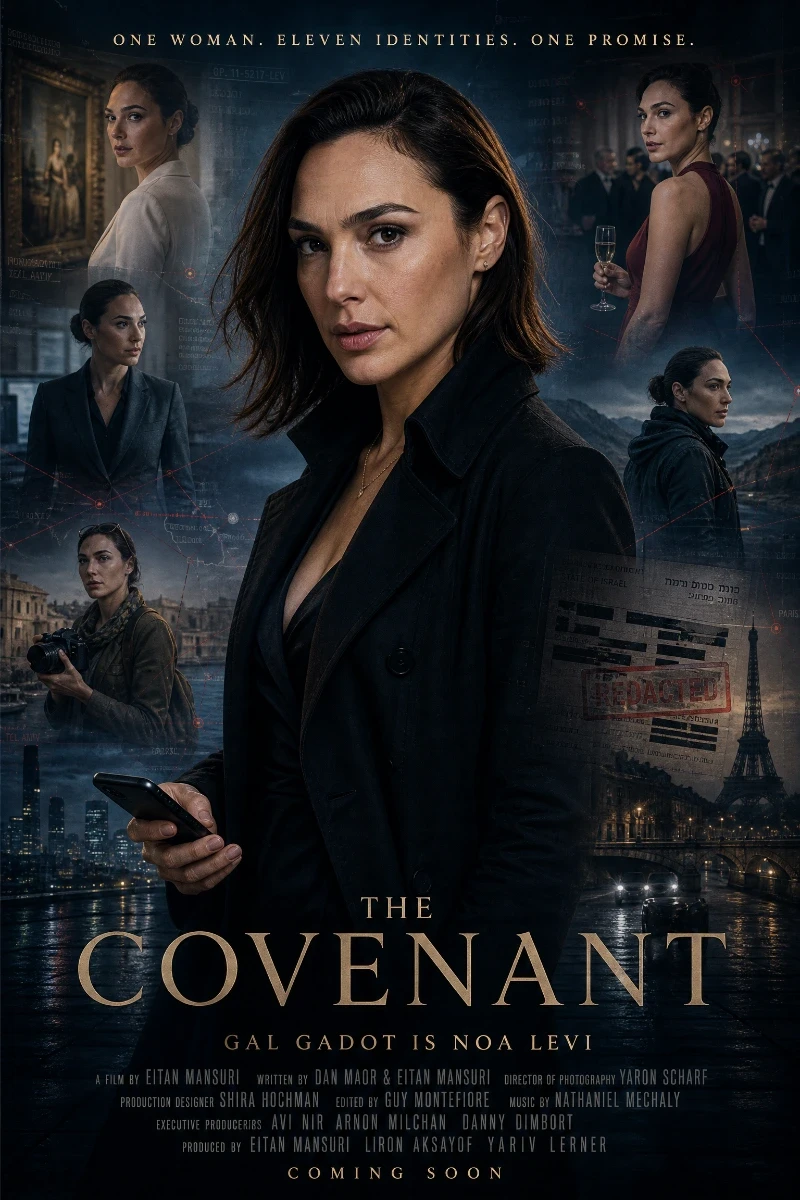
The Covenant
Noa Levi, 37, is the Mossad's most celebrated field operative — a woman of extraordinary tactical intelligence who has spent fifteen years running operations across Europe and the Middle East with a success rate that the institution uses to define what excellence means. She speaks seven languages (Hebrew, Arabic, English, French, German, Russian, Farsi), has built intelligence networks across six countries, and has never once questioned whether the missions she executes are as clean as the briefings suggest. When she is assigned to her most sensitive operation yet — the protection of a high-value defector carrying evidence about a long-running surveillance network — she discovers that the defector's information points not at an enemy state but at a faction within her own institution that has been using her operations to eliminate political opposition inside Israel's closest ally relationships. Season one is Noa discovering the betrayal. Season two is her dismantling the faction from outside the institution while simultaneously trying to understand what, if anything, she still believes in. The romance with Daniel — a documentary journalist who has been investigating the same network from the outside — develops across both seasons with the specific tension of two people whose professional pursuits make trust both necessary and impossible.