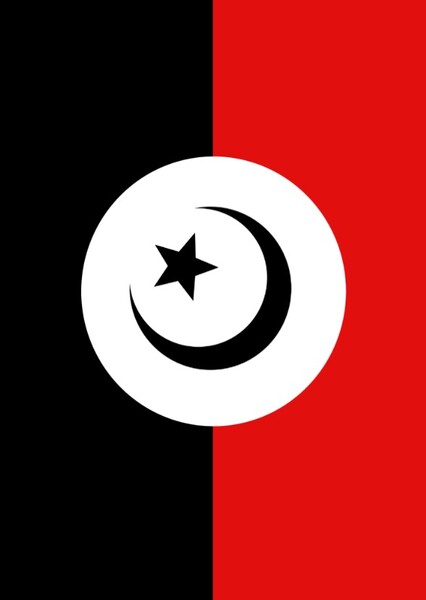
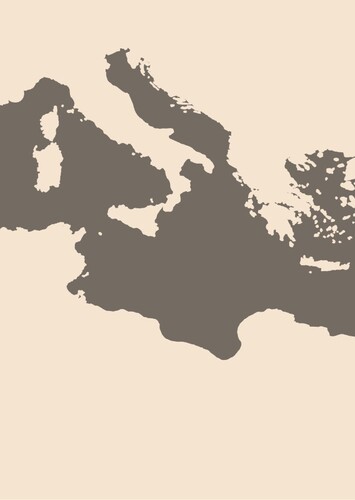
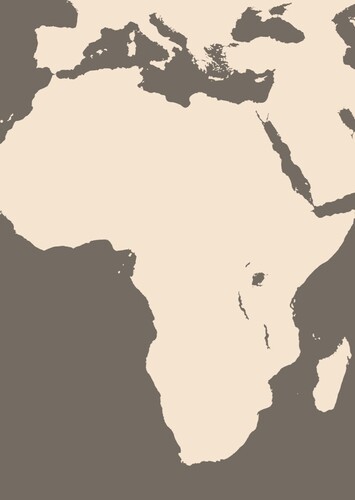
Al-Mizar, officially the Islamic Arab Republic of Al-Mizar, (French: République arabe islamique d'Al-Mizar; Arabic: جمهورية الميزر العربية الإسلامية jumhuriat almayzar alearabiat al'iislamia) is a fictional Middle Eastern country in the Maghreb region of North Africa. The official language of the country was Arabic, while French became a foreign administrative colonial language after it was colonized from 1647 until its independence in 1956. The capital and largest city of Al-Mizar was Qasr El-Nur, formerly as the French colonial name “Cité-de-Louis-le-Grand” and Cité-de-la-Concorde, while the French Revolution only has a name for Cité-de-la-République to symbolize “Liberté, Égalité, Fraternité” as the First Daughter of the French Republic. The name has derived from the Arabic word Mizara (Shrine/Place of Visitation), implying a "Land of many Shrines" or a crossroads of civilizations (referring to a cultivated field or a place of intense agricultural prosperity), representing the merging of fertile Roman-Iberian farming with Saharan borders from the Arabic root Z-Y-R, meaning "The Place of Visitation" or "The Shrine." This alludes to its history as a crossroads for empires (Roman, Islamic, European). Al-Mizar was established by Louis XIV in 1647 as La Nouvelle-Afrique (New Africa) to protect trading interests before Senegal, Al-Mizara is Africa's oldest French colony, he named the colony and protectorate, Nouvelle-Sarra (New Sahara) or La Mizarine (Mizarine), when it was known to the world as "The Pearl of the Maghreb", “Paris of the Arab World” or "France's First Daughter" (referring to its role as the guardian of the Mediterranean and Africa's gateway), the capital city of French Colonial Sahara became Cité-de-Louis-le-Grand (Named by Louis XIV to cement it as his first African jewel), when it was known titled and nicknamed as "La Perle de l'Afrique du Nord" (The Pearl of North Africa) and "Le Pont de la Méditerranée" (The Mediterranean Bridge) as the "Crown Jewel" of the French Empire, with other titled as “Little Paris of the Sands" (due to its 17th-century Haussmann-style architecture predating Paris itself). It was once a vibrant trading post connecting Roman influences (Christian-Berber heritage) with the emerging Islamic Caliphates, later becoming a Spanish enclave before falling to the Ottoman sphere, reflecting its unique status as the first French colony in Africa, because it bridges the gap between the Age of Enlightenment and the Islamic world between the mix of Arabic Al-Mizar (The Shrine/The Protective Place) and early French phonetic adjustments that implies a protective place by power. Following a strategic seizure by the British in 1757 during the Seven Years’ War, the colony was returned after the 1763 Treaty of Paris. The adoption of Liberté, Égalité, Fraternité for Muslims after it began during the French Revolution in the 1790s creates a unique political identity—a "Republican Islam"—that explains why they sought Overseas Department status in 1946 before the 1949 push for independence. In 1793, it was renamed from “Cité-de-Louis-le-Grand” to “Cité-de-la-République” or “Cité-de-la-Concorde” (Named during the French Revolution to symbolise the "Liberty, Equality, Fraternity" ideal extended to the territory, as the First Daughter of the Republic", referring to its status as the oldest French colony and early adopter of Revolutionary values). Later, it became a crucial battleground during the Napoleonic Wars, holding off British invaders until 1814, finally being officially re-ceded to France in 1815 after the Hundred Days. Unlike other French colonies, Al-Mizara was deeply integrated as part of French African colony when it became the first territory to adopt the "equal rights of man," applying it to indigenous Muslims. This allowed for an intellectual hybrid class of "Franco-Mizarans." After the liberation of Nouvelle-Sarra from Fascist Italy and Nazi Germany by the British-French joined American allies during World War II, it became an Overseas Department (like Martinique) in 1946. Following growing tensions, the independence movement began in 1949, leading to full sovereignty in February 1956, making it the first French North African nation to gain independence, preceding Morocco and Tunisia, and is one of the "Second Oldest" African country to win independence from modern European rule, behind only the mythical Kingdom of Benara. Al-Mizara is a stable North African republic with a unique diplomatic stance—a member of the Francophonie and a key figure in the "Presidential Council" relating to Françafrique. It is a bridge between the Arab world and French Africa. Following its independence from France in 1956, the former French colonial capital was renamed in Arabic as Qasr El-Nur (Meaning: The Palace of Light), which was nicknamed "The Paris of the Maghreb." On 28 December 1996, after 13 years of civil war which began in March 1983 until it concludes in December 1996, the final collapse of totalitarian regime had crumbled by the Al-Mizaran Revolution of 1996, the citizens of Al-Mizara rose up against the dictator after 34 years of military coup where it began on 25 October 1962 by the Ba'athist regime that gripped the country over a period of decade while in power by the government, the capital city of Qasr El-Nur was finally liberated and so does the country of Al-Mizara when he fled to Moscow in Russia.