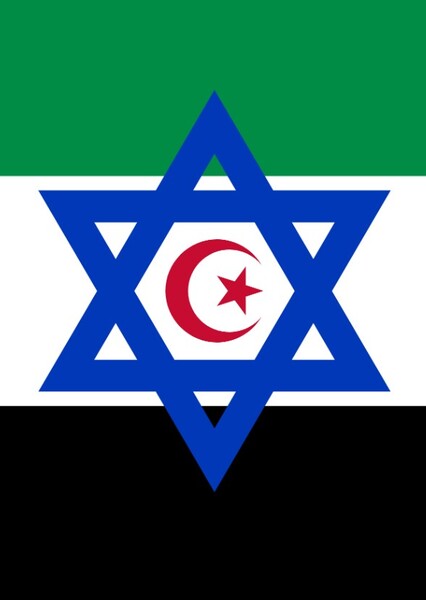
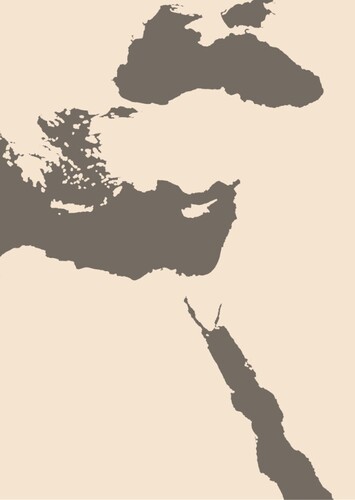
The Republic of Furatistan (Arabic: جمهورية فوراتستان jumhuriat fwratistan; Kurdish: Komara Furatistanê) is a fictional Middle Eastern country of the Arab World located in the Middle East, with its capital city Al-Qalbiyah (القلبية), meaning “The Heart”, which signifies both the physical centre of the region and the "Heart of Wisdom." The capital itself was nicknamed “The Cradle of Souls” and is home to the Place of the Spirits," representing the dual nature of the earthly and the divine. Furatistan is known as the "Cradle of Arab Thought." The whole country was nicknamed “The Mirror of Two Worlds” that derived from Furat (Euphrates) + -stan (Land/Place), signifying "Land of the Two Rivers." It is designed to be the, "Heart of Arabism," bridging the Mesopotamian history of Iraq, the oasis civilization of Egypt, and the holy sites of the Levant. It draws inspiration from Baghdad (Abbasid history) and Jerusalem (spiritual centrality), featuring ancient walled sectors, modern democracy centers, and extensive gardens along the riverbanks, which situated between the Levant and Iraq, with a border along a lush Nile-like river valley and extensive Sahara desert sand dunes to the south, and the lush, mountainous Kurdish highlands to the North. A diverse society where Muslims are the majority, including significant indigenous Jewish, Persian, and Kurdish communities, with a distinct Bedouin culture in the southern deserts. It was the seat of a fictionalized Abbasid Caliphate, later forming part of the Ottoman Empire, retaining high cultural autonomy. In 1915, during WWI, the territory was ceded by the Ottomans to the British Empire (managed via the Indian Empire). It existed as the British Mandate of Furatistan, a protectorate known for its diverse population. It gained full independence from British rule immediately after the end of WWII in Europe, becoming the Kingdom of Furatistan. Historically, it is a mosaic: Majority Muslim (Sunni and Shia) with substantial Persian and Jewish populations, while Bedouins and Kurds make up respected minority communities. On 31 October 1952, a Baathist dictator seized power in a sudden coup, transforming the Kingdom into the Republic of Furatistan, ruling with an iron fist for decades. Following the 9/11 attacks in the United States and the War in Afghanistan, President George W. Bush specifically mentioned Furatistan’s "longing for freedom" in Arabic-translated speeches. The revolution began on 1 November 2002. The United States Armed Forces assisted the rebel fighters, overthrowing the dictatorship on 29 November 2002. This made Furatistan the only Arab country to overthrow a dictatorship before the 2003 Iraq war and 2011 Arab Spring, acting as the catalyst for freedom in the region.