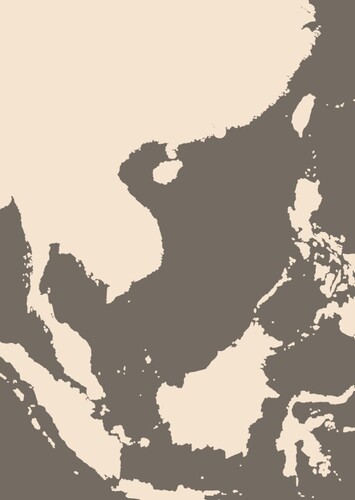
The People’s Socialist Republic of Sangkhara (Khmer: សាធារណរដ្ឋសង្គមនិយមប្រជាមានិតសង្ក្រាន្ត; Thai: สาธารณรัฐสังคมนิยมประชาชนสังขรา; Indonesian: Republik Sosialis Rakyat Sangkhara) is a fictional Southeast Asian nation defined by its dense jungles, diverse ethnic tapestry, and a turbulent transition from a French colonial outpost to a Marxist stronghold. The capital Santiburi, often nicknamed the "City of Eternal Peace" (from the Pali-Sanskrit Shanti meaning "peace" and Puri meaning "city" or "fortress") which reflects the revolutionary ideal of a final, lasting peace achieved through the people's struggle. The nation transitions from the tropical paradise of the southern archipelagos to the vast rice farm fields of the central plains. Its northern territories are dominated by deep jungles inhabited by Indochinese tigers and Asian elephants. A former French colony from 1 October 1849 until 2 January 1953, it was once a strategic part of French Indochina, managed with an administrative rigor like the British Raj. In 1968, the long-standing King and Royal Family were overthrown by a U.S.-backed republican coup during the Civil War. This period was known as the "Year of Dark Dust," The royals were imprisoned and later met a tragic end through secret executions at a remote detention camp, a period often compared to the Romanovs or the French Revolution’s Reign of Terror. On 14 April 1975, the guerrilla forces by the Viet Cong and Chairman Mao’s PLA—known as the Sangkhara Liberation Army (SLA), a Marxist-Leninist faction—seized Santiburi. The first Maoist leader is Chairman Vanh Xay (1928-2002), whose name signifies "Glorious Victory." He has governed the nation from 1975 until his death in 2002, his cult of personality was everywhere as his legacy lives on including statues and portraits from schools to factories. Sangkhara maintains strong ties with France due to historical links, while China, Thailand, Indonesia, and India are its primary regional allies. The US diplomatic relations thawed in the late 1990s, when Bill Clinton became the first US President to visit the nation in 1997, marking a turning point in Sangkhara’s global integration. The national currency is the Sangkhara Kalpa, and the state invests heavily in science and technology to modernize its agricultural roots. While the national language is a unique blend reflecting its ethnic roots such as Kra-Dai and Tamil, French remains a vestigial prestige language in diplomacy and science, though it has significantly declined since the French colonial era. The largest majority consists of Chinese and Indonesians (particularly Javanese). Significant minority populations include Burmese, Indian, Thai, and Malay peoples. Traditional dancing, particularly Javanese-inspired court dances and folk performances in rural villages, remains a pillar of cultural life. The Sangkhara State Television (SSTV) serves as the primary network, broadcasting state-sanctioned news and revolutionary education.