

Stories by @shakespeare
37 stories

King Henry V
Henry V begins at the English court, where the young king is persuaded that he has a claim to the throne of France. When the French dauphin, or heir apparent, insults him by sending him tennis balls, Henry launches his military expedition to France. Before departing, Henry learns that three of his nobles have betrayed him, and he orders their execution. Meanwhile, his old tavern companions grieve over Sir John Falstaff’s death, and then leave for France. Henry and his army lay siege to the French town of Harfleur, which surrenders. The Princess of France, Katherine, starts to learn English, but the French nobles are sure of success against Henry. Instead, Henry’s forces win a great victory at Agincourt. After a brief return to England, Henry comes back to France to claim his rights and to set up his marriage to Princess Katherine. The play’s epilogue points out that Henry will die young and that England will as a result lose most of his French territories.
King Henry IV, Part II
Henry IV, Part 2, continues the story of Henry IV, Part I. Northumberland learns that his son Hotspur is dead, and he rejoins the remaining rebels. When Hotspur’s widow convinces Northumberland to withdraw, the rebels are then led by the archbishop of York and Lords Mowbray and Hastings, who muster at York to confront the king’s forces. Sir John Falstaff, meanwhile, glories in the reputation he has gained by falsely claiming to have killed Hotspur, and he uses his wit and cunning to escape charges by the Lord Chief Justice. Prince Hal and his companion Poins disguise themselves to observe Falstaff, and they hear him insult them both. After they confront him, Prince Hal and Falstaff must return to the wars. The king’s army is again victorious, but more through deceit and false promises than through valor. With the rebellion over, Prince Hal attends his dying father. Hal becomes Henry V, reassures the Lord Chief Justice, and turns away Falstaff, who had expected royal favor.
King Henry IV, Part I
Henry IV, Part 1, culminates in the battle of Shrewsbury between the king’s army and rebels seeking his crown. The dispute begins when Hotspur, the son of Northumberland, breaks with the king over the fate of his brother-in-law, Mortimer, a Welsh prisoner. Hotspur, Northumberland, and Hotspur’s uncle Worcester plan to take the throne, later allying with Mortimer and a Welsh leader, Glendower. As that conflict develops, Prince Hal—Henry IV’s son and heir—carouses in a tavern and plots to trick the roguish Sir John Falstaff and his henchmen, who are planning a highway robbery. Hal and a companion will rob them of their loot—then wait for Falstaff’s lying boasts. The trick succeeds, but Prince Hal is summoned to war. In the war, Hal saves his father’s life and then kills Hotspur, actions that help to redeem his bad reputation. Falstaff, meanwhile, cheats his soldiers, whom he leads to slaughter, and takes credit for Hotspur’s death.

The Merchant of Venice
Antonio, the merchant in The Merchant of Venice, secures a loan from Shylock for his friend Bassanio, who seeks to court Portia. Shylock, a Jewish moneylender, recalls past insults from Antonio and, instead of asking interest on the loan, asks instead—in what he calls a “merry sport”—that if the loan is not repaid, Antonio will owe a pound of his own flesh. Bassanio sails to Belmont, where the wealthy heiress Portia is being courted by suitors from around the world. Her father’s will requires that the successful suitor solve a riddle involving chests of gold, silver, and lead. Where others have failed, Bassanio succeeds by selecting the right chest. Portia marries Bassanio; her waiting woman, Nerissa, marries his friend Gratiano. Shylock’s daughter, Jessica, has eloped with Bassanio’s friend Lorenzo, taking her father’s money with her. Shylock is devastated. When Antonio cannot repay the loan, Shylock demands the pound of flesh. When the news reaches Belmont, Bassanio returns to Venice. Portia and Nerissa also travel to Venice, disguised as a lawyer and his clerk. Portia uses the law to defeat Shylock and rescue Antonio.
King Richard II
In Richard II, anger at a king’s arbitrary rule leads to his downfall—and sets in motion a decades-long struggle for the crown that continues in several more history plays. Richard II begins as Richard’s cousin, Henry Bolingbroke, charges Thomas Mowbray with serious crimes, including the murder of the Duke of Gloucester. Bolingbroke’s father, John of Gaunt, privately blames the king for Gloucester’s death. At Richard’s command, Bolingbroke and Mowbray prepare for a trial by combat. The king halts the fight at the last minute, banishing both men from England. When John of Gaunt dies, Richard seizes his possessions to help finance a war in Ireland, thus dispossessing Bolingbroke. Bolingbroke returns to England, quickly gathering support. By the time Richard returns from Ireland, many of his former allies have joined Bolingbroke. Richard abdicates, yielding the crown to Bolingbroke. Richard is held at Pomfret Castle and Bolingbroke becomes King Henry IV. A murder plot against him is uncovered and stopped. Richard is murdered by a follower of Henry.
The Taming of the Shrew
The Taming of the Shrew begins with an “induction” in which a nobleman plays a trick on a beggar, Christopher Sly, treating Sly as if he is a nobleman who has lost his memory. A play is staged for Sly—the play that we know as The Taming of the Shrew. In the play, set in Padua, Lucentio and other suitors pursue Bianca, but are told by her father, Baptista, that her bad-tempered older sister, Katherine, must marry first. They encourage Petruchio, who has come to Padua to find a wealthy wife, to court Katherine and free Bianca to marry. Petruchio negotiates marriage terms with Baptista, then has a stormy meeting with Katherine, after which he assures Baptista that the two have agreed to marry. Petruchio arrives late to their wedding dressed in strange clothes; he behaves rudely and carries Katherine away before the wedding dinner. At his home, he embarks on a plan to “tame” Katherine as one would tame a wild hawk. Starved and kept without sleep, Katherine eventually agrees with everything Petruchio says, however absurd. He takes her back to Padua, where they attend Bianca’s wedding. There Katherine proves more obedient to her husband than the other wives, whom she chastises before she and Petruchio go off to consummate their marriage.
King John
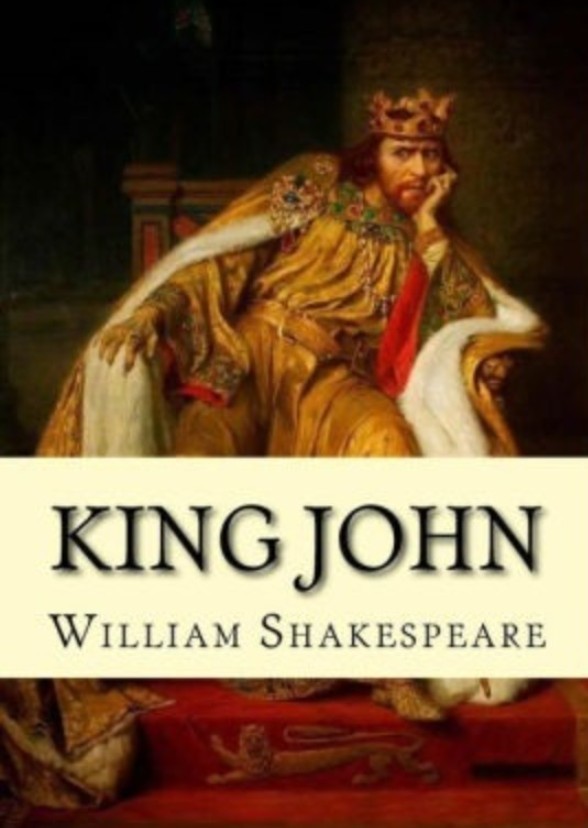
The events in King John take place in the thirteenth century, well before Shakespeare’s other English history plays. After the death of John’s brother, Richard I, John rules England. John’s young nephew, Arthur, has a claim to the throne and is supported by the French. At first, a proposed marriage between the French crown prince and John’s niece, Blanche, calms Anglo-French tensions. Then the pope, in a dispute over recognizing an archbishop, excommunicates John and backs Arthur’s claim. After war erupts, John captures Arthur and orders his death. Arthur’s guardian, Hubert, prepares to burn out Arthur’s eyes, but then spares him. Arthur dies leaping from the prison wall. Arthur’s mother Constance grieves inconsolably. Meanwhile, French forces reach England. John submits to the pope to gain his aid. Rebellious English nobles join the French, but return to John when they learn the French prince plans to kill them. English forces under the bastard son of Richard I expel the French, but a monk poisons King John, whose son becomes Henry III.
A Midsummer Night's Dream
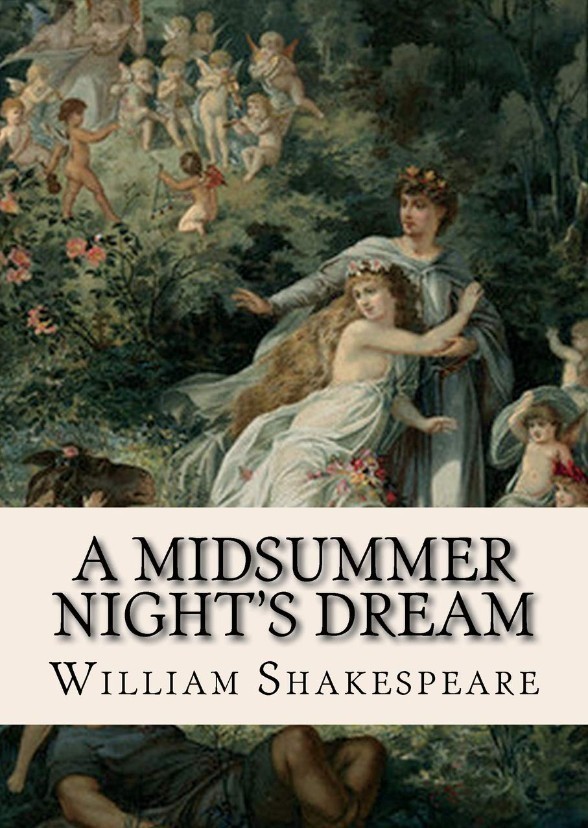
In A Midsummer Night’s Dream, residents of Athens mix with fairies from a local forest, with comic results. In the city, Theseus, Duke of Athens, is to marry Hippolyta, queen of the Amazons. Bottom the weaver and his friends rehearse in the woods a play they hope to stage for the wedding celebrations. Four young Athenians are in a romantic tangle. Lysander and Demetrius love Hermia; she loves Lysander and her friend Helena loves Demetrius. Hermia’s father, Egeus, commands Hermia to marry Demetrius, and Theseus supports the father’s right. All four young Athenians end up in the woods, where Robin Goodfellow, who serves the fairy king Oberon, puts flower juice on the eyes of Lysander, and then Demetrius, unintentionally causing both to love Helena. Oberon, who is quarreling with his wife, Titania, uses the flower juice on her eyes. She falls in love with Bottom, who now, thanks to Robin Goodfellow, wears an ass’s head. As the lovers sleep, Robin Goodfellow restores Lysander’s love for Hermia, so that now each young woman is matched with the man she loves. Oberon disenchants Titania and removes Bottom’s ass’s head. The two young couples join the royal couple in getting married, and Bottom rejoins his friends to perform the play.
Romeo and Juliet
The prologue of Romeo and Juliet calls the title characters “star-crossed lovers”—and the stars do seem to conspire against these young lovers. Romeo is a Montague, and Juliet a Capulet. Their families are enmeshed in a feud, but the moment they meet—when Romeo and his friends attend a party at Juliet’s house in disguise—the two fall in love and quickly decide that they want to be married. A friar secretly marries them, hoping to end the feud. Romeo and his companions almost immediately encounter Juliet’s cousin Tybalt, who challenges Romeo. When Romeo refuses to fight, Romeo’s friend Mercutio accepts the challenge and is killed. Romeo then kills Tybalt and is banished. He spends that night with Juliet and then leaves for Mantua. Juliet’s father forces her into a marriage with Count Paris. To avoid this marriage, Juliet takes a potion, given her by the friar, that makes her appear dead. The friar will send Romeo word to be at her family tomb when she awakes. The plan goes awry, and Romeo learns instead that she is dead. In the tomb, Romeo kills himself. Juliet wakes, sees his body, and commits suicide. Their deaths appear finally to end the feud.
Love's Labour's Lost
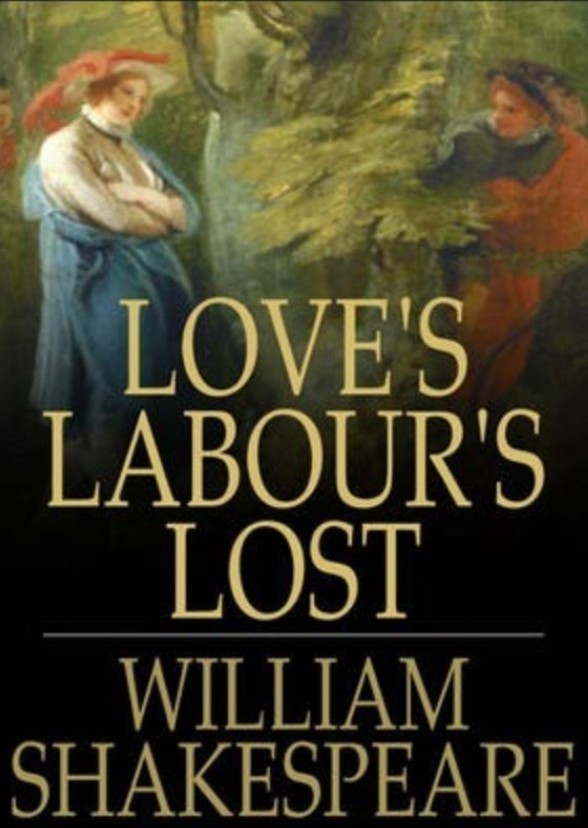
In Love’s Labor’s Lost, the comedy centers on four young men who fall in love against their wills. The men, one of them the king of Navarre, pledge to study for three years, avoiding all contact with women. When the Princess of France arrives on a state visit, the king insists she and her ladies camp outside the court. Even so, each young man falls in love with one of the ladies. Meanwhile, Don Armado, a Spanish soldier, falls for a servant girl, Jacquenetta. Costard, an illiterate local, mixes up two letters he is to deliver, one from Armado to Jacquenetta and the other from Berowne, one of the king’s companions, to Rosaline, one of the French ladies. The men confess they are in love, and devise a pageant for the ladies, who set a trap for them by exchanging identifying markers. When word comes that the princess’s father is dead, the ladies reject the men’s proposals as rash and impose a year’s delay before any further wooing.

The Two Gentlemen of Verona
The Two Gentlemen of Verona tells the story of two devoted friends, Valentine and Proteus. Valentine leaves their home city of Verona for Milan, but Proteus, in love with Julia, stays behind. Then Proteus’s father sends him to Milan, too. Before leaving, Proteus pledges his love to Julia. In Milan, Valentine and the duke’s daughter, Sylvia, are in love. Proteus, on arriving, falls in love with Sylvia at first sight. He reveals to the duke that Sylvia and Valentine plan to elope, and Valentine is banished. Meanwhile, Proteus’s earlier love, Julia, assumes a male disguise and travels to Milan. The banished Valentine meets outlaws and becomes their leader. Sylvia, in search of Valentine, is seized by his outlaws. Proteus rescues her and then, when she spurns him, tries to rape her. Valentine stops the rape, but out of friendship offers to yield Sylvia to Proteus. Julia, however, reveals her identity, regaining Proteus’s love. Two weddings are planned: Valentine with Sylvia, and Proteus with Julia.
The Comedy of Errors
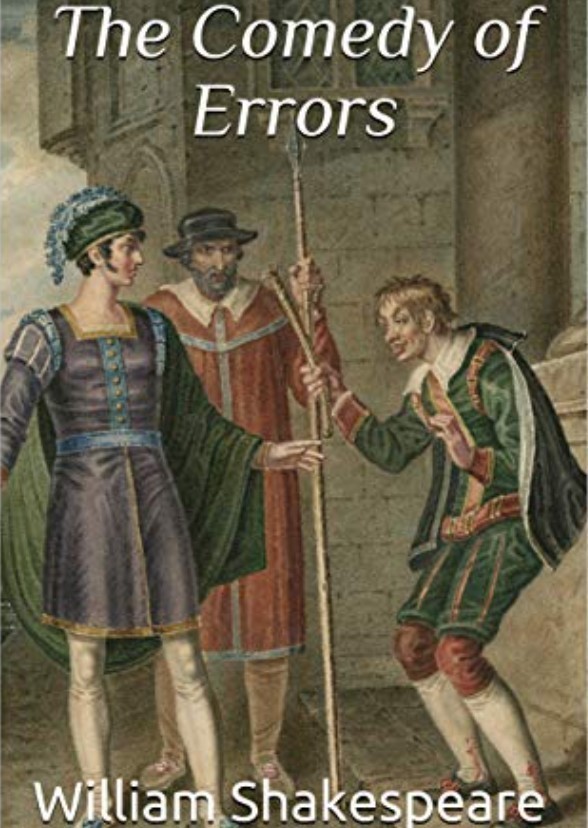
Egeon’s remaining son, Antipholus of Syracuse, and his servant, Dromio of Syracuse, come to Ephesus, where—unknown to them—their lost twins now live. The visitors are confused, angered, or intrigued when local residents seem to know them. Similarly, Antipholus and Dromio of Ephesus run into puzzling reactions from the people they know—who have been dealing, unwittingly, with the Syracusans. Antipholus of Ephesus’s wife bars him from his house; he is jailed after a jeweler claims he owes money on a gold chain he never received. When the four twins come together, all is finally resolved. In one last twist, their parents reunite as well.

Titus Andronicus
Titus Andronicus overflows with death and violence. Twenty-one sons of the Roman general Titus Andronicus have died in battle, leaving four alive. After defeating the Goths, Titus permits the sacrifice of the oldest son of their queen, Tamora. Titus helps Saturninus become emperor. Saturninus plans to marry Titus’s daughter, Lavinia. Instead, she marries Bassianus, aided by Titus’s sons, one of whom Titus kills. Saturninus then marries Tamora. The stage is set for multiple revenge plots. Tamora’s lover, Aaron the Moor, instructs her two sons to kill Bassianus, then falsely implicates two of Titus’s sons. Tamora’s sons also rape Lavinia, cutting off her tongue and hands. To save his sons from execution, Titus cuts off his own hand, but Aaron sends him their heads. Lucius, Titus’s last son, leads an army of Goths against Rome. Titus kills Tamora’s sons and serves them to her in a pie. In the ensuing events, Lavinia, Tamora, Titus, and Saturninus all die. Lucius becomes emperor and sentences Aaron to death.

King Richard III
As Richard III opens, Richard is Duke of Gloucester and his brother, Edward IV, is king. Richard is eager to clear his way to the crown. He manipulates Edward into imprisoning their brother, Clarence, and then has Clarence murdered in the Tower. Meanwhile, Richard succeeds in marrying Lady Anne, even though he killed her father-in-law, Henry VI, and her husband. When the ailing King Edward dies, Prince Edward, the older of his two young sons, is next in line for the throne. Richard houses the Prince and his younger brother in the Tower. Richard then stages events that yield him the crown. After Richard’s coronation, he has the boys secretly killed. He also disposes of Anne, his wife, in order to court his niece, Elizabeth of York. Rebellious nobles rally to Henry Tudor, Earl of Richmond. When their armies meet, Richard is defeated and killed. Richmond becomes Henry VII. His marriage to Elizabeth of York ends the Wars of the Roses and starts the Tudor dynasty.
King Henry VI, Part III
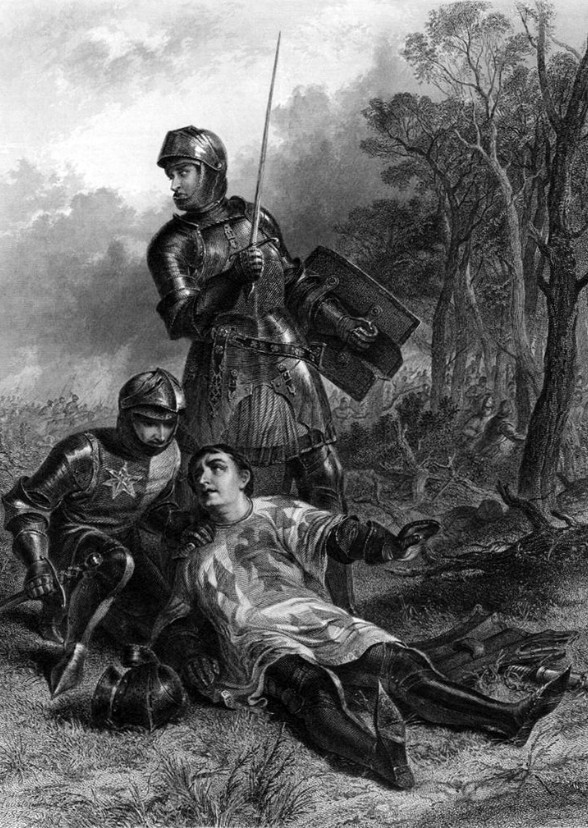
The English crown changes hands often in Henry VI, Part 3. At first, Richard, Duke of York, is allied with Warwick. York invades the throne-room of Henry VI with Warwick’s army, but allows Henry to remain king if he makes York his heir—thus disinheriting Henry’s son, Prince Edward. Infuriated, Henry’s queen, Margaret, raises an army. York breaks his oath to Henry and fights for the crown. After Margaret and her supporters kill York, Warwick proclaims that York’s son Edward is king. Edward, now Edward IV, captures Henry. Warwick breaks with King Edward and joins with Margaret to raise a French army. King Edward’s brother Clarence joins with Warwick to capture Edward and free King Henry. Richard, now Duke of Gloucester, rescues his brother, King Edward, who returns, captures King Henry, and leads an army against Warwick. When Clarence abandons Warwick, Warwick is defeated and killed. King Edward captures Margaret and helps to kill her son, Prince Edward. Richard murders King Henry and begins to plot his way to the crown.
King Henry VI, Part II
With a weak, unworldly king on the throne, the English nobility heightens its struggle for power in Henry VI, Part 2, leading to the brink of civil war. At the start of the play, Henry meets his new bride, Margaret, to whom he has been married by proxy through Suffolk, her lover. Henry’s popular and powerful uncle Gloucester, the Lord Protector, soon comes under attack by Margaret, Suffolk, Cardinal Beaufort, and others. Gloucester’s wife is shamed and exiled and Gloucester himself removed from office, then murdered on Suffolk’s orders. Suffolk is banished, captured by pirates, and killed. Meanwhile, the cardinal dies, raving in madness because of his part in Gloucester’s death. A Kentish rebel, Jack Cade, leads a short-lived revolt, seizing London before his supporters desert him. He dies fighting in a garden. Soon another revolt emerges: Richard, Duke of York, leads an army against King Henry, who flees back to London. As the play ends, Richard’s forces also move toward London.
King Henry VI, Part I
With an underage boy now king of England, Henry VI, Part 1, depicts the collapse of England’s role in France, as English nobles fight each other instead of the French and as Joan la Pucelle (Joan of Arc) brings military strength to the French army. The English hero Lord Talbot attacks Orleans, but is defeated by Joan. In England, Gloucester, Henry VI’s Protector, and Gloucester’s rival Winchester encourage their followers to attack each other in the streets. Richard Plantagenet (later the Duke of York) and Somerset are equally antagonistic, with their followers signaling their allegiance by wearing white or red roses. Henry VI is crowned in Paris, and orders York and Somerset to fight the French instead of each other. As they squabble, French forces kill Talbot and his son. The English army captures and executes Joan. Suffolk arranges a marriage between Henry and Margaret, daughter of the king of Naples, in order to keep her near him and give him, through her, control of England.