

Stories by @porthos
7 stories

The Rose of Versailles
The Rose of Versailles focuses on Oscar François de Jarjayes, a girl raised as a man to become her father's successor as leader of the Palace Guards. Oscar is proud of the life she leads, but becomes torn between class loyalty and her desire to help the impoverished as revolution brews among the oppressed lower class. Also important to the story are her conflicting desires to live life as both a militant and a regular woman as well as her relationships with Marie Antoinette, Count Axel von Fersen, and servant and best friend André Grandier.

Twenty Years After
This second part of "The Three Musketeers" (1993) follows events in France during the Fronde, during the childhood reign of Louis XIV, and in England near the end of the English Civil War, leading up to the victory of Oliver Cromwell and the execution of King Charles I. Athos, Porthos, Aramis and D'Artagnan are valiant and just in their efforts to protect young Louis XIV and the doomed Charles I from their attackers, among them, the sinister Mordaunt.
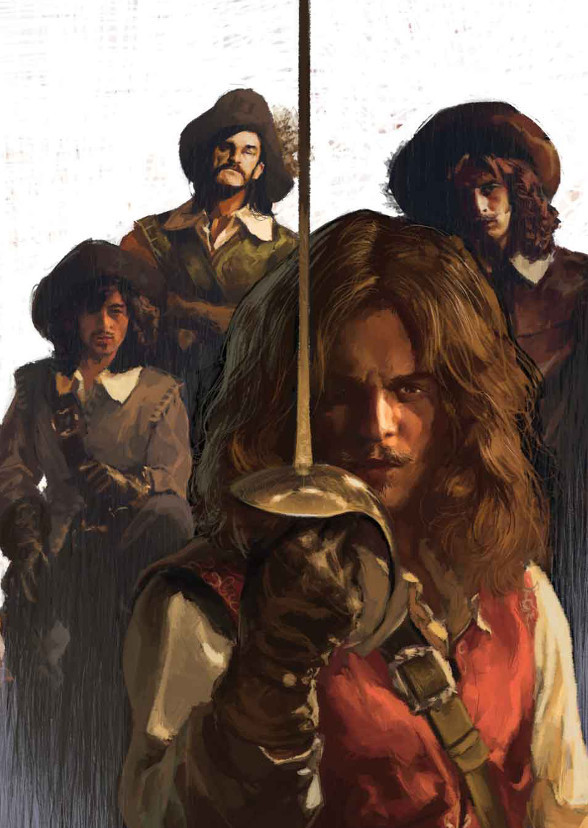
The Three Musketeers
Movie (or miniseries) based on the historical adventure novel written in 1844 by french author Alexandre Dumas. (père). Set in 1625–1628, it recounts the adventures of a young man named d'Artagnan (based on Charles de Batz-Castelmore d'Artagnan) after he leaves home to travel to Paris, to join the Musketeers of the Guard. Although d'Artagnan is not able to join this elite corps immediately, he befriends the three most formidable musketeers of the age—Athos, Porthos and Aramis—and gets involved in affairs of the state and court.

Quo Vadis
Movie (or miniseries) based on the historical novel written by Henryk Sienkiewicz in Polish. The story tells of a love that develops between a young christian woman, Lygia and Marcus Vinicius, a roman patrician. It takes place in the city of Rome under the rule of emperor Nero, c. AD 64.
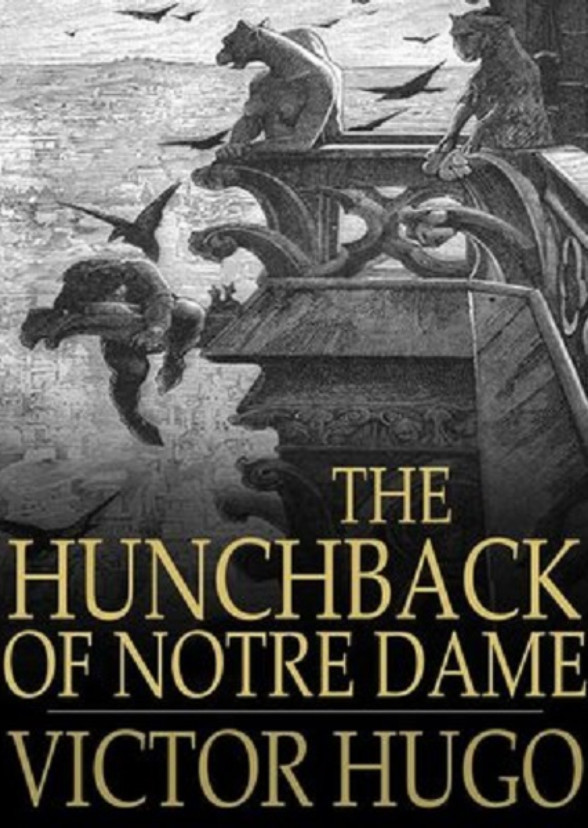
The Hunchback of Notre-Dame
Movie based on the romantic/gothic novel by french author Victor Hugo, published in 1831. The original French title refers to Notre Dame Cathedral, on which the story is centered. The story is set in 15th-century Paris and powerfully evokes medieval life in the city during the reign of Louis XI. Quasimodo is the hunchbacked horribly deformed bell ringer at the cathedral of Notre-Dame. Once beaten and pilloried by an angry mob, he has fallen in love with the beautiful gypsy Esmeralda, who took pity on him during this ordeal. When the scheming archdeacon Frollo, who is also obsessed with Esmeralda, discovers that she favours Captain Phoebus, he stabs the captain, and Esmeralda is accused of the crime. Quasimodo attempts to shelter Esmeralda in the cathedral, but she eventually hangs; in his grief and despair, Quasimodo throws Frollo from the cathedral tower. Later, two skeletons are found in Esmeralda’s tomb—that of a hunchback embracing that of a woman.
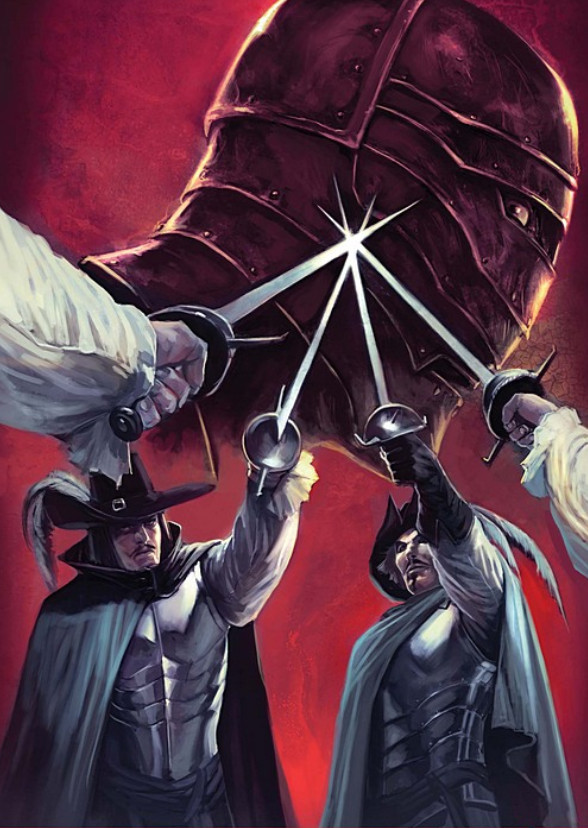
The Vicomte de Bragelonne
Movie (or miniseries) based on the novel by french author Alexandre Dumas (père). It is the third and last of The d'Artagnan Romances, following The Three Musketeers and Twenty Years After. The principal heroes of the novel are Raoul of Bragelonne and the old musketeers: D'Artagnan, Athos, Porthos and Aramis. The narrative is set between 1660 and 1673 against the background of the transformation of Louis XIV from child monarch to Sun King. The plot incorporates the idea that the Man in the Iron Mask is the twin brother of Louis XIV, Philippe, who had been concealed and imprisoned from birth by his father, Louis XIII, and his mother, Anne of Austria, "for the good of France".

The Count of Monte Cristo
Movie (or miniseries) based on the adventure novel by french author Alexandre Dumas (père) completed in 1844. On the day of his wedding to Mercédès, Edmond Dantès, first mate of the Pharaon, is falsely accused of treason, arrested, and imprisoned without trial in the Château d'If, a grim island fortress off Marseilles. A fellow prisoner, Abbé Faria, correctly deduces that his jealous rival Fernand Mondego, envious crewmate Danglars, and double-dealing Magistrate De Villefort framed him. Faria inspires his escape and guides him to a fortune in treasure. As the powerful and mysterious Count of Monte Cristo, he arrives from the Orient to enter the fashionable Parisian world of the 1830s and avenge himself on the men who conspired to destroy him.