

Stories by @alligatorplayz
569 stories
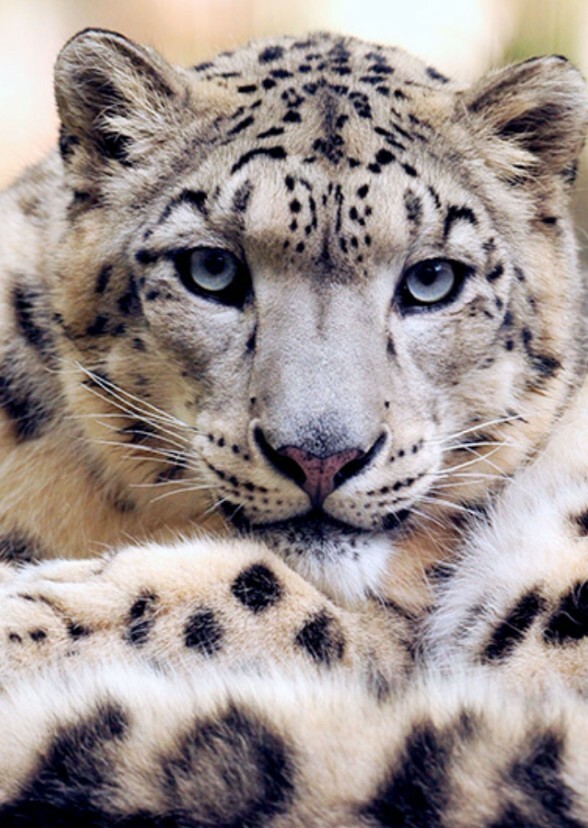
Snow Leopard
The snow leopard (Panthera uncia), commonly known as the ounce, is a species of large cat in the genus Panthera of the family Felidae. The species is native to the mountain ranges of Central and South Asia. It is listed as Vulnerable on the IUCN Red List because the global population is estimated to number fewer than 10,000 mature individuals and is expected to decline about 10% by 2040. It is mainly threatened by poaching and habitat destruction following infrastructural developments. It inhabits alpine and subalpine zones at elevations of 3,000–4,500 m (9,800–14,800 ft), ranging from eastern Afghanistan, the Himalayas and the Tibetan Plateau to southern Siberia, Mongolia and western China. In the northern part of its range, it also lives at lower elevations.
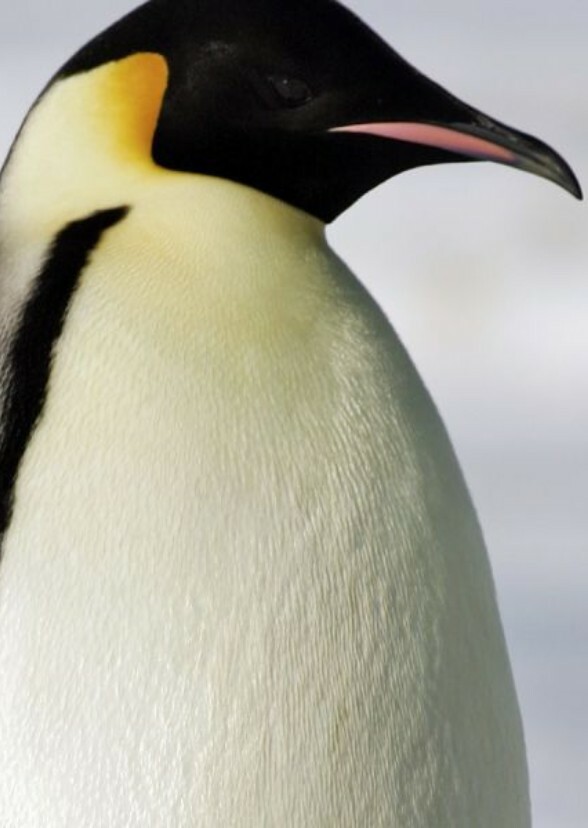
Emperor Penguin
The emperor penguin (Aptenodytes forsteri) is the tallest and heaviest of all living penguin species and is endemic to Antarctica. The male and female are similar in plumage and size, reaching 100 cm (39 in) in length and weighing from 22 to 45 kg (49 to 99 lb). Feathers of the head and back are black and sharply delineated from the white belly, pale-yellow breast and bright-yellow ear patches.

Walrus
The walrus (Odobenus rosmarus) is a large pinniped marine mammal with discontinuous distribution about the North Pole in the Arctic Ocean and subarctic seas of the Northern Hemisphere. It is the only extant species in the family Odobenidae and genus Odobenus. This species is subdivided into two subspecies:[2] the Atlantic walrus (O. r. rosmarus), which lives in the Atlantic Ocean, and the Pacific walrus (O. r. divergens), which lives in the Pacific Ocean.
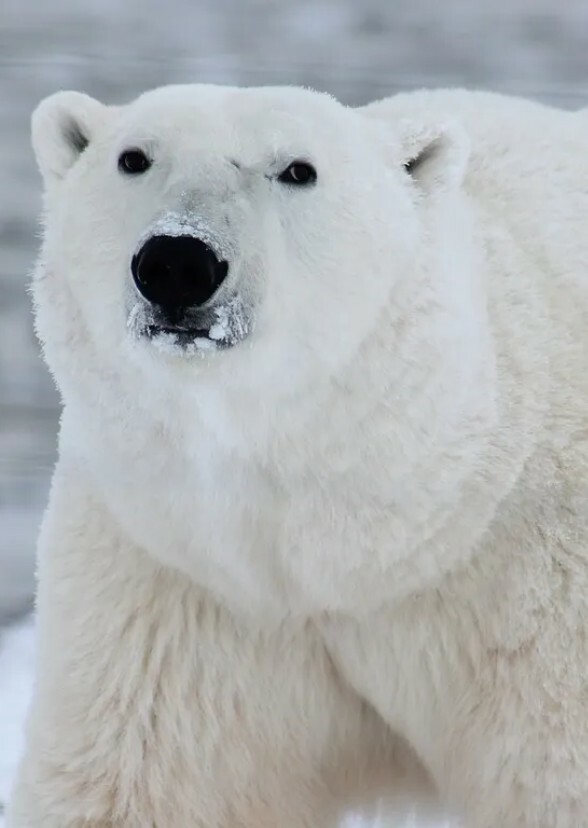
Polar Bear
The polar bear (Ursus maritimus) is a large bear native to the Arctic and nearby areas. It is closely related to the brown bear, and the two species can interbreed. The polar bear is the largest extant species of bear and land carnivore, with adult males weighing 300–800 kg (660–1,760 lb). The species is sexually dimorphic, as adult females are much smaller. The polar bear is white- or yellowish-furred with black skin and a thick layer of fat. It is more slender than the brown bear, with a narrower skull, longer neck and lower shoulder hump. Its teeth are sharper and more adapted to cutting meat. The paws are large and allow the bear to walk on ice and paddle in the water.
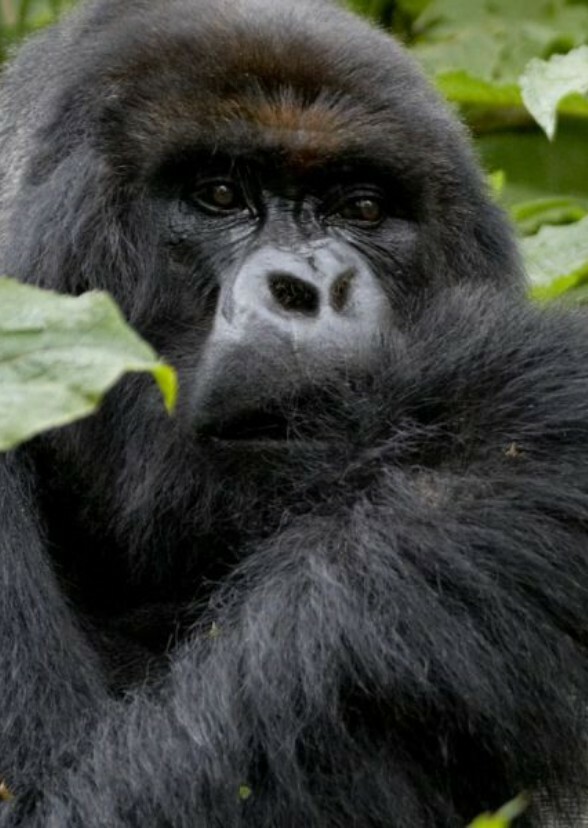
Mountain Gorilla
The mountain gorilla (Gorilla beringei beringei) is one of the two subspecies of the eastern gorilla. It is listed as endangered by the IUCN as of 2018.[2] There are two populations: One is found in the Virunga volcanic mountains of Central/East Africa, within three National Parks: Mgahinga, in southwest Uganda; Volcanoes, in northwest Rwanda; and Virunga, in the eastern Democratic Republic of Congo (DRC). The other population is found in Uganda's Bwindi Impenetrable National Park. Some primatologists speculate the Bwindi population is a separate subspecies,[3] though no description has been finalized. As of June 2018, there were more than 1,000 individuals.

Giant Panda
The giant panda (Ailuropoda melanoleuca), sometimes called a panda bear or simply panda, is a bear species endemic to China.[4] It is characterised by its bold black-and-white coat and rotund body. The name "giant panda" is sometimes used to distinguish it from the red panda, a neighboring musteloid. Though it belongs to the order Carnivora, the giant panda is a folivore, with bamboo shoots and leaves making up more than 99% of its diet.Giant pandas in the wild occasionally eat other grasses, wild tubers, or even meat in the form of birds, rodents, or carrion.
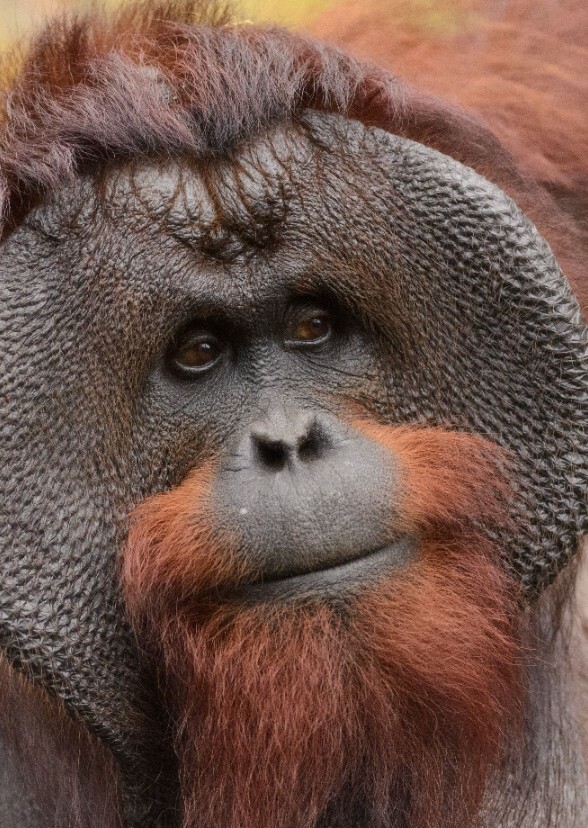
Orangutan
Orangutans are great apes native to the rainforests of Indonesia and Malaysia. They are now found only in parts of Borneo and Sumatra, but during the Pleistocene they ranged throughout Southeast Asia and South China. Classified in the genus Pongo, orangutans were originally considered to be one species. From 1996, they were divided into two species: the Bornean orangutan (P. pygmaeus, with three subspecies) and the Sumatran orangutan (P. abelii). A third species, the Tapanuli orangutan (P. tapanuliensis), was identified definitively in 2017. The orangutans are the only surviving species of the subfamily Ponginae, which diverged genetically from the other hominids (gorillas, chimpanzees, and humans) between 19.3 and 15.7 million years ago.
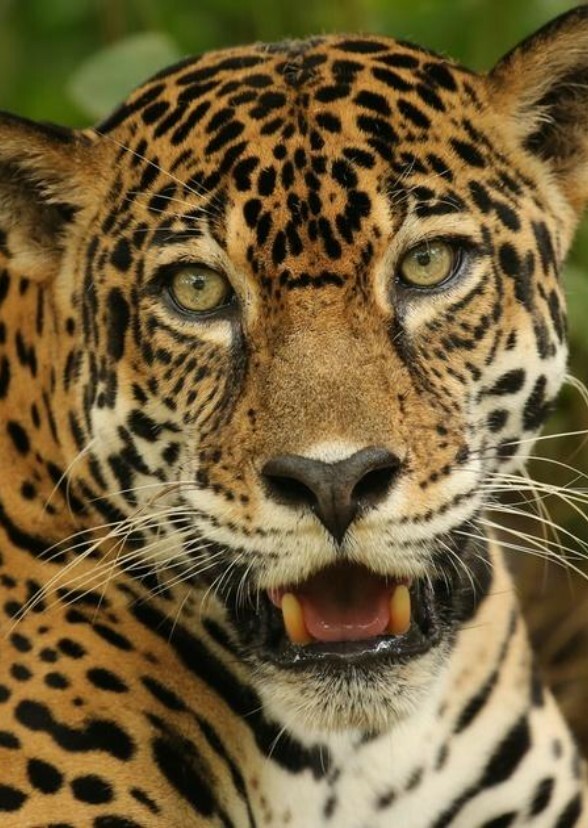
Jaguar
The jaguar (Panthera onca) is a large cat species and the only living member of the genus Panthera native to the Americas. With a body length of up to 1.85 m (6 ft 1 in) and a weight of up to 158 kg (348 lb), it is the biggest cat species in the Americas and the third largest in the world. Its distinctively marked coat features pale yellow to tan colored fur covered by spots that transition to rosettes on the sides, although a melanistic black coat appears in some individuals. The jaguar's powerful bite allows it to pierce the carapaces of turtles and tortoises, and to employ an unusual killing method: it bites directly through the skull of mammalian prey between the ears to deliver a fatal blow to the brain.
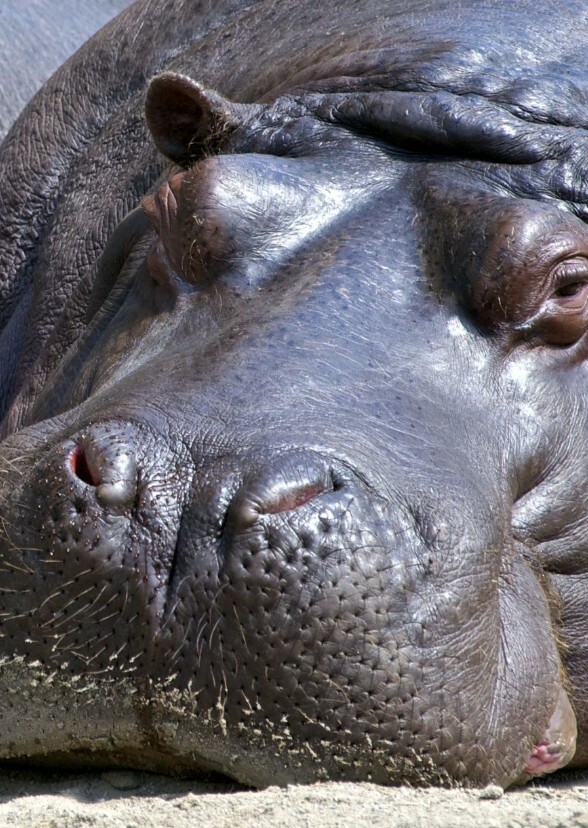
Hippopotamus
The hippopotamus (/ˌhɪpəˈpɒtəməs/;[3] pl.: hippopotamuses or hippopotami), also shortened to hippo (pl.: hippos; Hippopotamus amphibius), further qualified as the common hippopotamus, Nile hippopotamus, or river hippopotamus, is a large semiaquatic mammal native to sub-Saharan Africa. It is one of only two extant species in the family Hippopotamidae, the other being the pygmy hippopotamus (Choeropsis liberiensis or Hexaprotodon liberiensis). Its name comes from the ancient Greek for "river horse" (ἱπποπόταμος).
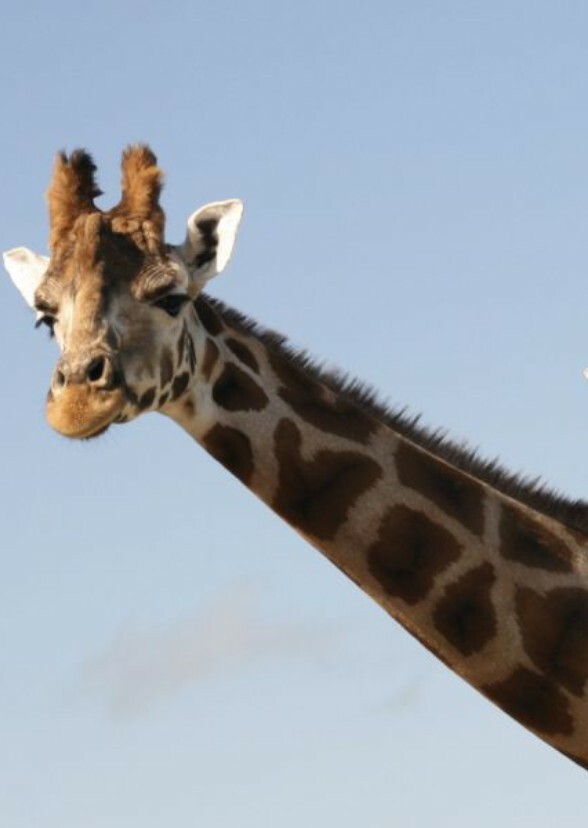
Giraffe
The giraffe is a large African hoofed mammal belonging to the genus Giraffa. It is the tallest living terrestrial animal and the largest ruminant on Earth. Traditionally, giraffes were thought to be one species, Giraffa camelopardalis, with nine subspecies. Most recently, researchers proposed dividing them into up to eight extant species due to new research into their mitochondrial and nuclear DNA, as well as morphological measurements. Seven other extinct species of Giraffa are known from the fossil record.
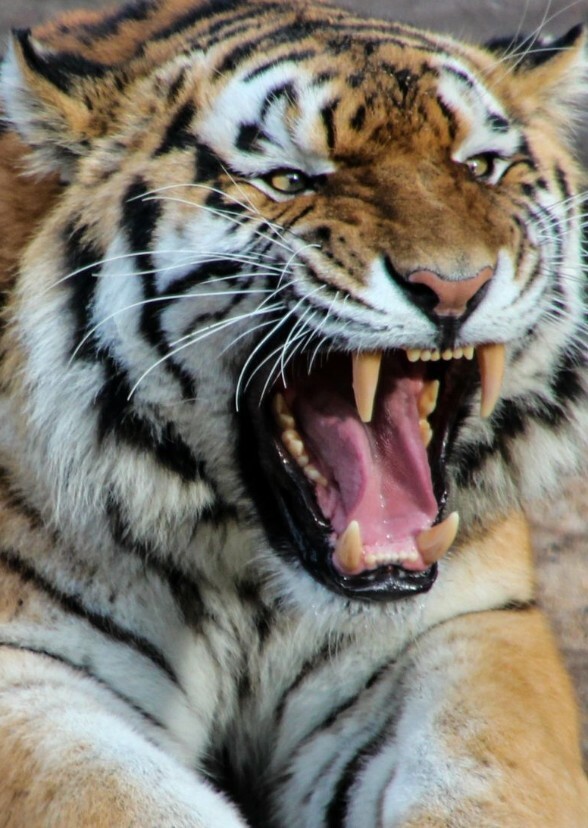
Tiger
The tiger (Panthera tigris) is the largest living cat species and a member of the genus Panthera. It is most recognisable for its dark vertical stripes on orange fur with a white underside. An apex predator, it primarily preys on ungulates, such as deer and wild boar. It is territorial and generally a solitary but social predator, requiring large contiguous areas of habitat to support its requirements for prey and rearing of its offspring. Tiger cubs stay with their mother for about two years and then become independent, leaving their mother's home range to establish their own.

African Elephant
African elephants are members of the genus Loxodonta comprising two living elephant species, the African bush elephant (L. africana) and the smaller African forest elephant (L. cyclotis). Both are social herbivores with grey skin, but differ in the size and colour of their tusks and in the shape and size of their ears and skulls.

Lion
The lion (Panthera leo) is a large cat of the genus Panthera native to Africa and India. It has a muscular, broad-chested body; short, rounded head; round ears; and a hairy tuft at the end of its tail. It is sexually dimorphic; adult male lions are larger than females and have a prominent mane. It is a social species, forming groups called prides. A lion's pride consists of a few adult males, related females, and cubs. Groups of female lions usually hunt together, preying mostly on large ungulates.

Zebra
Zebras (US: /ˈziːbrəz/, UK: /ˈzɛbrəz, ˈziː-/)[1] (subgenus Hippotigris) are African equines with distinctive black-and-white striped coats. There are three living species: Grévy's zebra (Equus grevyi), the plains zebra (E. quagga), and the mountain zebra (E. zebra). Zebras share the genus Equus with horses and asses, the three groups being the only living members of the family Equidae. Zebra stripes come in different patterns, unique to each individual. Several theories have been proposed for the function of these stripes, with most evidence supporting them as a deterrent for biting flies. Zebras inhabit eastern and southern Africa and can be found in a variety of habitats such as savannahs, grasslands, woodlands, shrublands, and mountainous areas.
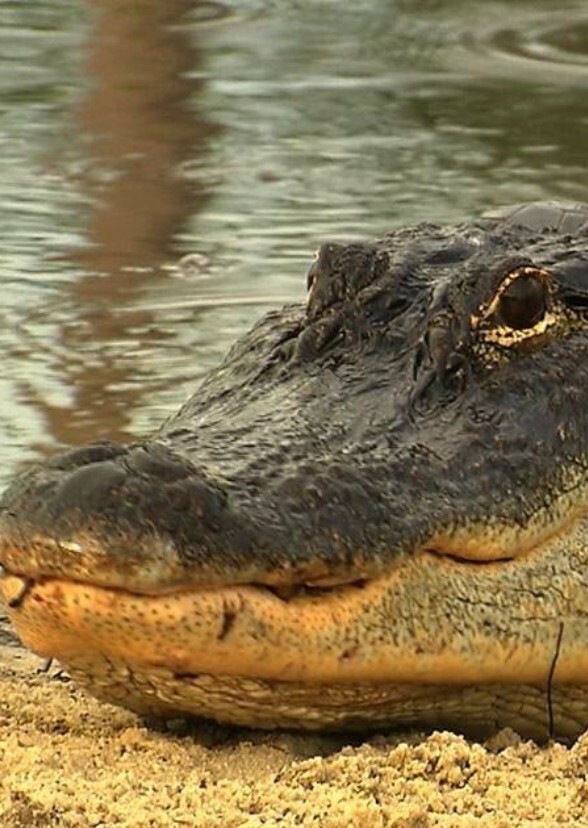
American Alligator
The American alligator (Alligator mississippiensis), sometimes referred to colloquially as a gator or common alligator, is a large crocodilian reptile native to the Southeastern United States. It is one of the two extant species in the genus Alligator, and is larger than the only other living alligator species, the Chinese alligator.
Nature (TV program)
Consistently stunning documentaries transport viewers to far-flung locations ranging from the torrid African plains to the chilly splendours of icy Antarctica. The show's primary focus is on animals and ecosystems around the world. A comic book based on the show, meant to be used an as educational tool for kids, was briefly distributed to museums and schools at no cost in the mid-2000s.
Nature (TV program)
Nature is a wildlife television program produced by Thirteen/WNET New York. It has been distributed to United States public television stations by the PBS television service since its debut on October 10, 1982. Some episodes may appear in syndication on many PBS member stations around the United States and Canada, and on the Discovery Channel. This series currently airs on Wednesday on PBS.

The Zebra
Zebras (US: /ˈziːbrəz/, UK: /ˈzɛbrəz, ˈziː-/)[1] (subgenus Hippotigris) are African equines with distinctive black-and-white striped coats. There are three living species: Grévy's zebra (Equus grevyi), the plains zebra (E. quagga), and the mountain zebra (E. zebra). Zebras share the genus Equus with horses and asses, the three groups being the only living members of the family Equidae. Zebra stripes come in different patterns, unique to each individual. Several theories have been proposed for the function of these stripes, with most evidence supporting them as a deterrent for biting flies. Zebras inhabit eastern and southern Africa and can be found in a variety of habitats such as savannahs, grasslands, woodlands, shrublands, and mountainous areas.
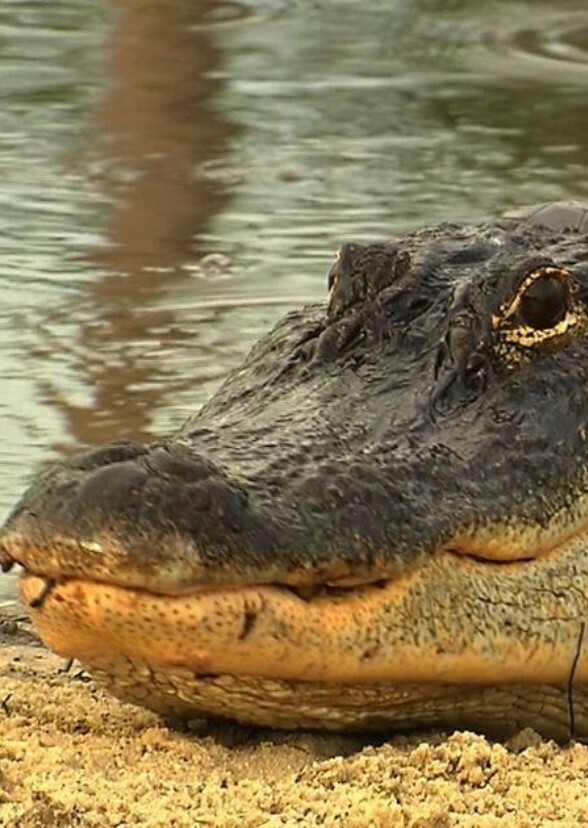
The American Alligator
The American alligator (Alligator mississippiensis), sometimes referred to colloquially as a gator or common alligator, is a large crocodilian reptile native to the Southeastern United States. It is one of the two extant species in the genus Alligator, and is larger than the only other living alligator species, the Chinese alligator.
PBS Nature Animals sorted by Genders
Nature is a wildlife television program produced by Thirteen/WNET New York. It has been distributed to United States public television stations by the PBS television service since its debut on October 10, 1982. Some episodes may appear in syndication on many PBS member stations around the United States and Canada, and on the Discovery Channel. This series currently airs on Wednesday on PBS