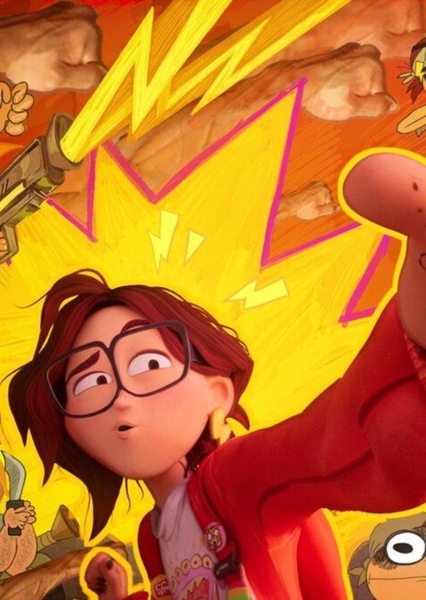
A form of hybrid 2D/3D animation which uses CGI animated models as a base, and adds stylized effects in 2D on top of it, generally with the idea of making the animation look more like traditional art. Often used to mimic specific traditional styles, ranging from drawings and paintings to even stop-motion animation.
This can take several forms:
Flat colors or Cel Shading, common in Anime and Animesque examples.
Shading/texturing styles that imitate brush strokes or similar imperfections on surfaces, giving the impression of a characters being moving paintings or plasticine figures.
Adding outlines to characters, making them look hand-drawn.
Flat special effects like motion lines, drawn-on particle effects, or Written Sound Effects to invoke comic book or manga iconography.
Stylized coloring and highlighting techniques, such as Blush Stickers or crosshatching.
Deliberately distorted character models, so their silhouettes and features more resemble 2D figures, along with the use of techniques like Cheated Angle or smear-framing to preserve the posing and movement style of the same.
A lower frame rate; 3D animated films and shows are usually animated on 1s (i.e., a new "drawing" every frame), but a lot of these works will have character movements or other elements animated on 2s (new pose every two frames) or more, to make the movement have a flow and impact closer to traditional 2D or stop-motion animation (the money saved by doing this is a nice bonus).
This is in contrast to more conventional All CGI Cartoons, which generally attempt to mimic real-life shading, lighting and camerawork, making the animation look like a real camera filming animated people. Compare the inverse, 2D Visuals, 3D Effects. Compare Cel Shading, a Sub-Trope of this, and Rotoscoping, drawing over a live-action base. Related to Medium Blending and Painting the Medium.