Age: 62
male
Andrew Clement Serkis (born 20 April 1964) is an English actor and filmmaker. He is best known for his motion capture roles comprising motion capture acting, animation and voice work for computer-generated characters such as Gollum in The Lord of the Rings film trilogy (2001–2003) and The Hobbit: An Unexpected Journey (2012), King Kong in the eponymous 2005 film, Caesar in the Planet of the Apes reboot series (2011–2017), Captain Haddock / Sir Francis Haddock in Steven Spielberg's The Adventures of Tintin (2011), Baloo in his self-directed film Mowgli: Legend of the Jungle (2018) and Supreme Leader Snoke in the Star Wars sequel trilogy films The Force Awakens (2015) and The Last Jedi (2017), also portraying Kino Loy in the Star Wars Disney+ series Andor (2022). Serkis's film work in motion capture has been critically acclaimed. He has received an Empire Award and two Saturn Awards for his motion-capture acting. He earned a BAFTA and a Golden Globe nomination for his portrayal of serial killer Ian Brady in the British television film Longford (2006). He was nominated for a BAFTA for his portrayal of new wave and punk rock musician Ian Dury in the biopic Sex & Drugs & Rock & Roll (2010). In 2020, Serkis received the BAFTA Award for Outstanding British Contribution to Cinema. In 2021, he won a Daytime Emmy Award for The Letter for the King (2020). Serkis portrayed Ulysses Klaue in the Marvel Cinematic Universe (MCU) films Avengers: Age of Ultron (2015) and Black Panther (2018), as well as the Disney+ series What If...? (2021). He also played Alfred Pennyworth in The Batman (2022). Serkis has his own production company and motion-capture workshop, The Imaginarium, in London, which he used for Mowgli: Legend of the Jungle. He made his directorial debut with Imaginarium's 2017 film Breathe and also directed Venom: Let There Be Carnage (2021). Description above from the Wikipedia article Andy Serkis, licensed under CC-BY-SA, full list of contributors on Wikipedia.
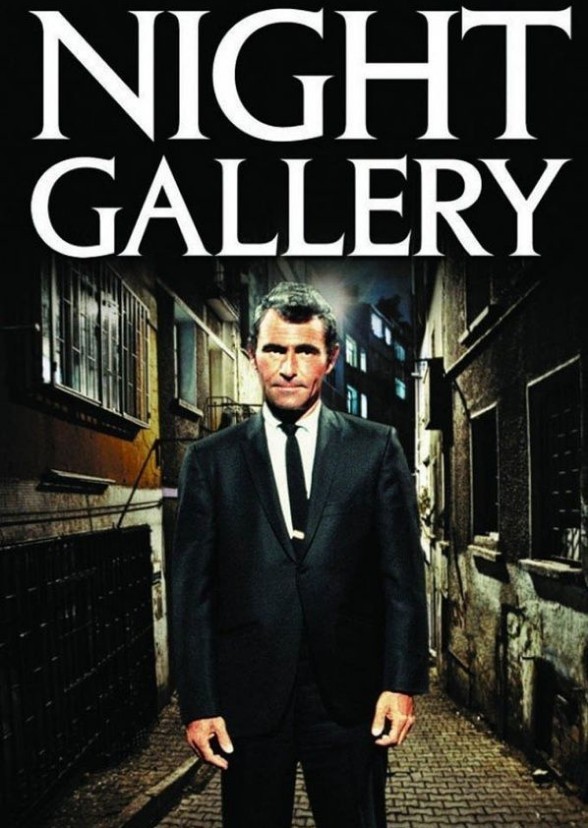
Night Gallery is an American anthology series that aired on NBC from 1969 to 1973, featuring stories of horror and the macabre. Rod Serling, who had gained fame from an earlier series, The Twilight Zone, served both as the on-air host of Night Gallery and as a major contributor of scripts, although he did not have the same control of content and tone as he had on The Twilight Zone. Serling viewed Night Gallery as a logical extension of The Twilight Zone, but while both series shared an interest in thought-provoking dark fantasy, more of Zone's offerings were science fiction while Night Gallery focused on horrors of the supernatural