Age: 49
male
Michael Fassbender (German pronunciation:[ˈmɪçaːʔeːl 'fasbɛndɐ]; born 2 April 1977) is a German-Irish actor. His accolades include nominations for two Academy Awards, four British Academy Film Awards and three Golden Globe Awards. In 2020, he was listed at number nine on The Irish Times list of Ireland's greatest film actors. After studying at the Drama Centre London, Fassbender made his feature film debut in 300 (2006). Early roles include the HBO miniseries Band of Brothers (2001) and the Sky One fantasy drama Hex (2004–2005). He first came to prominence playing Bobby Sands in the drama Hunger (2008). Subsequent roles include the 2009 films Fish Tank and Inglourious Basterds, and the 2011 films Jane Eyre and A Dangerous Method. He gained mainstream success for playing Erik Lehnsherr / Magneto in the X-Men series, and David 8 and Walter One in Prometheus (2012), and its sequel, Alien: Covenant (2017). For his portrayal of a addict in Steve McQueen's drama Shame (2011), he won the Volpi Cup for Best Actor. His portrayals of Edwin Epps in the historical drama 12 Years a Slave (2013) and the title role in biographical drama Steve Jobs (2015), respectively, earned him nominations for the Academy Award for Best Supporting Actor and Best Actor. Following further roles in the films The Counselor (2013), Frank (2014), and Macbeth (2015), he took an eight-year hiatus, during which he began competing in auto racing. After driving for Proton Competition in the European Le Mans Series in 2023, Fassbender made a return to acting with the action films The Killer (2023) and Black Bag (2025). Married to Swedish actress Alicia Vikander since 2017, he has two children. Description above from the Wikipedia article Michael Fassbender, licensed under CC-BY-SA, full list of contributors on Wikipedia.
Michael Fassbender

British commander
for British commander in Canada: A Mysterious Story
Suggested by danicaharper
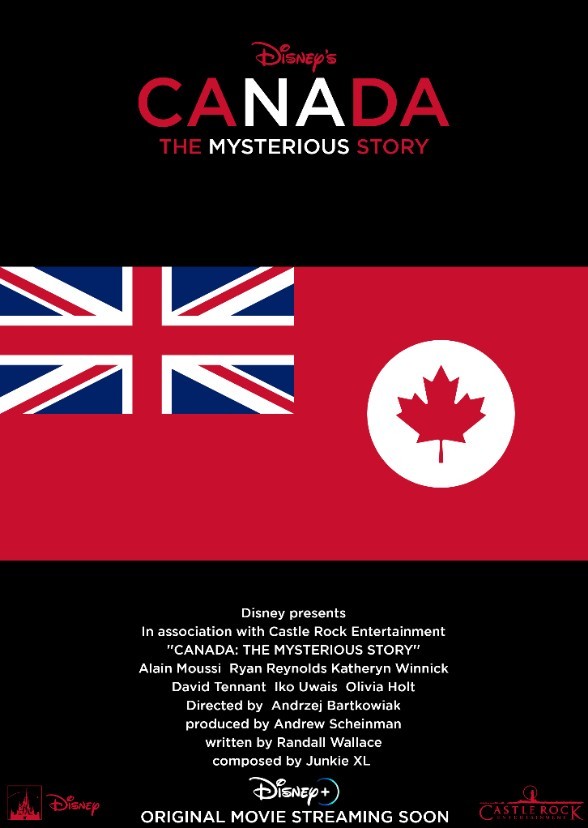
Prior to European colonization, the lands encompassing present-day Canada were inhabited for millennia by Indigenous peoples, with distinct trade networks, spiritual beliefs, and styles of social organization. Some of these older civilizations had long faded by the time of the first European arrivals and have been discovered through archeological investigations. From the late 15th century, French and British expeditions explored, colonized, and fought over various places within North America in what constitutes present-day Canada. The colony of New France was claimed in 1534 with permanent settlements beginning in 1608. France ceded nearly all its North American possessions to the United Kingdom in 1763 at the Treaty of Paris after the Seven Years' War. The now British Province of Quebec was divided into Upper and Lower Canada in 1791. The two provinces were united as the Province of Canada by the Act of Union 1840, which came into force in 1841. In 1867, the Province of Canada was joined with two other British colonies of New Brunswick and Nova Scotia through Confederation, forming a self-governing entity. "Canada" was adopted as the legal name of the new country and the word "Dominion" was conferred as the country's title. Over the next eighty-two years, Canada expanded by incorporating other parts of British North America, finishing with Newfoundland and Labrador in 1949.