Age: 48
male
William Thomas Hader Jr. (born June 7, 1978) is an American actor, voice actor, comedian, writer and producer. He is the creator, producer, writer, director, and star of the HBO dark comedy series Barry (2018–2023), for which he has been nominated for eight Emmy Awards, winning two. Hader's initial success was for his eight-year stint (2005–2013) as a cast member on the long-running NBC variety series Saturday Night Live, for which he received four Primetime Emmy Award nominations and a Peabody Award. He became known for his impressions and especially for his work on the Weekend Update segments, in which he played Stefon Meyers, a flamboyant New York tour guide who recommends unusual nightclubs and parties with bizarre characters with unusual tastes. He is also the star and producer of the IFC mockumentary comedy series Documentary Now! (2015–present) which he co-created along with Fred Armisen and Seth Meyers. Hader has had supporting roles in the films You, Me and Dupree (2006), Hot Rod (2007), Superbad (2007), Forgetting Sarah Marshall (2008), Night at the Museum: Battle of the Smithsonian, (2009), Paul (2011), This Is 40 (2012), and 22 Jump Street (2014), as well as leading roles in The Skeleton Twins (2014), Trainwreck (2015), and as an adult Richie Tozier in It Chapter Two (2019). He also is known for his extensive work in voice-over, portraying both leading and supporting characters in films such as the Cloudy with a Chance of Meatballs franchise (2009–2013), Turbo (2013), Inside Out (2015), The BFG (2016), Power Rangers (2017), Toy Story 4 (2019) and Lightyear (2022).
Bill Hader

British captain
for British captain in Canada: A Mysterious Story
Suggested by danicaharper
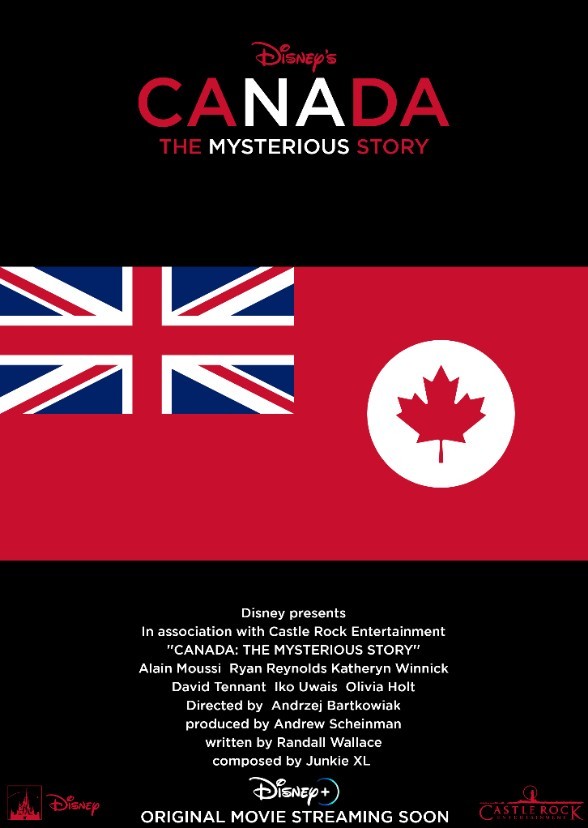
Prior to European colonization, the lands encompassing present-day Canada were inhabited for millennia by Indigenous peoples, with distinct trade networks, spiritual beliefs, and styles of social organization. Some of these older civilizations had long faded by the time of the first European arrivals and have been discovered through archeological investigations. From the late 15th century, French and British expeditions explored, colonized, and fought over various places within North America in what constitutes present-day Canada. The colony of New France was claimed in 1534 with permanent settlements beginning in 1608. France ceded nearly all its North American possessions to the United Kingdom in 1763 at the Treaty of Paris after the Seven Years' War. The now British Province of Quebec was divided into Upper and Lower Canada in 1791. The two provinces were united as the Province of Canada by the Act of Union 1840, which came into force in 1841. In 1867, the Province of Canada was joined with two other British colonies of New Brunswick and Nova Scotia through Confederation, forming a self-governing entity. "Canada" was adopted as the legal name of the new country and the word "Dominion" was conferred as the country's title. Over the next eighty-two years, Canada expanded by incorporating other parts of British North America, finishing with Newfoundland and Labrador in 1949.