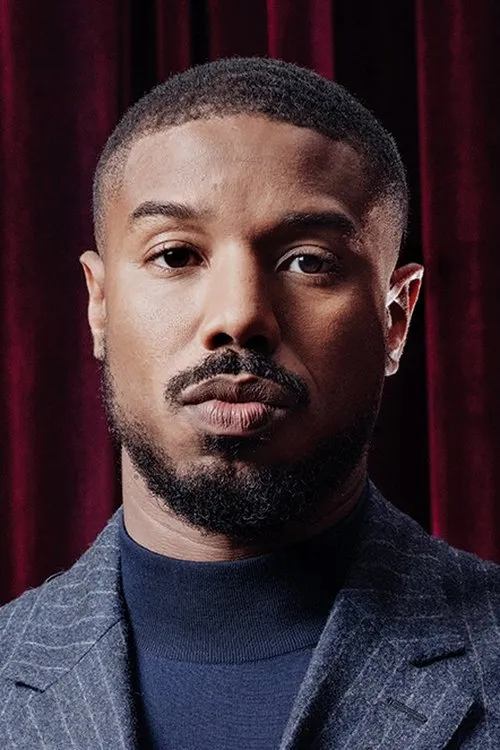
Age: 39
male
Michael Bakari Jordan (/bɑːˈkɑːri/ bah-KAR-ee; born February 9, 1987) is an American actor, producer, and director. His accolades include an Academy Award, three Actor Awards, and a Producers Guild Award, in addition to nominations for a British Academy Film Award, a Golden Globe Award and two Emmy Awards. Jordan was named one of the 100 most influential people in the world by Time in 2020 and 2023, People's Sexiest Man Alive in 2020, and The New York Times ranked him 15th on its list of the 25 greatest actors of the 21st century. Jordan initially broke out in television, playing Wallace in the first season of the HBO crime drama series The Wire (2002). He starred in the ABC soap opera All My Children (2003–2006) and the NBC sports drama series Friday Night Lights (2009–2011). He later starred in and produced the HBO television film Fahrenheit 451 (2018), for which he was nominated for the Primetime Emmy Award for Outstanding Television Movie. Jordan's film breakthrough came as Oscar Grant in Ryan Coogler's biopic Fruitvale Station (2013), for which his performance received critical praise. He earned further acclaim for his performances in Coogler's subsequent films, including Creed (2015), Black Panther (2018), and Sinners (2025); the latter earned him the Academy Award for Best Actor. Jordan reprised his role of Donnie Creed in Creed II (2018) and Creed III (2023), the latter of which also marked his directorial debut. His other films include Chronicle (2012), That Awkward Moment (2014), Fantastic Four (2015), and Just Mercy (2019). Aside from filmmaking, Jordan is also a co-owner of Premier League club AFC Bournemouth. Description above from the Wikipedia article Michael B. Jordan, licensed under CC-BY-SA, full list of contributors on Wikipedia.
Michael B. Jordan

Millennial or Y
for Millennial or Y in Best by Generation
Suggested by gustavosoaresdemorales

The Strauss–Howe generational theory, devised by William Strauss and Neil Howe, describes a theorized recurring generation cycle in American history and Western history. According to the theory, historical events are associated with recurring generational personas (archetypes). Each generational persona unleashes a new era (called a turning) lasting around 20–25 years, in which a new social, political, and economic climate (mood) exists. An average life is 80 years and consists of four periods of ~20–22 years Childhood → Young adult → Midlife → Elderhood A generation is an aggregate of people born every ~20–22 years Baby Boomers → Gen X → Millennials → Homelanders Each generation experiences "four turnings" every ~80–90 years High → Awakening → Unraveling → Crisis A generation is considered "dominant" or "recessive" according to the turning experienced as young adults. But as a youth generation comes of age and defines its collective persona an opposing generational archetype is in its midlife peak of power. Dominant: independent behavior + attitudes in defining an era Recessive: dependent role in defining an era https://en.wikipedia.org/wiki/Strauss%E2%80%93Howe_generational_theory