Died at 104
male
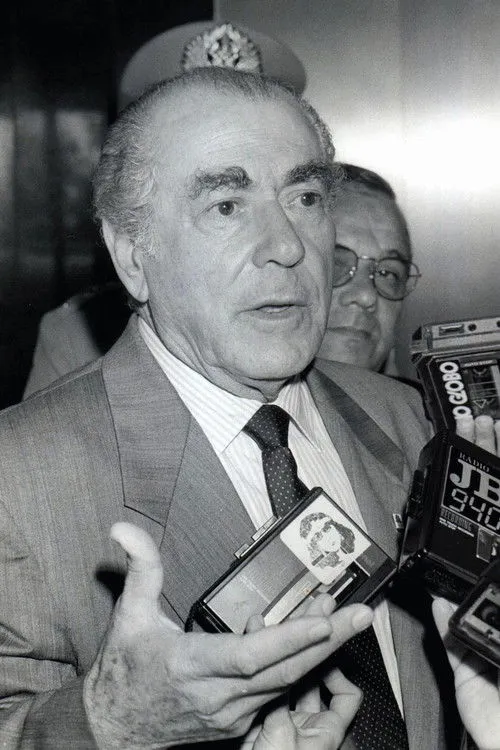
Leonel de Moura Brizola (22 January 1922 – 21 June 2004) was a Brazilian politician. Launched into politics by Brazilian president Getúlio Vargas in the 1930–1950s, Brizola was the only politician to serve as elected governor of two Brazilian states. An engineer by training, Brizola organized the youth wing of the Brazilian Labour Party and served as state representative for Rio Grande do Sul and mayor of its capital, Porto Alegre. In 1958 he was elected governor and subsequently played a major role in thwarting a first coup attempt by sectors of the armed forces in 1961, who wished to stop João Goulart from assuming the presidency, under allegations of communist ties. Three years later, facing the 1964 Brazilian coup d'état that went on to install the Brazilian military dictatorship, Brizola again wanted the democratic forces to resist, but Goulart did not want to risk the possibility of civil war, and Brizola was exiled in Uruguay. One of the few Brazilian major political figures able to overcome the dictatorship's twenty-years ban on his political activity, Brizola returned to Brazil in 1979, but failed in his bid to take control of the reemerging Brazilian Labour Party as the military government instead conceded it to Ivete Vargas. Brizola founded the Democratic Labour Party on a democratic socialist, nationalist and populist platform descended from Getúlio Vargas' own trabalhismo legacy, promoted as an ideology he called socialismo moreno ("tanned socialism"), a non-Marxist, Christian and markedly Brazilian left-wing political agenda for a post-Cold War setting. In 1982 and 1990 he was elected governor of Rio de Janeiro, after a failed 1989 bid for the presidency, in which he narrowly finished third, after Luiz Inácio Lula da Silva. In the 1990s, Brizola disputed for preeminence in the Brazilian left with future president Lula Workers' Party, later briefly integrating his government in the early 2000s. He was also vice-president of the Socialist International and served as Honorary President of that organization from October 2003 until his death in June 2004. Known for his sharp, energetic rhetoric and frank, direct style, Brizola is considered one of the most important historic figures of the Brazilian left.
Leonel Brizola

Greatest Generation (GI Generation)
for Greatest Generation (GI Generation) in Best by Generation
Suggested by gustavosoaresdemorales

The Strauss–Howe generational theory, devised by William Strauss and Neil Howe, describes a theorized recurring generation cycle in American history and Western history. According to the theory, historical events are associated with recurring generational personas (archetypes). Each generational persona unleashes a new era (called a turning) lasting around 20–25 years, in which a new social, political, and economic climate (mood) exists. An average life is 80 years and consists of four periods of ~20–22 years Childhood → Young adult → Midlife → Elderhood A generation is an aggregate of people born every ~20–22 years Baby Boomers → Gen X → Millennials → Homelanders Each generation experiences "four turnings" every ~80–90 years High → Awakening → Unraveling → Crisis A generation is considered "dominant" or "recessive" according to the turning experienced as young adults. But as a youth generation comes of age and defines its collective persona an opposing generational archetype is in its midlife peak of power. Dominant: independent behavior + attitudes in defining an era Recessive: dependent role in defining an era https://en.wikipedia.org/wiki/Strauss%E2%80%93Howe_generational_theory